UPCOMING EVENTS
- June 26th, 2026 – Basin Regional Luncheon
- August 6th – 7th, 2026 – 2026 Rocky Mountain Regional Safety Rendezvous
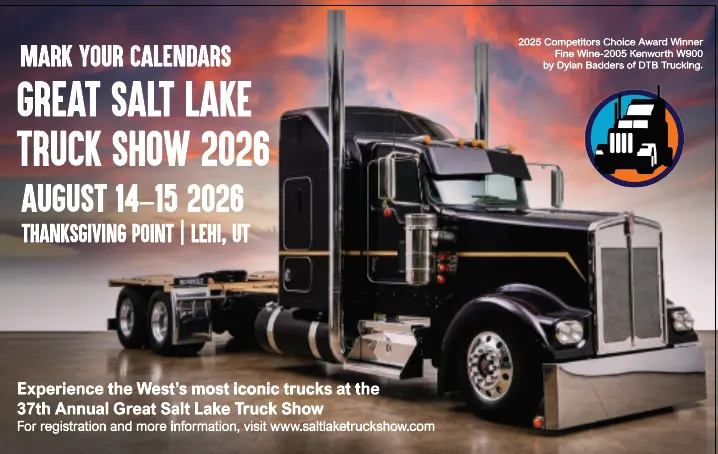
- August 14th – 15th, 2026 – Great Salt Lake Truck Show
Announcements
Application Closes Monday June 30 at 5:00pm

Events:
2026 Rocky Mountain Regional Safety Rendezvous
August 6th – 7th, 2026 Coeur d’Alene Idaho

Resources:



Truckin Hot News:
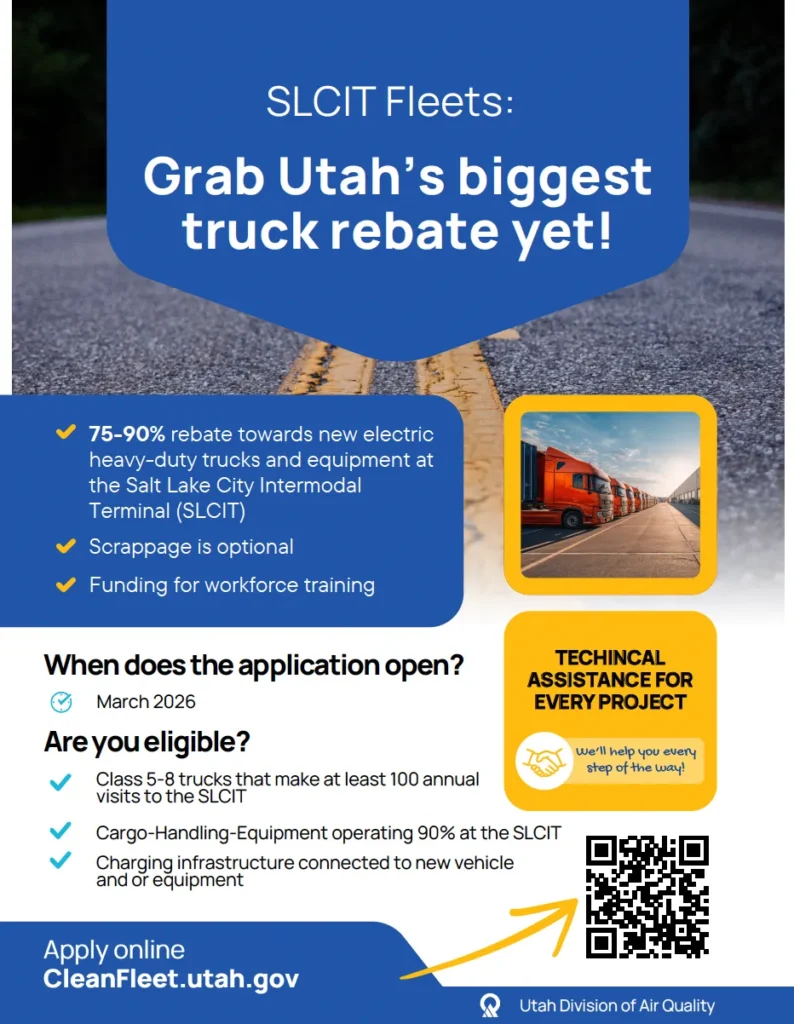
Upgrade Your Fleet: $2 Million in UDAQ Funding Available for Utah Trucking Businesses
The Utah Division of Air Quality (UDAQ) has a major opportunity for Utah fleet operators to upgrade their equipment while significantly offsetting replacement costs.
There is currently $2 million in funding available through the Diesel Emissions Reduction Act (DERA) program that must be spent by September. This program provides substantial rebates to Utah fleet owners who replace older, heavy-duty diesel vehicles with newer, cleaner technology.
How this benefits your bottom line:
UDAQ can cover a substantial portion of the cost for a new vehicle purchase:
- Up to 25% for a new clean diesel truck.
- Up to 35% for a new CARB-certified Low-NOx or CNG vehicle.
- Up to 45% for a new all-electric vehicle (this also includes associated charging infrastructure).
Key Eligibility Requirements:
- Existing Vehicle: Must be a Class 5–8 diesel truck with an engine model year of 2009 or older.
- Operations: The vehicle must operate at least 50% of the time in Utah’s nonattainment areas (Northern and Southern Wasatch Front).
- Status: The old vehicle must be operational, have been owned for at least two years, and have at least three years of useful life remaining.
- Mandatory Scrappage: The old vehicle/engine must be scrapped within 90 days of the new vehicle being placed into service.
How to Apply:
If you are considering upgrading your Class 5–8 trucks and might have a qualifying vehicle to replace, fill out the 5-minute, non-binding pre-application.. This allows UDAQ to quickly confirm your eligibility and reserve your funding.
For more information, to request a one-page informational flyer for your team, or to discuss the program further, please contact Tony Gandolfo at tgandolfo@utah.gov or 385-443-1317.
| Nearly 200 organizations ask Senate to swiftly act to combat cargo theft. |
| Washington – The American Trucking Associations today delivered a coalition letter to the U.S. Senate, urging swift action to advance the Combating Organized Retail Crime Act (CORCA). Signed by 191 businesses and associations representing a wide range of industries—including the Association of American Railroads and the Retail Industry Leaders Association—the letter underscores the urgent need for federal leadership in addressing the escalating threat of cargo theft. Last month, the House of Representatives overwhelmingly passed CORCAwith strong bipartisan support, sending a clear message about the importance of protecting frontline transportation workers, retailers, consumers, and communities. Now, industry leaders are calling on the Senate to build on this momentum and advance the legislation to the President’s desk. “[O]rganized retail and supply chain crime requires a federal response, as it is being driven by coordinated, multi-state criminal networks. These are not isolated incidents, and current enforcement tools are not keeping pace with the scale and sophistication of these operations,” the coalition wrote. “The House’s overwhelming bipartisan vote, following unanimous approval in the House Judiciary Committee, demonstrates that Congress can come together to address this growing threat to public safety, workers, and commerce. We respectfully urge Senate leadership to build on this momentum by advancing CORCA for timely consideration and passage in the Senate.” Cargo theft is becoming increasingly prevalent and high-tech, and it often originates overseas. The American Transportation Research Institute calculated that cargo theft is costing the trucking industry over $18 million per day. Strategic theft, a category of crime that uses deception, identity theft, and fraudulent documentation to divert freight, has surged by 1,500% since 2021 according to CargoNet. Ninety percent of motor carriers are small businesses operating 10 trucks or fewer, and they are under enormous strain to counter these technologically advanced adversaries. The transnational aspect of cargo theft also poses a national security threat. The proceeds from stolen goods finance other criminal activities, including drug trafficking, organized crime, and even potentially terrorism. Introduced by a bipartisan, bicameral group of lawmakers last year and cosponsored by approximately half of both the House and Senate, CORCA would help law enforcement connect the dots by enhancing legal frameworks; improving enforcement capabilities; and fostering coordination among federal, state, and local agencies. The Department of Homeland Security would be tasked with leading a cohesive national response to cargo theft. Click here to read the coalition letter. |
Washington – Today, the American Trucking Associations applauded Senators Todd Young (R-IN) and Angela Alsobrooks (D-MD) for introducing the Modern, Clean, and Safe Trucks Act, legislation to repeal the antiquated federal excise tax on the purchase of new trucks and trailers.
“First implemented over a century ago to fund America’s involvement in World War I, the FET currently adds tens of thousands of dollars to the cost of all new heavy-duty trucks and trailers, regardless of whether they run on diesel, alternative fuels, or zero-emission powertrains,” said ATA President & CEO Chris Spear. “Keeping this antiquated tax on the books imposes an enormous hardship—particularly for the family businesses and independent truckers who make up the overwhelming majority of trucking. Removing this burden will allow motor carriers to replace their trucks and trailers with modern, safer, and cleaner equipment, which will in turn provide a boost to U.S. manufacturing jobs. Our industry is grateful to Senators Young and Alsobrooks for their leadership on this issue to improve highway safety, reduce emissions, and strengthen our economy.”
The FET began in 1917 to help finance World War I. Today, it is the highest percentage federal excise tax—at 12 percent—levied on any product, amounting to a $6 billion annual burden on the trucking industry. In many cases, this exorbitant additional expense simply puts new trucks out of reach, and small businesses with less access to capital are disproportionately harmed. Fleets operating 10 trucks or fewer comprise 96% of U.S. trucking companies. Keeping this tax on the books decreases orders for trucks and trailers, consequently reducing manufacturing jobs. It also delays the deployment of new trucks and trailers, which have greater environmental and safety benefits compared to older models still on the road.
A House companion to the Modern, Clean, and Safe Trucks Act was introduced last year by a bipartisan coalition of Congressmen.
| The House’s FY27 Transportation Appropriations bill includes $200 million for truck parking and other industry priorities |
| Washington – The American Trucking Associations applauded the inclusion of numerous provisions to support truckers and strengthen the supply chain in the fiscal year 2027 transportation funding package that was passed by the House Appropriations Committee last night. Notably, under the leadership of Transportation Appropriations Subcommittee Chairman Steve Womack (R-AR), the bill includes a $200 million line item for truck parking expansion projects. This investment builds on the $200 million in dedicated truck parking funding that Chairman Womack secured earlier this year. “The legislation approved by the House Appropriations Committee represents a meaningful step toward addressing some of the most pressing challenges facing our industry,” said ATA President & CEO Chris Spear. “By advancing commonsense policies that strengthen safety, combat cargo theft and fraud, and support enforcement, this bill reflects a growing recognition in Washington that a strong trucking industry is essential to our economy and a resilient supply chain.” “ATA would also like to thank House Appropriators for prioritizing a significant investment to alleviate the severe shortage of truck parking, which is a persistent safety concern for drivers,” Spear continued. “We are especially appreciative of the decisive leadership of Congressman Womack for ensuring this funding was incorporated in the final bill.” According to a USDOT study, 98% of truck drivers regularly experience problems locating safe parking. An analysis by the American Transportation Research Institute found that the average driver sacrifices 56 minutes of drive time per day. This results in $6,813 in lost wages for truck drivers each year. In addition to the $200 million for truck parking, the appropriations package addresses a number of other trucking industry priorities for which ATA advocated and supported, including:Directing USDOT to provide a report and develop a strategy to respond to cargo theft.Requiring a study on the effects of congestion pricingUrging FMCSA to fill safety-critical vacancies to conduct timely inspections, investigations, enforcement actions, and oversight activities;Incorporating provisions of the Stop Scamming Truckers Act that would protect the trucking industry from fraudsters masquerading as government agencies;Studying the issue of predatory towing and providing recommendations to protect the public;Requiring NHTSA to assess the feasibility of available technology to detect cannabis impairment;Urging NHTSA to consider the merits of creating an interagency Impaired Driving Task Force or other partnerships to increase cross-agency collaboration among federal, state, and local levels; Authorizing $3 million to study alternatives to GPS, which is important to national security resiliency and can ensure that existing systems that are important to trucking are not disrupted;Permitting stopped CMVs to use light-based warning devices in lieu of traditional triangle devices that must be manually placed;Directing DOT to review existing inspection requirements and determine what additional standards may be needed to ensure the safety of AV trucks;Encouraging FMCSA to engage with state transportation departments to implement anti-human trafficking awareness and prevention programs for CMV operators;Preempting disruptive state laws pertaining to meal and rest breaks. |
Washington – Today, the American Trucking Associations’ Automobile Carriers Conference applauded the introduction of legislation to remove red tape related to duplicative warning flags for stinger-steered automobile transporters, which will increase efficiency and lower costs without impacting safety.
The bipartisan, bicameral bill was introduced by Senators Deb Fischer (R-NE) and Gary Peters (D-MI) and Representative Tom Barrett (R-MI). Representative Barrett also successfully included the bill in the BUILD America 250 Act, which passed the House Transportation & Infrastructure Committee last month.
“The vehicles we transport, by their very nature, meet federal conspicuity requirements in both daytime and nighttime,” said Brian Suhre, executive vice president of Cassens Transport. “Vehicle manufacturers also prohibit us from attaching any items to the vehicles during transport. This solves multiple problems and preserves highway safety, so it’s a win-win,”
“Years of real-world data point to one commonsense conclusion: removing the warning flag requirement for stinger-steered automobile transporters does not compromise safety,” said Mike Matousek, director of ATA’s Automobile Carriers Conference. “Modern vehicles already have reflective safety features, such as taillights and headlights, so warning flags are entirely redundant. When FMCSA granted a 5-year waiver from the warning flag requirement in 2019, there were no impacts to safety, which is why the agency extended the waiver for an additional five years in 2024. We thank Rep. Barrett and Sens. Fischer and Peters for their bipartisan leadership to find a permanent solution, reduce costs, prevent damage to finished motor vehicles, and enhance the efficiency of the automotive supply chain.”
“The FMCSA twice waived the warning flag requirement for stinger-steered automobile transporters, citing that cars already feature reflective devices and that trailers are equipped with proper lighting and conspicuity treatments,”said Alex Rosen, ATA’s SVP of legislative affairs. “We thank Sens. Fischer and Peters and Rep. Barrett for advancing a commonsense fix that allows carriers to move vehicles more efficiently without causing damage or compromising safety. Rep. Barrett’s successful inclusion of this provision in the BUILD America 250 Act underscores the bipartisan momentum to finally eliminate this superfluous requirement.”
In 2015, the FAST Act extended the allowable rear overhang for stinger-steered automobile transporters from 4’ to 6’; however, federal regulations require that any cargo extending more than 4’ beyond the rear of a trailer must have a warning flag affixed to the cargo itself.
In 2017, ATA’s Automobile Carriers Conference petitioned the U.S. Department of Transportation for a waiver, making the case that their cargo—vehicles—already have reflective markings. Additionally, vehicle manufacturers generally prohibit carriers from affixing anything on the vehicles to prevent damage.
In 2019, DOT granted a 5-year waiver, which was renewed in 2024. There is no evidence that the waiver has had an adverse impact on safety, and no opposition comments were filed in response to the waiver’s renewal in 2024.
The legislation introduced by Senators Fischer and Peters and Representative Barrett would make this waiver permanent.
Washington, DC – The American Transportation Research Institute (ATRI) is conducting a follow-up survey to motor carriers and truck drivers on adoption levels and user perspectives for onboard safety technologies. The research is part of the ongoing TechCelerate program, which is sponsored by the Federal Motor Carrier Safety Administration (FMCSA). The TechCelerate research team includes ATRI, ATA’s Technology & Maintenance Council (TMC) and the OOIDA Foundation.
This follow-up survey on industry adoption of onboard safety systems will allow the research team to compare and contrast updated findings with the original TechCelerate survey conducted in 2023. The two surveys will also help the research team to improve messaging and issue resolution, with the goal of improving truck safety and efficiency.
The Motor Carrier survey helps identify which safety technologies are most and least preferred by motor carriers, and what issues and perspectives they’ve encountered relating to truck driver acceptance, repair & maintenance and safety benefits – among other topics. The survey should take approximately 10-15 minutes to complete. The motor carrier survey can be found here – https://www.research.net/r/2026-MC-ADAS-Survey.
The Truck Driver survey focuses on truck driver familiarity and experiences with the onboard safety technologies, and which technologies had the most and fewest safety benefits, from a driver’s perspective. The truck driver survey should take approximately 10-15 minutes to complete. The truck driver survey can be found here – https://www.research.net/r/2026-Driver-ADAS.
| Spear outlines six steps lawmakers can take to strengthen supply chains, improve safety, and keep America competitive |
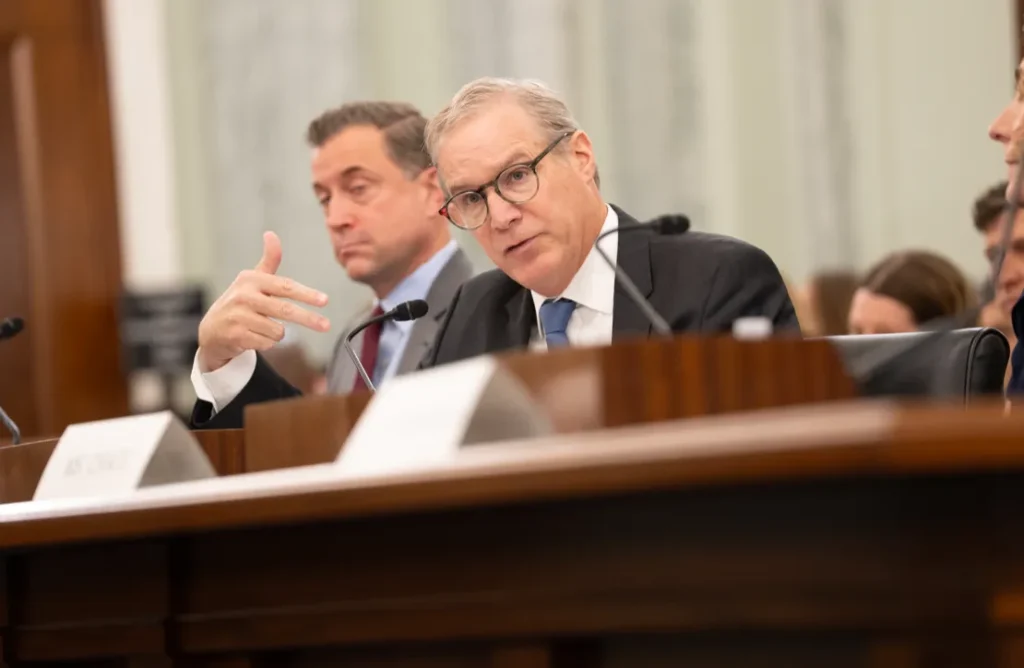
Washington – American Trucking Associations President & CEO Chris Spear testified today before the Senate Commerce Subcommittee on Surface Transportation, Freight, Pipelines, and Safety, urging Congress to support policies that accelerate the deployment of proven technologies, strengthen America’s supply chain, and ensure the United States remains the global leader in transportation innovation.
The hearing, titled “The Need for Speed: How Technological Advances are Driving Transportation Innovation,” was convened by Subcommittee Chairman Todd Young (R-IN), who has emphasized the importance of ensuring America continues to lead in the development and deployment of technologies critical to the nation’s transportation network.
“Trucking moves the vast majority of our nation’s freight, connects manufacturers to markets, keeps store shelves stocked, and delivers essential goods to communities in every state,” Spear told the Subcommittee. “Our industry is already investing billions in technology to create a safer, more modern freight network. Innovation-driven solutions not only improve outcomes but also help lower the prices paid by consumers and businesses alike.”
In his testimony, Spear outlined six policy priorities Congress should advance to help build a safer, more efficient, and more resilient freight network.
First, Spear called on Congress to repeal the 12% federal excise tax on heavy-duty trucks, trailers, and tractors. The century-old tax adds tens of thousands of dollars to the cost of new equipment, discouraging fleet turnover and slowing adoption of the latest technologies. Spear urged lawmakers to support Chairman Young’s Modern, Clean, and Safe Trucks Act, which would remove this outdated barrier and accelerate the deployment of newer, cleaner, and safer equipment nationwide.
Second, Spear emphasized the need to preserve a clear national framework for motor vehicle safety standards by reaffirming the National Highway Traffic Safety Administration’s role as the primary authority over vehicle safety. A fragmented patchwork of state or court-imposed equipment standards, he warned, would create uncertainty for manufacturers, motor carriers, and the broader supply chain.
“Trucking is a national industry, and vehicle standards must remain national as well,” Spear said. “That clarity is essential if companies are going to invest confidently in new technologies and deploy them at scale.”
Third, Spear urged Congress to establish a federal framework for autonomous commercial vehicles. Autonomous systems, he said, hold real promise to enhance safety, improve productivity, and strengthen America’s economic competitiveness, but only if deployment is governed by a clear national strategy. The BUILD America 250 Act would provide needed guidance and help prevent a patchwork of conflicting state rules from stifling innovation.
Fourth, Spear called for technology upgrades and operational improvements at federal agencies to combat the rise of cargo theft and supply chain fraud. Criminal networks are exploiting outdated systems, weak identity controls, and fragmented reporting structures to steal freight, impersonate legitimate carriers, and undermine trust in the supply chain. Spear highlighted Chairman Young’s SAFER Transport Act and the Combating Organized Retail Crime Act as important steps toward strengthening federal tools to detect, deter, and respond to these crimes.
Fifth, Spear urged Congress and regulators to distinguish between technologies that are ready for broad deployment and those that still require additional testing, refinement, and real-world validation. Policymakers should promote proven safety technologies while avoiding mandates for systems that have not yet matured or demonstrated effectiveness in trucking operations.
Finally, Spear warned against proposals that could disrupt existing positioning, navigation, and timing technologies relied on by the freight network. He specifically urged policymakers to reject NextNav’s petition to repurpose the Lower 900 MHz band in a manner that could risk harmful interference with incumbent devices and systems used across logistics, transportation, and critical infrastructure.
“Together, these six steps would send a clear signal: Congress is ready to embrace the technologies of today and tomorrow and help the trucking industry deliver even greater safety, resilience, and economic strength for the American people,” Spear said.
Spear’s testimony comes as Congress prepares to consider the next surface transportation reauthorization and as the trucking industry continues making major private-sector investments in technologies that improve safety, efficiency, environmental performance, and supply chain reliability.
Click here to read Spear’s full testimony.
Washington – Honoring the hard work and commitment of professional technicians, the American Trucking Associations and ATA’s Technology & Maintenance Council will kick off the seventh annual National Technician Appreciation Week on Sunday, June 14. This year’s theme is “Celebrating technicians that keep us moving.”
“Trucking operations run around the clock and cover hundreds of billions of miles to deliver to virtually every home, workplace, and business. Our nation owes enormous gratitude to the hardworking men and women who keep our trucks well maintained and ensure the wheels of our essential industry continue to turn,” said ATA President & CEO Chris Spear. “During National Technician Appreciation Week, we will join Americans from coast to coast in celebrating technicians and thanking them for their knowledge, skill, and attention to detail. Their professionalism and commitment to upholding exacting standards enhance the efficiency of our supply chain and help to keep everyone on the road safe.”
Professional technicians perform one of the most demanding and critical roles in trucking. NTAW acknowledges the extraordinary efforts and talent of these dedicated professionals.
“During National Technician Appreciation Week, we recognize the professional technicians who are indispensable to trucking operations,” said TMC Executive Director Robert Braswell. “By ensuring vehicles are safe and ready for service, technicians make it possible for drivers to deliver the goods we all rely on. This week is an opportunity for both the industry and the public to show their appreciation and thank these professionals for the critical work they do every day.”
For more information on NTAW and to download social media graphics to thank technicians, visit the official NTAW website.
Washington, D.C. – The American Transportation Research Institute (ATRI) today called on motor carriers to participate in its Safety Impacts of In-Cab Monitoringresearch, which will assess how driver-facing cameras (DFCs) can positively impact safety and operational metrics.
Fleets are increasingly adopting in-cab monitoring systems alongside other core safety technologies. In response, ATRI conducted prior research that examined driver perspectives of these systems, with a specific focus on DFCs.
This new study builds upon that work, collecting before and after safety metrics to identify any statistical relationships between deployment of in-cab monitoring systems and improvements in safety outcomes. The research will also map specific carrier and driver strategies for managing in-cab data that improve safety outcomes.
Motor carriers are invited to participate by Friday, July 24, 2026. Data can be submitted online or by PDF at this link. All data will remain confidential and published only in an aggregate format.
Washington – Today, the American Trucking Associations announced that the acclaimed documentary series DRIVEN has been recognized with two major honors, underscoring the campaign’s growing impact in telling the story of America’s trucking industry.
“Jackpot Justice,” the fourth episode in the DRIVEN series produced by Nothing Without Trucking and ACT 1, earned a Silver Award for General Documentary: Short Form (under 40 minutes) and a Bronze Award for General Law & Crime from the Telly Awards. Founded in 1979, the Telly Awards honor work from some of the most respected advertising agencies, television stations, production companies, and publishers from around the world. Each year, the Telly Awards receive over 13,000 entries globally from 6 continents and all 50 states.
“‘Jackpot Justice’ brings national attention to a growing crisis that threatens the safety of our roadways and the livelihoods of hardworking trucking professionals,” said ATA President & CEO Chris Spear. “By elevating these stories, we are helping policymakers and the public understand why a solution is urgently needed.”
The DRIVEN series shines a spotlight on the people and issues shaping trucking today, from the dedication of professional drivers to the policy challenges that impact the movement of goods across the country. Released in March, “Jackpot Justice” focuses on lawsuit abuse that is driving up insurance costs, disrupting supply chains, and ultimately raising prices for American consumers. Specifically, the docuseries’ latest installment exposes an epidemic of staged accidents targeting reputable motor carriers and endangering innocent truck drivers.
The powerful narrative highlights the experience of a third-generation, family-owned trucking business in Louisiana, an ordeal that began when a con artist deliberately crashed into one of their trucks to score a big insurance payout. Eventually, federal investigators unraveled a vast conspiracy involving dozens of “slammers,” “spotters,” and corrupt lawyers who orchestrated numerous operations that targeted multiple companies. In an attempted coverup, a federal witness was killed. The short film follows the victims’ quest to ensure the kingpins of staged accidents are put behind bars.
Since its launch, the Nothing Without Trucking campaign has worked to elevate public understanding of trucking’s essential role in the economy and the industry’s ability to safely and efficiently deliver the nation’s freight.
Learn more about the DRIVEN series and watch “Jackpot Justice” by visiting NothingWithoutTrucking.com.
| onnage Remains above Year Earlier Levels |
| Washington – Trucking activity in the United States contracted 2% in May after decreasing 0.9% in April, according to the American Trucking Associations’ advanced seasonally adjusted For-Hire Truck Tonnage Index. |
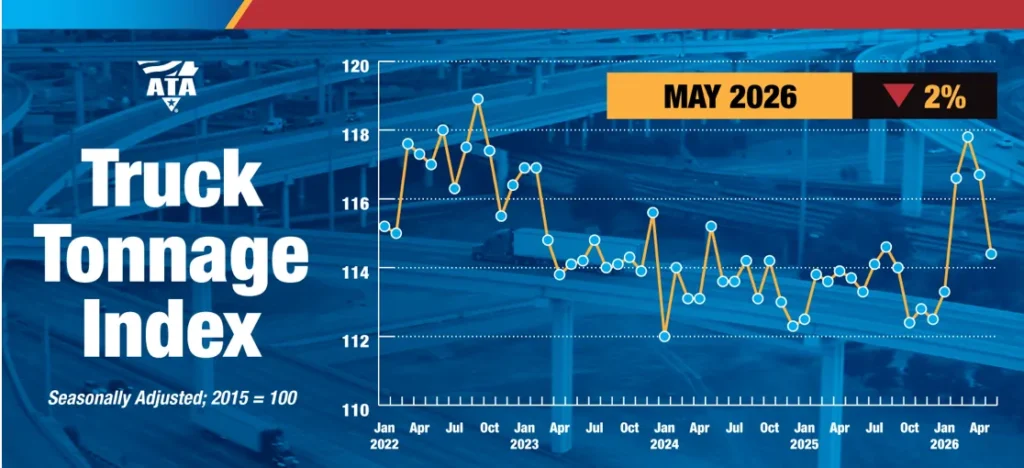
“After a total gain of 4.7% during the first three months of the year, tonnage fell a total of 2.9% during the last two months,” said ATA Chief Economist Bob Costello. “Despite the recent decreases, the index increased from year earlier levels for the sixth straight month, which is pretty good considering the bulk of freight drivers, like manufacturing and construction, remain lackluster.”
In May, the ATA advanced seasonally adjusted For-Hire Truck Tonnage Index equaled 114.4. The index, which is based on 2015 as 100, increased 0.6% from the same month in 2025, down from April’s 2.5% increase. During the first five months of the year, tonnage was up 2% from the same period last year. In 2025, the tonnage index was flat compared to the 2024 average.
April’s reading was revised down from what was first reported in our May 19th press release.
The not seasonally adjusted index, which calculates raw changes in tonnage hauled, equaled 114.8 in May, 0.8% below April’s reading of 115.7.
Trucking serves as a barometer of the U.S. economy, representing 72.7% of tonnage carried by all modes of domestic freight transportation, including manufactured and retail goods. Trucks hauled 11.27 billion tons of freight in 2024.* Motor carriers collected $906 billion, or 76.9% of total revenue earned by all transport modes.
Both indices are dominated by contract freight, as opposed to traditional spot market freight. The tonnage index is calculated on surveys from its membership and has been doing so since the 1970s. This is a preliminary figure and subject to change in the final report issued around the 5th day of each month. The report includes month-to-month and year-over-year results, relevant economic comparisons, and key financial indicators.
| A new $25,000 donation builds on the Trucking Cares Foundation’s ongoing support for this transformational nonprofit |
| Washington – Today, the Trucking Cares Foundation, the trucking industry’s charitable arm, donated $25,000 to the South Dallas Driving Academy (SDDA), a nonprofit that provides free driver education courses to low-income teens and young adults. The contribution builds on the foundation’s longstanding support of the program. The Trucking Cares Foundation initially donated $15,000 in seed funding that helped launch the program in 2021, followed by an additional $20,000 in 2023 and $25,000 in 2024 as part of its ongoing commitment to expanding access to career opportunities in trucking. The inspiration for South Dallas Driving Academy was Germany Williams, a young man who grew up in an impoverished neighborhood, earned his CDL, and changed the trajectory of his life. His story was recently featured in a documentary produced by Nothing Without Trucking. “The South Dallas Driving Academy has been instrumental in removing barriers to rewarding careers in our industry,” said Greg Owen, chairman of the Trucking Cares Foundation and head coach of Ability Tri-Modal. “By equipping individuals from disadvantaged backgrounds with the skills and credentials they need to succeed, SDDA is helping to create opportunity, strengthen communities, and build the next generation of trucking professionals. The Trucking Cares Foundation is proud to continue supporting this life-changing program.” “Our vision has always been to create an on-ramp to opportunity for underserved members of our community,” said Chris Petersen, President of Rally Fleet Services and Chairman of South Dallas Driving Academy. “Thanks to the support of the Trucking Cares Foundation, not only have we been able to serve hundreds of individuals in South Dallas, but we are currently working with community leaders to expand into new markets across Texas and beyond. We are deeply grateful to Greg Owens, the entire TCF Board, Chris Spear, and the American Trucking Associations for their continued support of this important initiative.” “The support of the Trucking Cares Foundation has been catalytic in advancing the mission and impact of the South Dallas Driving Academy,” said Von Minor, President & Executive Director of South Dallas Driving Academy. “Over the past year, we have seen 20 men and women graduate from our commercial driver’s license program and launch into living-wage career opportunities as professional drivers. The Trucking Cares Foundation’s support is helping to dismantle generational poverty one driver at a time, allowing our programs to truly drive lives forward.” Nearly 40% of low-income individuals in urban areas in the United States—and nearly half in South Dallas—lack a valid driver’s license, often due to limited access to affordable driver education. The South Dallas Driving Academy addresses this challenge by offering a dual-track training program that enables participants to obtain their driver’s license and prepare for careers in transportation. The only program of its kind, SDDA is offered at no cost to Bonton and South Dallas residents with a student course completion and program graduation rate of 90%. |