UPCOMING EVENTS
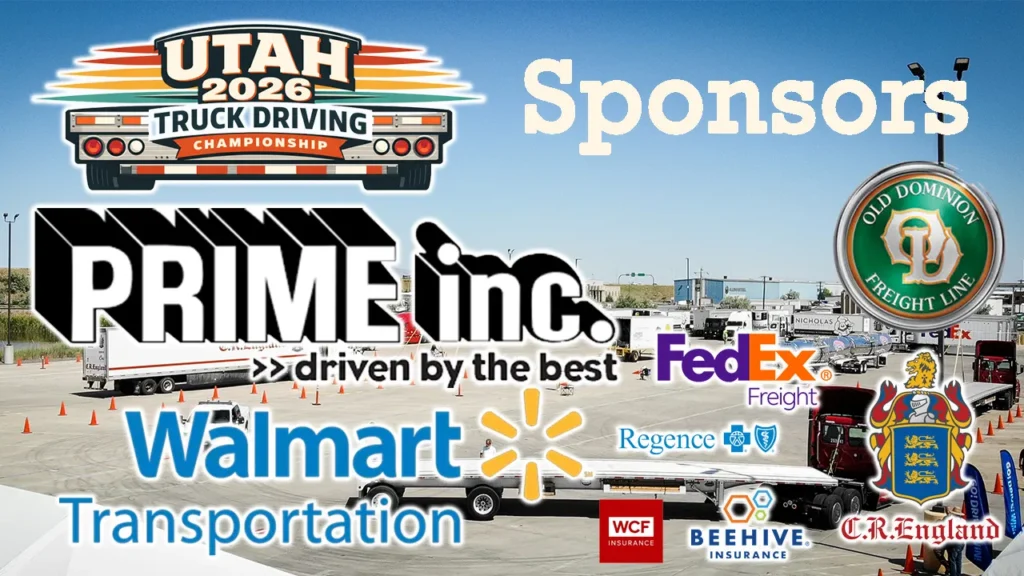
- June 5th – 6th, 2026 – 2026 Utah Truck Driving Championship (Registration Closed)
- June 11th, 2026 – Drug & Alcohol for Safety Supervisors Seminar (Registration Open Soon)
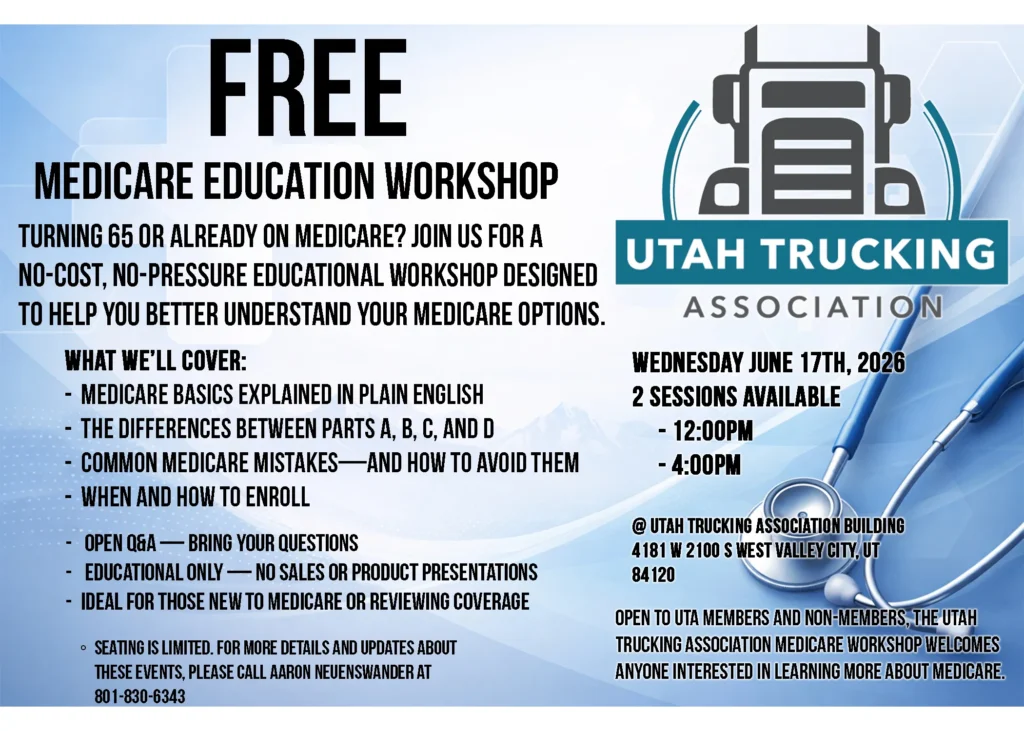
- June 17th, 2026 – Free Medicare Workshop
- August 6th – 7th, 2026 – 2026 Rocky Mountain Regional Safety Rendezvous
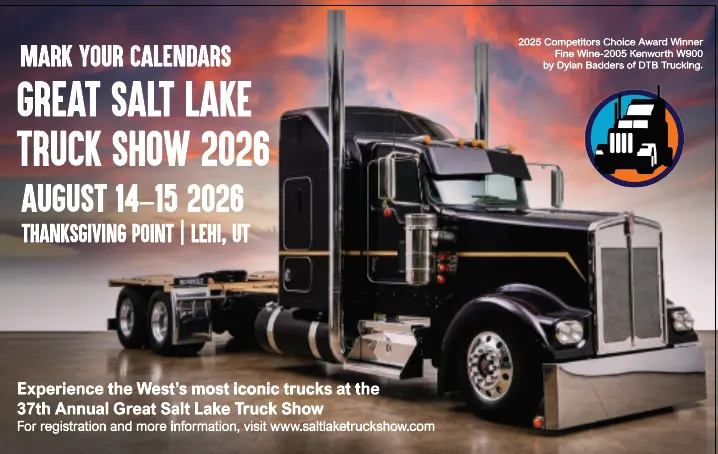
- August 14th – 15th, 2026 – Great Salt Lake Truck Show
Announcements

Events:

AMAROK is hosting an upcoming virtual event as part of our ROKtalks series on June 4: “Landscaping Security Trends: Protecting Your Yard, Fleet & Equipment”
This session is focused on the growing theft and security challenges impacting landscaping businesses and other businesses that store valuable equipment, vehicles, or assets outdoors.

2026 Rocky Mountain Regional Safety Rendezvous
August 6th – 7th, 2026 Coeur d’Alene Idaho

Resources:


Truckin Hot News:
Washington – Trucking activity in the United States jumped in February, pushing tonnage levels to the highest point in three years. Specifically, truck freight tonnage increased 2.6% after gaining 0.7% in January, according to the American Trucking Associations’ advanced seasonally adjusted For-Hire Truck Tonnage Index.
“February’s robust gain is great to see, but the size of the gain is likely magnified due to lower industry capacity,” said ATA Chief Economist Bob Costello. “With that said, particularly after a very prolonged freight recession, improving volumes in any manner is welcomed.”
In February, the ATA advanced seasonally adjusted For-Hire Truck Tonnage Index equaled 116.2, up from 113.3 in January. The index, which is based on 2015 as 100, increased 2.1% from the same month in 2025, the largest year-over-year gain since October 2022. During the first two months of the year, tonnage was up 1.4% from the same period last year. In 2025, the tonnage index was flat compared to the 2024 average.
January’s SA increase was revised up slightly from what was first reported in our February 24 press release.
The not seasonally adjusted index, which calculates raw changes in tonnage hauled, equaled 106.9 in February, 1.5% below January’s reading of 108.5.
Trucking serves as a barometer of the U.S. economy, representing 72.7% of tonnage carried by all modes of domestic freight transportation, including manufactured and retail goods. Trucks hauled 11.27 billion tons of freight in 2024. Motor carriers collected $906 billion, or 76.9% of total revenue earned by all transport modes.
Both indices are dominated by contract freight, as opposed to traditional spot market freight. The tonnage index is calculated on surveys from its membership and has been doing so since the 1970s. This is a preliminary figure and subject to change in the final report issued around the 5th day of each month. The report includes month-to-month and year-over-year results, relevant economic comparisons, and key financial indicators.
* 2024 estimates include fecasts.
Washington, DC – The American Transportation Research Institute today issued a reminder that recruitment of candidates for the 2027-2028 Research Advisory Committee (RAC) will close May 15. ATRI RAC members represent a diverse cross-section of the trucking industry, including motor carriers, industry suppliers, professional truck drivers, government and academia.
RAC members are required to participate in one in-person meeting annually and actively engage in ATRI’s research studies throughout the year. This includes serving on subcommittees working directly with ATRI researchers to develop research methodologies and data collection tools. RAC member responsibilities also include providing data for ATRI research initiatives and promoting ATRI’s research findings.
Interested individuals are encouraged to submit an online application, detailing your interest in serving and your unique industry background that best positions you to serve on ATRI’s RAC. The ATRI Board of Directors will appoint members to the 2027-2028 RAC when they meet later this year.
The online application is available now and also allows you to nominate an industry colleague for consideration. The application will remain open through Friday, May 15, 2026.
Making Our Roads Safer for Everyone
When a commercial vehicle is stopped on the side of the road, warning nearby drivers is critical. For decades, federal regulations have required operators to exit the vehicle and place reflective triangles behind the stopped truck. Doing so is dangerous for drivers who must step out onto busy roads, and not possible for autonomous trucks operating without anyone in the cab.
The Federal Motor Carrier Safety Administration (FMCSA) is accepting public comments on a petition for a five-year exemption allowing Level 4 autonomous trucks to use cab-mounted warning beacons in place of placed warning triangles. Cab-mounted beacons provide continuous visibility that exceed the safety of warning triangles and do so without requiring anyone to stand close to traffic. The petition being considered by FMCSA is a common-sense solution that promotes safer roads and modernizes regulations.
The comment period closes May 15. Submit your comment at regulations.gov and let FMCSA know you support smart, technology-forward safety policy.
Washington — The American Trucking Associations joined a broad coalition of freight, retail, and manufacturing stakeholders to pressure the U.S. Department of Justice to implement congressionally mandated measures to counter a sharp rise in cargo theft and organized retail crime.
Cargo theft is becoming increasingly prevalent and high-tech, costing the trucking industry over $18 million per day. In response, Congress passed an appropriations bill in January with a provision championed by ATA that directed DOJ to begin the process of establishing a unified, federal response to cargo theft; however, the Department has already missed the first deadline set by the new law.
As incidents of cargo theft accelerate, industry groups are calling for accountability and adherence to statutory language. In a letter sent to Acting Attorney General Todd Blanche, two dozen organizations, including ATA, urged DOJ to swiftly deploy new resources to close enforcement gaps, improve coordination, and deter criminal enterprises from exploiting the U.S. supply chain.
“Cargo theft and [organized retail crime] have escalated dramatically in recent years, affecting freight rail, trucking, retailers, and the broader U.S. economy. These crimes are not isolated or opportunistic, but are increasingly conducted by organized, sophisticated criminal networks operating across state and national borders,” the stakeholders wrote. “Through the resale of stolen goods and related monetization schemes, these criminal rings often engage in broader illicit activities, including drug trafficking, money laundering, and terrorism.”
“We strongly urge the Department to move swiftly to implement the FY2026 funding and to establish this critical enforcement capacity without delay,” the stakeholders continued. “The continued rise in cargo theft, [organized retail crime], and gift card fraud presents a growing threat to workers, consumers, the movement of essential goods, and the broader American economy.”
Congress’ directive to DOJ was included in the FY2026 Commerce, Justice, Science, and Related Agencies (CJS) Appropriations Act, which was enacted 96 days ago. The law specified that DOJ must:
- Submit a report within 90 days that identifies U.S. Attorneys’ Offices with the highest rates of crime involving cargo theft and directs those offices to assign at least one additional attorney to these cases.
- Provide a briefing within 120 days on plans to establish regional task forces to investigate and refer cargo theft cases for prosecution.
The coalition’s letter underscores DOJ’s failure to meet the initial reporting deadline and urges the Department to comply with Congress’ timeline by delivering the required report and briefing without further delay.
Click here to read the letter.
ATA is a leading champion of efforts to put a stop to proliferating cargo theft. The Federation endorsed the Combating Organized Retail Crime Act, which would help law enforcement target organized crime rings by enhancing legal frameworks; improving enforcement capabilities; and fostering coordination among federal, state, and local agencies. The legislation passed the House Judiciary Committee unanimously and is expected to be considered by the full House next month.
ATA members have also served as key witnesses at multiple congressional hearings on this topic. Most recently, ATA President & CEO Chris Spear testified before a House Judiciary Subcommittee.
ates the forward-thinking, principled approach that keeps our industry strong and sets a standard for others to follow.”
Washington — The American Trucking Associations and ATA Moving and Storage Conference are marking National Moving Month and the start of peak moving season by sharing tips to help consumers select a reputable mover and avoid potential scams. More than two million Americans move between states between May and September.
“For the millions of Americans who relocate each year, moving can be a time of high anxiety. Fortunately, there are more than 8,000 professional movers nationwide who have the expertise needed to help get their household goods where they need to go. Choosing a reputable moving company is the best way families can ensure a stress-free process,” said ATA’s Moving and Storage Executive Director Dan Hilton. “During National Moving Month, we recognize the hardworking and dedicated individuals who handle their customers’ possessions with the utmost care.”
“While it can be tempting to move ‘on the cheap,’ this can lead to a costly mistake. Criminal networks are becoming more sophisticated and organized to prey on the stress that a move can often create, enabling unsuspecting consumers to be taken advantage of and defrauded,” Hilton continued. “Consumers should always contact at least three moving companies, get estimates based on in-person or virtual surveys instead of a phone call, and be wary of ultra-low or ‘too-good-to-be-true’ estimates. Additionally, ATA’s Moving and Storage Conference is urging policymakers to pass legislation to crack down on rogue operators who do shoddy work, rip off customers, or hold goods hostage.”
Every year, thousands of complaints are filed with the Federal Motor Carrier Safety Administration’s National Consumer Complaint Database against disreputable movers. To help root out bad actors, ATA’s Moving and Storage Conference endorsed the Household Goods Shipping Consumer Protection Act, which would strengthen penalties and protect consumers.
ATA-MSC is also working to advance a number of commonsense consumer protection provisions in the next round of Surface Transportation Reauthorization. Those include: 1) Creating an industry working group with the FMCSA to help them identify the latest trends in moving fraud, 2) Improving the SAFER website that consumers use to identify vital moving company information, 3) Cracking down on name-spoofing, a tactic long used by rogue operators to deceive consumers into thinking their companies are legitimate agents of America’s major van lines, and 4) Making improvements to broker registration.
“It is vital that we do more to require every participant in the moving industry to register their fleets and restore the public’s trust which too often has been lost,” said Hilton.
While most professional movers are conscientious and dependable, following the “3 Rs” can help ensure a successful move:
- Recognize the qualities of a reputable mover and the difference between a mover and a broker;
- Research the moving companies you are considering and only use registered movers;
- Read key documents from the U.S. Department of Transportation and all information provided by your mover.
In addition to the “3 Rs,” consumers should visit moving.org, where they can explore movers in their area.
To help ensure a successful move, here are some additional tips consumers can follow:
Get at least three in-home estimates. Reputable movers will want to see your home and your goods before telling you the cost of a move, just like a professional contractor will want to see your home before estimating the cost of a project.
Research your moving companies. Interstate movers must be registered with the U.S. Department of Transportation and have a DOT Number and the correct operating authorities. You can look them up at ProtectYourMove.gov.
Know your rights and obligations as a consumer. For interstate moves, moving companies must provide you with two documents: “Ready to Move?” and “Your Rights and Responsibilities When You Move.” Read these documents thoroughly and ask questions if there is something you do not understand.
Avoid large down payments. While some movers may ask for a small deposit to hold a date, any company who asks for large deposits or full payment upfront – especially in cash or through a service such as Venmo – should be avoided.
Read all paperwork and never sign a blank document. Professional movers ensure that all agreements between you and the mover are in writing. Keep copies of all paperwork (either as printouts or saved PDFs) for future reference, especially your bill of lading, which is the contract between you and your mover.
Understand the difference between a mover and a broker. Brokers will book your move and then sell it to a different company to do the actual move. Be wary that many scam companies operate as Internet-only brokers without proper DOT registration – if you cannot find them on ProtectYourMove.gov, this is a red flag.
Consider liability options and valuation. Know how much your goods are worth and make an informed choice of liability protections when booking your move. What you select will determine what the mover will be responsible for in case of loss or damage. Always take valuable documents and other items with you.
Ask questions. Any reputable moving company knows that moving, while exciting, can also be challenging, and they are happy to assist in any way possible. If a company is unhelpful or refuses to answer questions or take time to alleviate your concerns, look for a different company that is more willing to assist.
Fees for the Unified Carrier Registration Plan and Agreement
Today, FMCSA extended the comment period for its notice of proposed rulemaking (NPRM), titled “Fees for the Unified Carrier Registration Plan and Agreement,” from May 7, 2026, to May 26, 2026. The purpose of the comment extension is to provide an opportunity for the public to access the supporting documentation regarding fee calculations for the 2027 registration year. Comments must be received on or before May 26, 2026. The link to the Federal Register notice can be found here: https://www.federalregister.gov/documents/2026/05/01/2026-08498/fees-for-the-unified-carrier-registration-plan-and-agreement.
Washington — Today, the American Trucking Associations applauded the Trump Administration for taking a critical step towards unlocking advanced drug testing methodologies in safety sensitive industries.
A proposed rule by the U.S. Food and Drug Administration would eliminate the 510(k) clearance requirement, which served as the primary obstacle for labs seeking certification to perform oral fluid testing despite its approval for regulated use over three years ago. The proposal also paves the way for a wider modernization of federal drug testing, from incorporating additional methods like hair testing to strengthening the nation’s capacity to react quickly to emerging drug threats, such as fentanyl and synthetic cannabinoids.
This breakthrough came after six Members of Congress sent a letter at ATA’s request to the U.S. Department of Health and Human Services. Reps. Andy Harris (R-MD), Ben Cline (R-VA), Pete Sessions (R-TX), Mike Bost (R-IL), Mike Collins (R-GA), and Claudia Tenney (R-NY) urged HHS Secretary Robert F. Kennedy Jr. to reform the nation’s drug testing programs.
“Trucking relies on a strong federal drug testing program to protect public safety and ensure that impaired individuals are not operating commercial motor vehicles,” said ATA President & CEO Chris Spear. “Following years of advocacy focused on cutting red tape, ATA is pleased that FDA has finally created a pathway to implement oral fluid testing. This major development also lays the groundwork for the eventual adoption of hair testing. Empowering employers with these tools will make drug testing more accurate, more cheat-resistant, and less invasive. The end result will be a stronger trucking workforce and safer roads for everyone.”
For well over a decade, ATA has warned that the federal government’s overreliance on urine testing has created dangerous gaps in the system—including widespread drug test “cheating.” According to an analysis of Quest Diagnostics data, substituted and invalid urine specimens increased by more than 370% and 36%, respectively, between 2022 and 2023 among federally regulated, safety-sensitive employees—a troubling trend that underscores how vulnerable the current system has become.
As directly observed methods, oral fluid and hair testing are less susceptible to substitutions or tampering. Additionally, hair testing offers a longer detection window, providing a more complete picture of past drug use. Access to these testing methods ensures motor carriers have the most effective, robust toolboxes when it comes to understanding potential patterns of drug and alcohol use and safety hazards, yet for years, their adoption has been stalled by needless bureaucratic delays.
Oral fluid testing was approved for regulated use in 2023, yet no U.S. laboratory has been able to obtain certification due to the 510(k) clearance process. The 510(k) requirement also risked further delaying the adoption of hair testing once HHS issues its guidance.
The comment window for FDA’s proposed rule is open for the next 60 days. ATA plans to submit comments in support of removing the 510(k) requirement and is encouraging other safety stakeholders to do the same via regulations.gov.

Washington — Today, in response to proposals to suspend the gas tax, the American Trucking Associations, Truckload Carriers Association, and National Tank Truck Carriers released this statement:
“We understand and appreciate the desire to provide relief to Americans facing higher fuel costs. However, history shows that gas tax holidays deliver negligible benefit to consumers. Because the tax is collected at the wholesale level and not at the retail pump, most savings never reach the consumer. While the average motorist pays about $1.63 per week in federal fuel taxes, a suspension would translate into only about 30 cents in weekly savings.
“Without replacement funds, fuel tax revenues supporting critical investments in highway safety and infrastructure projects would evaporate, hindering the safe and efficient movement of people and goods across the country.
“America’s highways are truckers’ shop floor. While trucks are only four percent of vehicles on the road, the trucking industry covers nearly half of all Highway Trust Fund revenue. We look forward to working with members of Congress on solutions that deliver meaningful relief to consumers while preserving the long-term integrity of our transportation system.”
Washington — Today, the American Trucking Associations applauded the U.S. House of Representatives for voting to pass the Combating Organized Retail Crime Act (CORCA).
CORCA is bipartisan legislation that would establish a unified, federal response to the growing threat of cargo theft perpetrated by criminals who often operate across state and international borders. The bill now heads to the Senate for consideration before being sent to the President to be signed into law.
This major development is the result of months of advocacy led by ATA, including multiple congressional hearings where members of the Federation served as key witnesses. Most recently, ATA President & CEO Chris Spear testified before a House Judiciary Subcommittee to urge lawmakers to support CORCA. Shortly after that hearing, the House Judiciary Committee passed the bill unanimously. Additionally, Spear met directly with the sponsors of CORCA and leadership in both the House and Senate to convey ATA’s support for the bill and develop a strategy to get it across the finish line.
“The House’s passage of CORCA represents a pivotal moment in ATA’s fight to protect drivers, freight, and the integrity of our supply chain,” said ATA President & CEO Chris Spear. “Cargo thieves are stealing $18 million every day from the trucking industry, and motor carriers and consumers pay the price. CORCA will give our industry and law enforcement the tools we need to fight back against highly organized, technologically advanced cargo theft rings, which are often orchestrated by transnational criminal groups. Reps. David Joyce and Susie Lee deserve enormous credit for their bipartisan leadership of this critical legislation, and we thank their colleagues for voting in support.”
Cargo theft is becoming increasingly prevalent and high-tech, and it often originates overseas. The American Transportation Research Institute calculated that cargo theft is costing the trucking industry over $18 million per day. Strategic theft, a category of crime that uses deception, identity theft, and fraudulent documentation to divert freight, has surged by 1,500% since 2021 according to CargoNet. Ninety percent of motor carriers are small businesses operating 10 trucks or fewer, and they are under enormous strain to counter these technologically advanced adversaries. The transnational aspect of cargo theft also poses a national security threat. The proceeds from stolen goods finance other criminal activities, including drug trafficking, organized crime, and even potentially terrorism.
Introduced by a bipartisan, bicameral group of lawmakers last year and now cosponsored by approximately half of both the House and Senate, CORCA would help law enforcement connect the dots by enhancing legal frameworks; improving enforcement capabilities; and fostering coordination among federal, state, and local agencies. The Department of Homeland Security would be tasked with leading a cohesive national response to cargo theft.
As part of a coalition of nearly 100 stakeholders representing every facet of the supply chain, ATA wrote to congressional leaders last November to urge them to prioritize CORCA. In addition, ATA’s Law Enforcement Advisory Board endorsed CORCA and called on House leadership to schedule a vote.
Washington, DC – With federal law prohibiting the use of foreign B-1 visa-holding truck drivers from engaging in point-to-point service while operating in the U.S., ATRI’s Research Advisory Committee identified research to assess the scale and impact of cabotage activities in the U.S. as a top priority.
While B-1 visa-holders are generally allowed to make one pick-up or delivery in the U.S., anecdotal evidence indicates that some foreign truck drivers actively conduct new business throughout the U.S. and beyond the border commercial zones.
ATRI’s cabotage research includes a trucking industry survey that asks truck drivers and motor carriers to provide input on when and where this illegal activity is most often observed. The survey findings will help develop an economic model that will calculate the real costs and impacts that cabotage has on U.S. truck drivers and truck fleets.
“Cabotage laws were created to protect U.S. jobs and ensure that a level playing field exists,” noted Kaitlyn Holmecki, American Trucking Associations’ Director of International Policy. “When illegal low-cost transportation services undercut domestic freight operations, the entire trucking industry pays the price.”
All survey responses will be kept strictly confidential and used only in summary statistics.
The survey can be found here: https://www.research.net/r/MC-Cabotage-Survey and will remain open through Friday, June 12, 2026.
Washington — The American Trucking Associations applauded the House Appropriations Committee for passing the fiscal year 2027 Commerce, Justice, Science, and Related Agencies funding bill, which would begin the process of establishing a unified, federal response to cargo theft. The legislation, which must now be considered by the full House, would require the U.S. Department of Justice to step up its enforcement of cargo theft cases as well as make a $4 million down payment to prosecute these crimes.
This initiative would complement the comprehensive framework created by the Combating Organized Retail Crime Act that has been endorsed by ATA and passed the House earlier this week. Together, the FY27 CJS appropriations bill and CORCA would help counter the sharp rise in cargo theft and broader supply chain fraud, addressing one of ATA’s top strategic priorities.
“America’s trucking industry delivers billions of tons of goods to every community, and those essential shipments have increasingly become prime targets for organized crime, putting truck drivers at risk and raising costs for consumers,” said ATA Chief Advocacy & Public Affairs Officer Henry Hanscom. “ATA commends the House Appropriations Committee for directing DOJ to leverage its enforcement capabilities to pursue criminals operating across borders. This directive and funding will strengthen the partnership between the government, law enforcement, motor carriers, and our supply chain partners to strike an effective blow against these organized theft groups.”
The bill includes report language championed by ATA that would:
- Direct DOJ to provide a briefing within 120 days on plans to establish regional task forces, led by the FBI and in partnership with HSI; TSA; USDOT; and federal, state, and local law enforcement to investigate and refer cases for prosecution. The bill allocates $2 million to support the establishment of these task forces.
- Direct the Executive Office of U.S. Attorneys to submit a report within 90 days that identifies U.S. Attorneys’ Offices (USAOs) with the highest rates of crime involving cargo theft and directs those USAOs to assign at least one additional attorney to cargo theft prosecutions. The bill allocates an additional $2 million for this purpose.
ATA secured similar provisions in FY26 and recently joined a coalition to pressure DOJ to implement this congressional mandate.
Cargo theft is becoming increasingly prevalent and high-tech, and it often originates overseas. The American Transportation Research Institute calculated that cargo theft is costing the trucking industry over $18 million per day. Strategic theft, a category of crime that uses deception, identity theft, and fraudulent documentation to divert freight, has surged by 1,500% since 2021 according to CargoNet. Ninety percent of motor carriers are small businesses operating 10 trucks or fewer, and they are under enormous strain to counter these technologically advanced adversaries. The transnational aspect of cargo theft also poses a national security threat. The proceeds from stolen goods finance other criminal activities, including drug trafficking, organized crime, and even potentially terrorism.
Washington — Today, in response to the House Transportation & Infrastructure Committee unveiling the BUILD America 250 Act, legislation to reauthorize the nation’s surface transportation programs, American Trucking Associations President & CEO Chris Spear issued the following statement:
“ATA commends Chairman Graves, Ranking Member Larsen, and members of the House T&I Committee for putting forward a visionary five-year plan to invest $580 billion to modernize and revitalize the nation’s infrastructure.
“Since last January, ATA has testified multiple times on Capitol Hill and met with key lawmakers on both sides of the aisle to lay the groundwork for the surface transportation bill. We are pleased to see that many of the trucking industry’s priorities have been included in the base text.
“Every American benefits from a modern, safe, and efficient transportation network. It is even more essential to the 3.6 million truck drivers who are indispensable to our way of life. Roads and bridges are their shop floor.
“The highway bill has always been a bipartisan product, and it is encouraging to see Republicans and Democrats coming together prior to the September 30th deadline to expand truck parking, enforce safety rules, and take additional steps that will strengthen our industry. ATA is committed to being a constructive partner throughout the legislative process and will continue to work with Chairman Graves and Ranking Member Larsen to build a 21st century supply chain that can meet our economy’s needs over the long term.”
ATA has been deeply engaged throughout the consideration of the surface transportation reauthorization bill, including through testimony before the House T&I Committee and a record-setting Call on Washington season during the 119th Congress.
Some key wins secured by ATA as a result of this advocacy include:
- Robust investment in roads and bridges: $580 billion for our nation’s infrastructure is tangible proof that Congress understands how important the supply chain is. This investment will help make our roads safer for drivers, help get goods to market faster, and keep our economy moving.
- Truck Parking: $750 million over the next five years for the construction of new truck parking and conversion of existing property into additional parking spaces is a tremendous win. Drivers work to comply with federal regulations like hours of service requirements but are often forced to park in illegal and unsafe locations due to a lack of dedicated truck parking. This funding will help keep drivers, and the motoring public, more safe.
- Prevent Bridge Strikes: Including the Bridges Not Bumpers Act creates a DOT working group to develop best practices to reduce instances of bridge strikes.
- Bathroom Access: Including the bipartisan Trucker Bathroom Access Act helps give drivers the dignity they deserve when they are working. Drivers servicing shippers and receivers should not be denied access to bathroom facilities, and this language makes sure they won’t be.
- Extension of Safe Driver Apprenticeship Program: ATA was supportive of this program when it was included in IIJA, and we wholeheartedly endorse its extension. Building a pathway for 18-to-20-year-olds to enter the industry is essential to meeting the demand for safe and qualified drivers today and in the future.
- Household Goods: The inclusion of the Household Goods Shipping Consumer Protection Act is a win for both consumers and the moving and storage industry. This bipartisan bill helps consumers find reputable moving and storage companies and avoid being scammed, while also helping those same companies protect themselves from bad actors that steal their company name in order to commit fraud.
- Autonomous Vehicles: ATA has been a strong voice calling for a national framework for autonomous commercial vehicles. This legislation directs DOT to create performance-based safety requirements, ensuring that adoption of AVs is done with safety at the forefront.
- Electric Vehicle Fees: For too long, electric vehicles have not paid their fair share into the Highway Trust Fund as a result of not paying the federal fuel tax. This legislation takes an important step in making sure that funding that goes into the Trust Fund is done on an equitable basis with all road users paying for maintenance and upkeep of our highways.
- Axle Weight Tolerance: The billincludes the bipartisan VARIANCE Act. This language allows for a 10% axle weight enforcement tolerance for dry bulk vehicles, accounting for load distribution changes when the vehicle brakes and accelerates. This commonsense language will improve the efficiency of dry bulk carriers across the country.
- Connecting Veterans with Trucking Jobs: The bipartisan TRANSPORT Jobs Act is included in this legislation, directing federal agencies to develop a plan to address barriers in transportation and supply chain occupations for separating and retiring service members.
- Closing the Front Door to Bad Actors: Directs an important review of the FMCSA New Entrant Safety Assurance program, which will help Congress and the agency make reforms to ensure that only safe trucking companies enter the industry.
- Cleaning Up CDL Schools: The bill includes language directing FMCSA to remove noncompliant training providers from the Training Provider Registry within 90 days. This language will help ensure that people working to get their CDL are receiving the training necessary to operate in a safe fashion.
- Access to Performance History Data: The bill includes the Motor Carrier Safety Screening Modernization Act, which allows motor carriers to access safety records for prospective and current drivers. Inclusion of this language gives carriers better oversight of driver records to make sure safety is accounted for.
- Cargo Theft: Building on recent successes in combating supply chain theft and fraud, ATA supports language in the bill creating a Cargo Theft Advisory Committee. This Committee will provide recommendations to DOT on ways to prevent these crimes.
ATA will monitor amendments introduced for consideration during the markup scheduled for Thursday to ensure that the bill retains its pro-trucking provisions.
Washington, D.C. – The American Transportation Research Institute (ATRI) today released new research detailing the rising costs of commercial auto liability insurance in the trucking industry and the risk management strategies that motor carriers use to mitigate these costs.
From 2021 to 2024, liability insurance premium costs rose by 18.6 percent to 10.2 cents per mile – outpacing consumer inflation by 5.4 percentage points – at the same time that heavy-duty truck-involved crash rates fell by 2.6 percent industry-wide. The research confirms that a sharp rise in crash claims expenses fueled this rise in insurance costs: among respondents, per-mile liability losses rose by an average of 33.1 percent over the same period.
Premium costs for excess coverage in particular rose at an even higher rate. From 2021 to 2024, per-mile premium costs for the $5-10 million insurance layer rose by 34 percent to 1.58 cents, and per-mile premium costs for the $10-15 million layer rose by 45 percent to 1.05 cents. These increases in excess coverage expenses point to the role of rampant litigation in inflating claims costs.
Several risk management approaches did yield positive outcomes during this period, however. Fleets with more retained risk in their primary coverage layer experienced lower combined liability losses and premium costs during this period, regardless of size. Furthermore, fleets that reduced total purchased coverage experienced an average reduction of 2.4 percent in combined liability losses and premium costs in the subsequent year when adjusted for inflation. These outcomes can be attributed to a combination of premium reductions and aggressive implementation of safety strategies by fleets. For example, the deployment of six safety technologies had a statistically significant correlation with lower per-mile liability losses.
The report includes a variety of additional benchmarks for fleets to evaluate trends and assess their own risk management approach, such as coverage limits, percent of revenue spent on insurance, and deductible or self-insurance levels by fleet size.
“ATRI’s report gives us invaluable visibility on the changing liability insurance landscape and how fleets are navigating it,” said Lynette Woodie, ArcBest Manager of Loss Prevention and Administration. “Good fleets don’t just react passively to rate increases each year: they take the initiative by analyzing data and working closely with their insurers to craft a holistic risk management plan that improves safety and reduces costs.”
The full report is available on ATRI’s website here.
Washington – Trucking activity in the United States remained unchanged in April after increasing 1% in March, according to the American Trucking Associations’ advanced seasonally adjusted For-Hire Truck Tonnage Index.
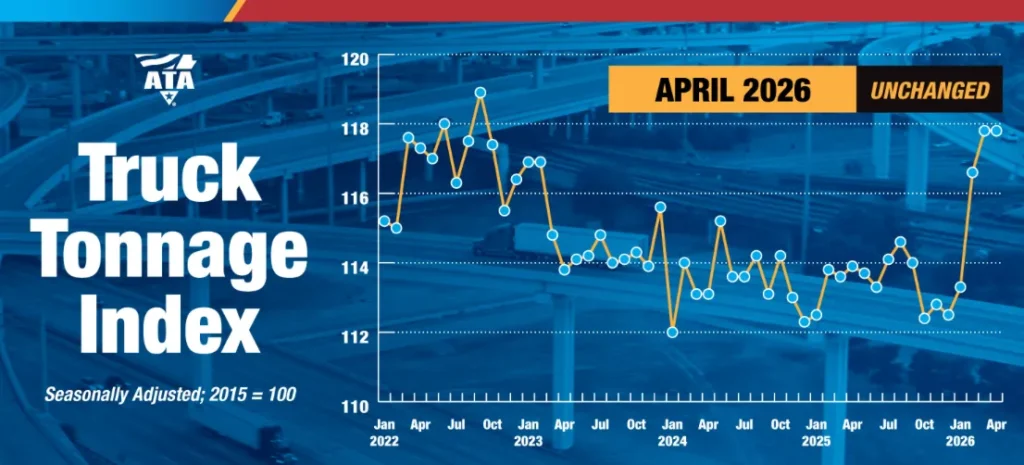
“April’s unchanged tonnage level is more impressive when considering that the index increased a total of 4.7% since the end of 2025 and hasn’t decreased so far in 2026,” said ATA Chief Economist Bob Costello. “The index is back to levels last seen during the fall of 2022.”
In April, the ATA advanced seasonally adjusted For-Hire Truck Tonnage Index equaled 117.8. The index, which is based on 2015 as 100, increased 3.5% from the same month in 2025, down slightly from March’s 3.7% increase. During the first four months of the year, tonnage was up 2.6% from the same period last year. In 2025, the tonnage index was flat compared to the 2024 average.
March’s SA increase was revised up slightly from what was first reported in our April 21 press release.
The not seasonally adjusted index, which calculates raw changes in tonnage hauled, equaled 116.8 in April, 3.4% below March’s reading of 120.9.
Trucking serves as a barometer of the U.S. economy, representing 72.7% of tonnage carried by all modes of domestic freight transportation, including manufactured and retail goods. Trucks hauled 11.27 billion tons of freight in 2024.* Motor carriers collected $906 billion, or 76.9% of total revenue earned by all transport modes.
Both indices are dominated by contract freight, as opposed to traditional spot market freight. The tonnage index is calculated on surveys from its membership and has been doing so since the 1970s. This is a preliminary figure and subject to change in the final report issued around the 5th day of each month. The report includes month-to-month and year-over-year results, relevant economic comparisons, and key financial indicators.
* 2024 estimates include forecasts.
Washington — Today, the American Trucking Associations congratulated Representatives Chris Pappas (D-NH) and Jen Kiggans (R-VA) on the House passing the Veterans’ Transition to Trucking Act, legislation they authored that would cut red tape for veteran truckers seeking to build careers in the trucking industry.
“Members of our military put their lives on the line to defend our nation and our freedom. When they return home, it is our responsibility to help them achieve the American Dream they fought to protect,” said American Trucking Associations Chief Advocacy & Public Affairs Officer Henry Hanscom. “By slashing bureaucratic red tape for VA education benefits, the Veterans’ Transition to Trucking Act would expand career paths in trucking. ATA commends Representatives Pappas and Kiggans for their bipartisan leadership on this commonsense bill that would make it easier for veterans to find good-paying jobs behind the wheel.”
In December, Greg Hamm, Vice President of Field and Government Recruiting for ATA member Werner Enterprises, testified before a House Veterans’ Affairs Subcommittee. He expressed support for policies—including the Veterans’ Transition to Trucking Act—that would expand training access and eliminate bureaucratic barriers that arbitrarily limit veterans’ career prospects in trucking. A U.S. Army veteran himself, Hamm underscored the vital role veterans play in strengthening America’s supply chain.
Nearly 200,000 service members separate from the military each year, and many possess the discipline, technical expertise, and leadership qualities that translate seamlessly into transportation careers.
Current federal policy requires interstate trucking companies to secure approval from every state in which they operate before veterans can use their VA education benefits to participate in company-sponsored apprenticeship programs. This could mean that a company needs dozens of approvals to bring veterans into their apprenticeship program, which has discouraged some motor carriers from offering these opportunities.
The Veterans’ Transition to Trucking Act would streamline this process by allowing interstate trucking companies to obtain a single approval from the VA for all apprenticeship programs nationwide. By cutting unnecessary red tape and simplifying oversight, the legislation would make it easier for motor carriers to expand apprenticeship offerings and help more veterans transition into rewarding careers as professional truck drivers.
Washington – The American Trucking Associations praised the inclusion of $200 million for truck parking in the fiscal year 2027 funding bill passed by the House Transportation, Housing and Urban Development, and Related Agencies Appropriations Subcommittee today. The measure now heads to the full House Appropriations Committee for a vote scheduled on June 4.
Subcommittee Chairman Rep. Steve Womack (R-AR) played a key role in advancing the truck parking funding, an issue of critical importance to the trucking industry that will bolster the nation’s supply chain. ATA anticipates additional progress on priorities such as combatting cargo theft and enhancing highway safety as the appropriations process moves forward in June.
“The severe parking shortage means that truck drivers are forced to waste a significant portion of their day searching for a safe place to pull over, putting enormous strain on them and the supply chain, and creating serious safety risks on our roads,” said ATA President & CEO Chris Spear. “Truckers keep our economy moving, and we owe it to them to ensure they have safe, reliable places to rest during federally mandated breaks or at the end of their shifts. We are especially grateful to Chairman Womack for his leadership in securing this vital funding, and we thank the subcommittee for making this investment a priority.”
“Congressman Womack’s leadership on critical issues like truck parking reflects a deep understanding of the challenges facing the men and women who keep America’s economy moving,” said Arkansas Trucking Association President Shannon Newton. “Trucking supports one in every 10 jobs in Arkansas, and our state serves as a vital crossroads for interstate commerce. From I-30 to I-40 and I-55, Arkansas plays an outsized role in moving the nation’s freight. We are grateful for Congressman Womack’s commitment to strengthening our industry and improving safety for drivers.”
According to a USDOT study, 98% of truck drivers regularly experience problems locating safe parking. An analysis by the American Transportation Research Institute found that the average driver sacrifices 56 minutes of drive time per day. This results in $6,813 in lost wages for truck drivers each year.
ATA has long championed additional investments in truck parking. This new funding would build on the $200 million Congressman Womack secured for truck parking in the previous transportation funding bill that was signed into law earlier this year.
Washington – Today, following the House Transportation & Infrastructure Committee’s vote to advance the BUILD America 250 Act, legislation to reauthorize the nation’s surface transportation programs, American Trucking Associations President & CEO Chris Spear issued this statement:
“ATA commends Chairman Graves, Ranking Member Larsen, and the House T&I Committee for taking action on a bold infrastructure proposal that will ensure our country maintains its dominant position as the world’s leading economy.
“Our focus throughout this process has been to ensure that the final bill promotes a safe, efficient transportation system that is befitting the world’s greatest nation. This legislation fulfills that goal.
“All Americans have experienced the consequences of underinvestment in infrastructure. Traffic bottlenecks and record-high congestion cost the economy more than $109 billion, contributing directly to rising concerns about affordability. Expanding capacity and eliminating inefficiency will lower costs for consumers as well as spur the creation of new jobs.
“The robust funding for roads and bridges as well as dedicated funding for truck parking will support our essential work and the supply chain. For the first time in decades, this bill would establish a new source of revenue for the Highway Trust Fund by requiring contributions from electric vehicles. Additionally, ATA welcomes the integration of commonsense policies that will enhance safety standards and promote strong driver qualifications.
“It is notable that this landmark highway bill is moving forward as the United States prepares to celebrate its 250th anniversary. Our transportation system is a key source of our strength and cohesiveness, uniting Americans across vast distances. Modern roads, bridges, and ports will keep trucking strong and rolling towards a bright future in the next quarter millennium.”
ATA has been deeply engaged throughout the consideration of the surface transportation reauthorization bill, including through testimony before the House T&I Committee and a record-setting Call on Washington season during the 119th Congress.
Key pro-trucking provisions in the BUILD America 250 Act for which ATA advocated include:
Robust Investment in Roads and Bridges: $580 billion for our nation’s infrastructure is tangible proof that Congress understands how important the supply chain is. This investment will help make our roads safer for drivers, help get goods to market faster, and keep our economy moving.
Truck Parking: $750 million over the next five years for the construction of new truck parking and conversion of existing property into additional parking spaces is a tremendous win. Drivers work to comply with federal regulations like hours of service requirements but are often forced to park in illegal and unsafe locations due to a lack of dedicated truck parking. This funding will help keep drivers, and the motoring public, more safe.
Option to Equip: Preempts lawsuits that seek to impose liability for failing to equip motor vehicles beyond NHTSA safety standards. This is a critical step toward regulatory clarity and industry stability.
Bathroom Access: Including the bipartisan Trucker Bathroom Access Act helps give drivers the dignity they deserve when they are working. Drivers servicing shippers and receivers should not be denied access to bathroom facilities, and this language makes sure they won’t be.
Extension of Safe Driver Apprenticeship Program: ATA was supportive of this program when it was included in IIJA, and we wholeheartedly endorse its extension. Building a pathway for 18-to-20-year-olds to enter the industry is essential to meeting the demand for safe and qualified drivers today and in the future.
Electric Vehicle Fees: For too long, electric vehicles have not paid their fair share into the Highway Trust Fund as a result of not paying the federal fuel tax. This legislation takes an important step in making sure that funding that goes into the Trust Fund is done on an equitable basis with all road users paying for maintenance and upkeep of our highways.
Tax Parity: Federal law already prohibits state governments from levying gross receipts taxes on interstate air cargo transportation, air passenger transportation, and bus travel. ATA supported language that extends this same treatment to the trucking industry, affording trucking the same tax protections already enjoyed by airlines and bus companies.
Household Goods: The inclusion of the Household Goods Shipping Consumer Protection Act is a win for both consumers and the moving and storage industry. This bipartisan bill helps consumers find reputable moving and storage companies and avoid being scammed, while also helping those same companies protect themselves from bad actors that steal their company name in order to commit fraud.
Fraud Detection Tools: Section 8 of the SAFER Transport Act was included in the bill and requires FMCSA to implement automated systems to flag fraudulent activity in registration systems. The language also empowers FMCSA to rescind the operating authority of motor carriers and brokers who endeavor to register using fraudulent documentation.
Autonomous Vehicles: ATA has been a strong voice calling for a national framework for autonomous commercial vehicles. This legislation directs DOT to create performance-based safety requirements, ensuring that adoption of AVs is done with safety at the forefront.
Stinger Steered Automobile Transporters: Including the CARS Act provides a narrow weight tolerance that provides temporary relief during trips for fully-laden stinger steered automobile transporters. There are roughly 14,000 “stingers” nationwide that move automobiles short distances from rail heads to dealerships. Stingers are bridge formula compliant and would revert to a weight under 80,000 pounds once the first vehicle is unloaded.
Warning Flags: The bill includes H.R. 8673, which exempts stinger-steered combinations from a requirement to include warning flags on projecting loads. This addresses a redundant requirement without compromising safety because the reflective nature of automobile bumpers serve the same purpose as a warning flag.
Axle Weight Tolerance: The bill includes the bipartisan VARIANCE Act. This language allows for a 10% axle weight enforcement tolerance for dry bulk vehicles, accounting for load distribution changes when the vehicle brakes and accelerates. This commonsense language will improve the efficiency of dry bulk carriers across the country.
Transportation of Lithium Batteries: Requires drivers and carriers hauling lithium-ion battery mega packs in cargo transport units to obtain a hazardous materials endorsement on their CDL or register as a hazmat motor carrier with PHMSA. This loophole has created widespread misconceptions in the carrier community, resulting in unqualified carriers and drivers accepting these high-risk shipments at reduced rates, often without proper training or safety programs.
Connecting Veterans with Trucking Jobs: The bipartisan TRANSPORT Jobs Act is included in this legislation, directing federal agencies to develop a plan to address barriers in transportation and supply chain occupations for separating and retiring service members.
Promoting New Entrant Safety Audits: Directs an important review of the FMCSA New Entrant Safety Assurance program, which will help Congress and the agency make reforms to ensure that only safe trucking companies enter the industry.
Cleaning Up CDL Schools: The bill includes language directing FMCSA to remove noncompliant training providers from the Training Provider Registry within 90 days. This language will help ensure that people working to get their CDL are receiving the training necessary to operate in a safe fashion.
Hair Testing: Directs DOT to recognize hair testing as an approved drug testing method within one year of HHS issuing final guidelines—a major step toward modernizing driver screening and improving safety.
Access to Performance History Data: The bill includes the Motor Carrier Safety Screening Modernization Act, which allows motor carriers to access safety records for prospective and current drivers. Inclusion of this language gives carriers better oversight of driver records to make sure safety is accounted for.
Cargo Theft: Building on recent successes in combating supply chain theft and fraud, ATA supports language in the bill creating a Cargo Theft Advisory Committee. This Committee will provide recommendations to DOT on ways to prevent these crimes.
Prevent Bridge Strikes: Including the Bridges Not Bumpers Act creates a DOT working group to develop best practices to reduce instances of bridge strikes.
Block Congestion Pricing: Eliminates the Congestion Relief Program, which authorized congestion pricing on Interstates for states that received a grant under the program.
Modernizing Environmental Reviews: Streamlines DOT’s environmental review process by designating a single lead agency, requiring biennial reviews to improve efficiency, and setting clearer timelines and page limits under NEPA. It also directs DOT to regularly update and expand categorical exclusions to accelerate project delivery.
Highway Safety Program Reform: Consolidates national priority safety programs while maintaining focus on six core national priority programs: occupant protection, impaired driving, distracted driving, motorcyclist safety, non-motorist safety, and speeding. States exceeding fatality thresholds must target funding accordingly, while those below thresholds gain greater flexibility.
Freight Broker Registration: Requires DOT to issue a final rule implementing requirements on experience and qualifications for freight brokers and freight forwarders to register.
Consumer Protection Improvements: Requires DOT to implement GAO recommendations to improve the National Consumer Complaint Database. This will improve transparency and enforcement and is particularly important for the household goods sector.
Cabotage Study: Directs DOT to partner with the National Academies and the Transportation Research Board on a comprehensive study of the safety and economic impacts of cabotage, helping inform future policy decisions to crack down on lawbreakers and protect responsible carriers.
ELD Oversight: Strengthens oversight of electronic logging devices by improving certification verification processes, requiring cross-checks against revoked devices, and establishing a public website listing compliant and non-compliant ELDs.
Freight Mobility: Enhances the National Multimodal Freight Network by emphasizing the need to address freight mobility and bottlenecks and expanding eligible projects to include connections to water storage and inland maritime port facilities.
Washington – Today, the American Trucking Associations applauded the U.S. Department of Education’s final rule establishing the “Workforce Pell Grant” program, a transformative policy that will make more commercial driver’s license (CDL) and diesel technician schools eligible for federal student aid.
Beginning July 1, qualifying students will be able to apply Pell Grants toward short-term workforce programs designed to prepare them for high-skill, high-wage, and in-demand careers.
For decades, Pell Grants have been limited to longer academic programs, leaving many short-term, career-focused training opportunities out of reach for students who could not afford them. Under the new rule, students will be able to use Pell Grants for approved programs lasting from eight to 15 weeks, significantly expanding access to education pathways that lead directly to employment.
“This is a landmark step forward in expanding opportunity and strengthening America’s workforce,” said ATA Chief Advocacy & Public Affairs Officer Henry Hanscom. “This reform will help build a stronger talent pipeline, reduce financial obstacles for aspiring workers, and reinforce trucking’s role as a pathway to the middle class. It also represents a critical investment in the skilled professionals our industry depends on to safely and efficiently deliver the nation’s freight.”
ATA has long championed reforms to modernize federal financial aid to align it with today’s workforce needs and strengthen supply chains. The final rule implements provisions in the Big, Beautiful Bill for which ATA advocated to help students from low-income households enroll in credentialing programs that meet rigorous federal and state standards.
By removing outdated barriers that previously restricted Pell Grants to programs lasting 15 weeks or longer, the policy will make CDL training, diesel technician education, and similar programs more accessible.

Following the announcement of ATRI President Rebecca Brewster’s retirement in early 2027, the ATRI Board of Directors today launched its search for Brewster’s successor. The position description is available on ATRI’s websiteand interested individuals are asked to submit a resume and cover letter to the ATRI Search Committee by July 12, 2026. The ATRI Search Committee is being led by ATRI Board Member Brenda Neville, Iowa Motor Truck Association President and CEO.