
UPCOMING EVENTS
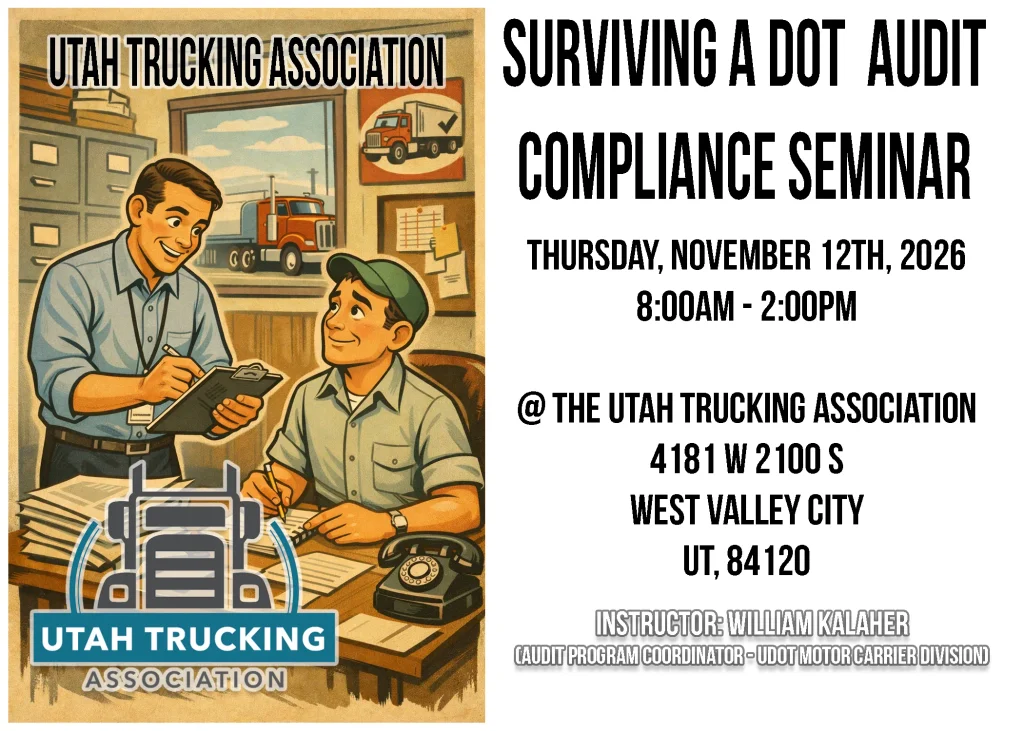
- November 12th, 2026 – DOT Audit Compliance Seminar
- November 13th, 2026 – BUTA Fall Luncheon
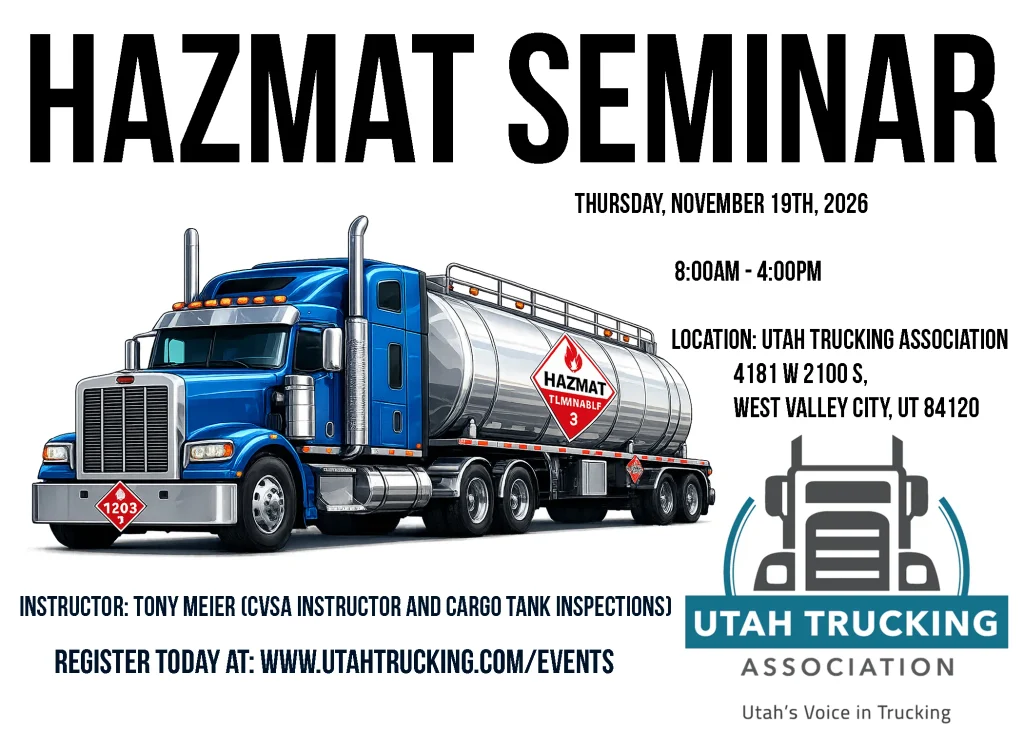
- November 19th, 2026 – HazMat 101 Seminar
- December 2nd, 2026 – NUTA Monthly Luncheon
- December 3rd, 2026 – Utah Safety Management Council Monthly Luncheon
- December 15th, 2026 – Long Combination Vehicle Training
- March 15th – 19th, 2027 – NATMI Fleet Safety Certification
- March 30th, 2026 – SUTA Charitable Golf Tournament
- May 5th – 7th, 2026 – Utah Trucking Association Management Conference & Truck Expo
Announcements:
Congratulations to Lloyd Berry Geck
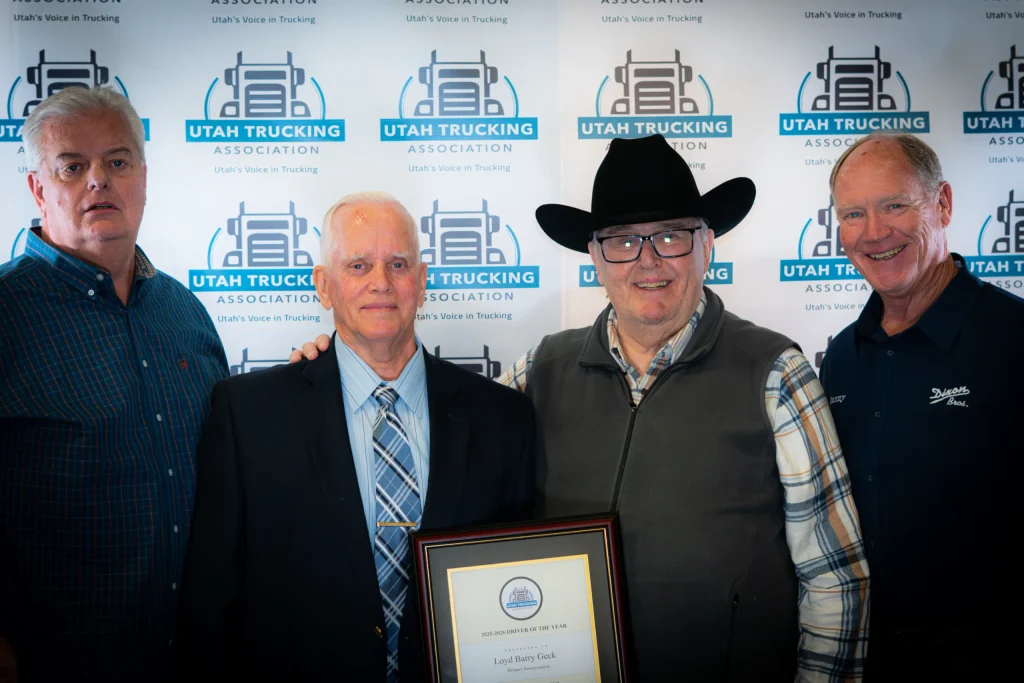
2025/2026 Driver of the Year
Congratulations to Jason Carlsen

2026 Utah Truck Driving Championship Grand Champion
Events:

Resources:




Truckin Hot News:
ATHS: Three trucking pioneers to be inducted into Hall of Fame
KANSAS CITY, Mo. — The American Truck Historical Society (ATHS) will induct Chester Rodney England, Harold C. Groendyke and Al Peterman into the American Trucking and Industry Leader Hall of Fame.
Washington—Today, the American Trucking Associations applauded the Trump Administration for taking a major step towards unlocking advanced drug testing methodologies in safety-sensitive industries. ATA helped spearhead the coalition dedicated to expanding and enhancing the nation’s drug testing protocols and tools to help keep America’s roadways safe.
A newly finalized rule by the U.S. Food and Drug Administration exempts regulated drug testing from the 510(k) clearance requirement, which served as the primary obstacle for labs seeking certification to perform oral fluid testing despite this method’s approval for regulated use over three years ago. The proposal also paves the way for a wider modernization of federal drug testing, from incorporating additional methods like hair testing to strengthening the nation’s capacity to react quickly to novel drug threats, such as fentanyl and synthetic cannabinoids.
FDA initiated its rulemaking process earlier this year shortly after six Members of Congress sent a letter at ATA’s request to the U.S. Department of Health and Human Services. ATA submitted comments on FDA’s proposed rule in June.
“A modern drug testing program is essential to keeping impaired drivers off the road and protecting the motoring public,” said ATA Chief Advocacy & Public Affairs Officer Henry Hanscom. “After years of ATA advocacy, FDA has finally removed a major regulatory roadblock that prevented oral fluid testing from moving forward. This long-overdue action creates a pathway for labs to develop and employers to access more accurate, less invasive, and harder-to-defeat testing methods, while making federal programs nimbler in responding to emerging drug threats. It is an important victory for highway safety and a critical step toward a stronger trucking workforce.”
For well over a decade, ATA has warned that the federal government’s overreliance on urine testing has created dangerous gaps in the system—including widespread drug test “cheating.” According to an analysis of Quest Diagnostics data, substituted and invalid urine specimens increased by more than 370% and 36%, respectively, between 2022 and 2023 among federally regulated, safety-sensitive employees—a troubling trend that underscores how vulnerable the current system has become.
As directly observed methods, oral fluid and hair testing are less susceptible to substitutions or tampering. Additionally, hair testing offers a longer detection window, providing a more complete picture of past drug use. Access to these testing methods ensures motor carriers have the most effective, robust toolboxes when it comes to understanding potential patterns of drug and alcohol use and safety hazards, yet for years, their adoption has been stalled by needless delays.
Oral fluid testing was approved for regulated use in 2023, yet the 510(k) clearance process prevented U.S. laboratories from obtaining certification. The 510(k) requirement also risked further delaying the adoption of hair testing once HHS issues its guidance.
FDA’s final rule removing the 510(k) requirement is a victory long sought by ATA, the National Drug & Alcohol Screening Association, and other key partners, who worked together to press federal officials to eliminate this major bureaucratic barrier.
WASHINGTON, D.C. – The Federal Motor Carrier Safety Administration (FMCSA) has launched the enhanced FMCSA Complaint Center, providing a more streamlined way to report potential violations of federal motor carrier safety and hazardous materials regulations. This effort is part of the U.S. Department of Transportation’s Pro-Trucker Package unveiled in June 2025 by Transportation Secretary Sean Duffy in support of President Donald Trump’s Executive Order 14286, Enforcing Commonsense Rules of the Road for America’s Truck Drivers.
The FMCSA Complaint Center provides an accessible channel for reporting potential safety and compliance concerns across the commercial motor vehicle industry. By making it easier to share critical information, FMCSA can better identify potential threats, hold unsafe operators and bad actors accountable, and advance its mission to reduce crashes, injuries, and fatalities involving large trucks and buses.
Formerly known as the National Consumer Complaint Database (NCCDB), the FMCSA Complaint Center has undergone significant improvements since the updated system launched last year. Recent enhancements include:
- Expanded complaint categories: New categories cover property brokers, Entry-Level Driver Training/Training Provider Registry (ELDT/TPR), intermodal equipment providers, and registration-related fraud and identity theft.
- Updated name and audience references: The latest release renames the platform the FMCSA Complaint Center and replaces references to “consumer” with “general public” to better reflect the range of individuals who can submit complaints.
- Improved user experience: FMCSA has overhauled the website and complaint submission form and updated the complaint search tool to make the platform easier to navigate.
- Reorganized categories: The Medical Review Officer/Substance Abuse Professionals category is now included under a new category, Drug and Alcohol Service Agents.
How to Submit a Complaint
FMCSA encourages individuals who witness a potential violation to submit a complaint as soon as possible. Complainants do not need to have every detail before filing and should provide the information available to them. FMCSA reviews complaints alongside other information to determine which companies or regulated entities may warrant further review, investigation, or enforcement action. Submitting a complaint does not automatically trigger an investigation or result in a violation or penalty.
Online: complaint.fmcsa.dot.gov
By phone: 1-888-DOT-SAFT (1-888-368-7238), 8 a.m. to 8 p.m. Eastern Time, Monday through Friday.
Eligible complaints: www.fmcsa.dot.gov/complaint-center/eligible-complaints.
For emergencies or situations requiring immediate attention, call 911.
Washington—Today, the American Trucking Associations welcomed the U.S. Department of Transportation’s announcement of a $200 million investment in truck parking projects across the country, which represents a significant victory for highway safety, supply chain efficiency, and America’s professional truck drivers. The funding, announced by U.S. Transportation Secretary Sean Duffy, will support 14 truck parking projects in 12 states through the INFRA grant program.
“Truck parking is not simply a matter of convenience. It is a critical safety and supply chain issue that affects every truck driver and every motorist on our highways,” said ATA Chief Advocacy & Public Affairs Officer Henry Hanscom. “We applaud Secretary Duffy and USDOT for making this significant investment and following through on a longstanding commitment to address one of trucking’s most persistent challenges. These projects will help hardworking professional drivers find places to rest when they need it, improve the efficiency of freight movement, and make our roads safer for everyone.”
Among the projects receiving funding are truck parking expansions in Arkansas, California, Connecticut, Georgia, Iowa, Illinois, Minnesota, North Carolina, Nebraska, Tennessee, Texas, and Wisconsin. The investments will create hundreds of new parking spaces along major freight corridors and at key freight facilities.
According to a USDOT study, 98% of truck drivers regularly experience problems locating safe parking. An analysis by the American Transportation Research Institute found that the average driver sacrifices 56 minutes of drive time per day. This results in $6,813 in lost wages for truck drivers each year.
“Professional drivers deserve to know a safe parking space will be available at the end of their shift,” Hanscom added. “USDOT’s announcement demonstrates meaningful progress, and more remains to be done. ATA will continue working with Congress and the administration to expand truck parking capacity nationwide and ensure drivers have the infrastructure they need to keep America’s economy moving.”
ATA has endorsed the Truck Parking Safety Improvement Act, introduced by Representatives Mike Bost (R-IL) and Angie Craig (D-MN), which would authorize $755 million in competitive grant funding to expand commercial truck parking capacity across the United States. Similarly, the BUILD America 250 Act, legislation proposed to reauthorize the nation’s surface transportation programs, would authorize $750 million over the next five years for the construction of truck parking.
Additionally, following ATA’s sustained advocacy, Congress approved $200 million for truck parking as part of the fiscal year 2026 appropriations package. Under the leadership of Transportation Appropriations Subcommittee Chairman Steve Womack (R-AR), Congress is working to approve an additional $200 million for truck parking in the upcoming fiscal year funding bill.
Today’s announcement builds on previous federal investments in truck parking and reflects growing recognition among policymakers that addressing the truck parking shortage is essential to improving transportation safety, supporting supply chains, and strengthening the nation’s freight network.

Washington, D.C. – The American Transportation Research Institute (ATRI) today launched two new surveys, for motor carriers and for truck drivers, as part of a new research initiative on driver health.
Truck drivers face unique health challenges, from finding healthy food on the road to remaining physically active. As a result, they are more likely than workers in other industries to experience negative health conditions that can reduce quality of life and life expectancy. In addition to these well-documented personal repercussions of poor driver health, the U.S. supply chain depends on the well-being of drivers to deliver freight safely and efficiently.
This ATRI research will identify the impact of driver health on trucking operations and costs to further underscore its importance to the industry:
- Drivers are asked anonymously to share basic health information (e.g. time duration of their medical cards) as well as their experience with maintaining health and wellness while on the road.
- Motor carriers are asked for fleetwide averages for medical card durations, insurance costs, and operations key performance indicators. Motor carriers are also strongly encouraged to share the driver survey with their driver workforce.
“We already know driver health can affect safety. The next question is how much it may also be affecting operational risk and cost,” said Project 61 Founder & CEO Jeremy Reymer. “ATRI’s research will help fleets better understand the relationship between driver health and outcomes such as healthcare costs, workers’ compensation, productivity, turnover, and medical qualification.”
Industry stakeholders are invited to participate by Friday, November 13, 2026. The online data collection forms can be accessed here. All responses are completely confidential.
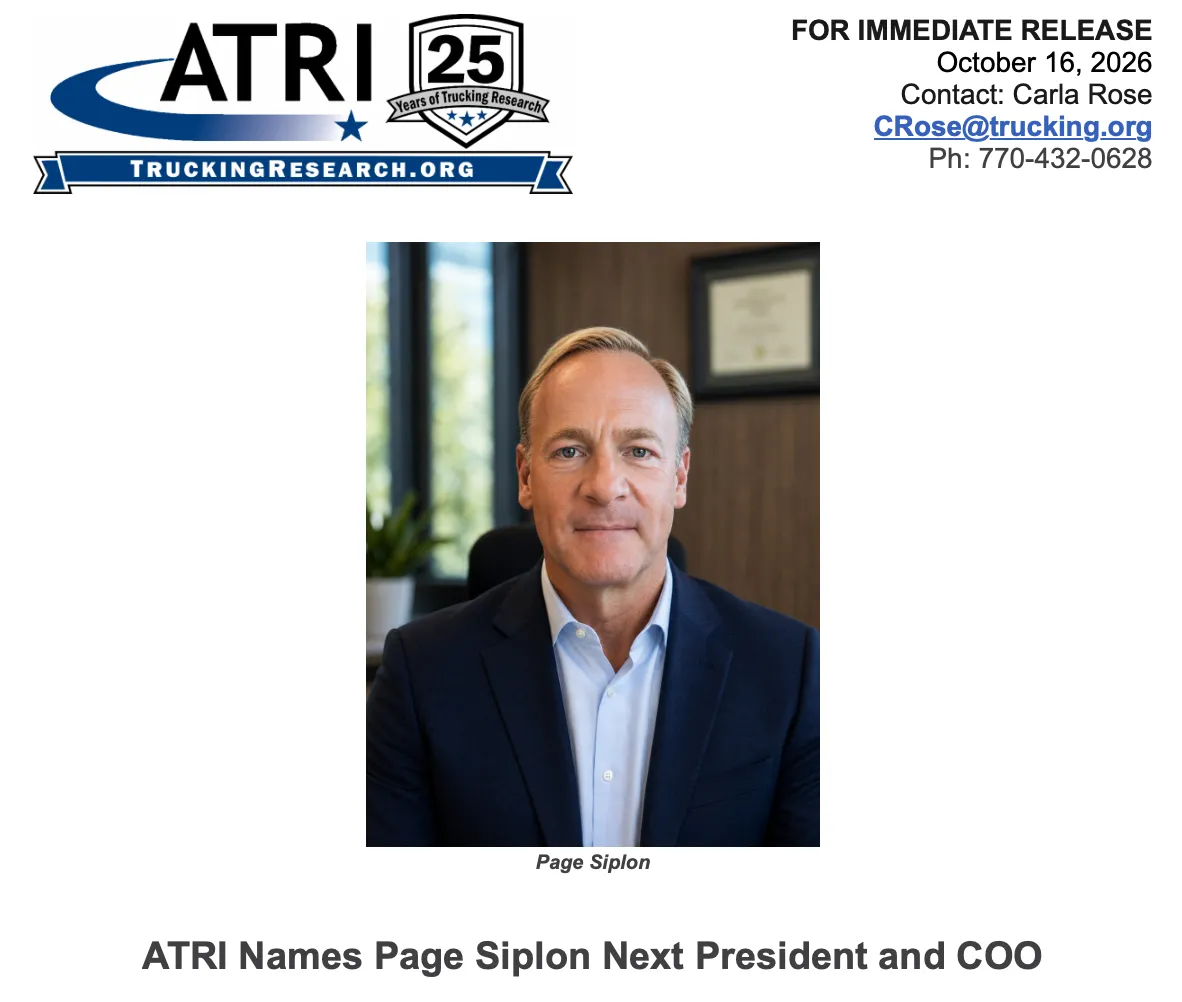
Atlanta, GA – The Board of Directors of the American Transportation Research Institute (ATRI), the trucking industry’s not-for-profit research organization, today announced the selection of nationally recognized transportation and logistics executive Page Siplon as its next president and chief operating officer. Siplon will join ATRI in November, working alongside current ATRI President Rebecca Brewster to ensure a seamless leadership transition before succeeding her upon her retirement in February 2027.
Siplon brings more than two decades of leadership experience spanning private industry, economic development, public policy, and military service. Most recently, he served as Chief Executive Officer of TeamOne Logistics, where he led the organization for more than a decade, guiding its growth and expanding its capabilities. His leadership focused extensively on the trucking workforce, driver recruitment and retention, safety, and the operational challenges facing motor carriers.
Prior to joining TeamOne, Siplon spent more than a decade leading logistics and innovation initiatives for the State of Georgia. As Executive Director of the Georgia Center of Innovation for Logistics, he worked with industry and government leaders to advance freight transportation initiatives and strengthen Georgia’s logistics competitiveness. Siplon also founded and led the nationally recognized Georgia Logistics Summit, which grew to become one of the nation’s largest logistics conferences. He later assumed leadership of Georgia’s broader Centers of Innovation program, overseeing six strategic industry sectors statewide. Siplon’s industry leadership also extended to the national level, where he served as Vice Chairman of the U.S. Department of Commerce’s Advisory Committee on Supply Chain Competitiveness, helping inform national discussions on transportation, logistics, and supply chain policy.
“Page brings a unique combination of executive leadership, a track record of building public-private partnerships, and a deep understanding of the transportation industry,” said Brenda Neville, Iowa Motor Truck Association President and CEO, and ATRI Search Committee Chair. “We are excited to welcome Page to ATRI and believe his experience, collaborative approach, and leadership will help the organization build on its strong foundation and continue delivering meaningful value to the trucking industry.”
ATRI President Rebecca Brewster added, “I have known Page since his tenure with the Georgia Center of Innovation for Logistics, and I am excited to have him join the ATRI team and work with me and our staff on the leadership transition. Page’s leadership will be vital to carrying ATRI’s research mission forward at a time when trucking faces increasingly complex decisions. In the years ahead, credible independent research will be essential to helping our industry navigate change, improve safety and make informed decisions.”
“I’m incredibly excited and humbled by the opportunity to lead ATRI and build on the remarkable work Rebecca and her team have done over the years,” said Siplon. “I’ve always believed that trucking is the common denominator of our economy. Our nation simply cannot function without it. ATRI has earned a level of respect and trust throughout our industry that is truly special, and looking ahead, I see tremendous opportunity to build on that foundation, broaden our reach, and find new ways to put our research to work for the trucking industry and the economy that relies on it.”
Siplon’s selection follows a nationwide search to succeed Brewster, who announced her retirement earlier this year after serving more than three decades with ATRI.
Charlotte, NC – Today, the American Transportation Research Institute (ATRI), the trucking industry’s not-for-profit research organization, released its 22nd annual Top Industry Issues report that identifies the trucking industry’s leading issues. This year’s list includes Fuel Prices, Lawsuit Abuse Reform, CSA and Insurance Cost/Availability. Two issues that debuted on the 2025 list have remained top 10 concerns again this year: Artificial Intelligence in Trucking and Diesel Emissions Regulations.
“Just as we started to see some positive signs in the freight economy, the cost of diesel topped $6.50 per gallon,” said Ben Banks, TCW President. “With operating costs continuing to climb overall, this spike in fuel costs is particularly painful for small- to mid-size fleets. ATRI’s annual analysis is so essential for trucking to not only quantify the issues, but more importantly, to understand what we can collectively do as an industry to address each.”
After holding on to the number one spot on the list for three years in a row, the Economy dropped down to #6 overall, reflecting some cautious optimism on the part of motor carriers. Given some positive signs in the economy, this year’s list saw workforce issues come back into the top 10, with the Driver Shortage at #5 and Driver Retention at #10. Driver Compensation remained a top 10 issue, ranking 9th overall.
More than 48 percent of the survey respondents were motor carrier executives and personnel, truck drivers represented 26 percent, with the remaining 26 percent made up of other freight stakeholders. Among truck driver respondents – both owner-operators and company drivers – Fuel Prices, Truck Parking and Driver Compensation were the top three concerns, while motor carriers ranked Lawsuit Abuse Reform, Fuel Prices and the Driver Shortage as their top three concerns.
Nearly 3,100 trucking industry stakeholders participated in this year’s survey. Respondents included motor carriers, truck drivers, industry suppliers, driver trainers and law enforcement, among other groups. This year’s report also includes an analysis of the top concerns among law enforcement personnel, whose top-ranked issue was Electronic Logging Device Fraud. Finally, states that generated adequate response rates received state-specific TII analyses.
The complete results of the annual survey were released as part of 2026 American Trucking Associations Management Conference and Exhibition. The full report can be found on ATRI’s website here.

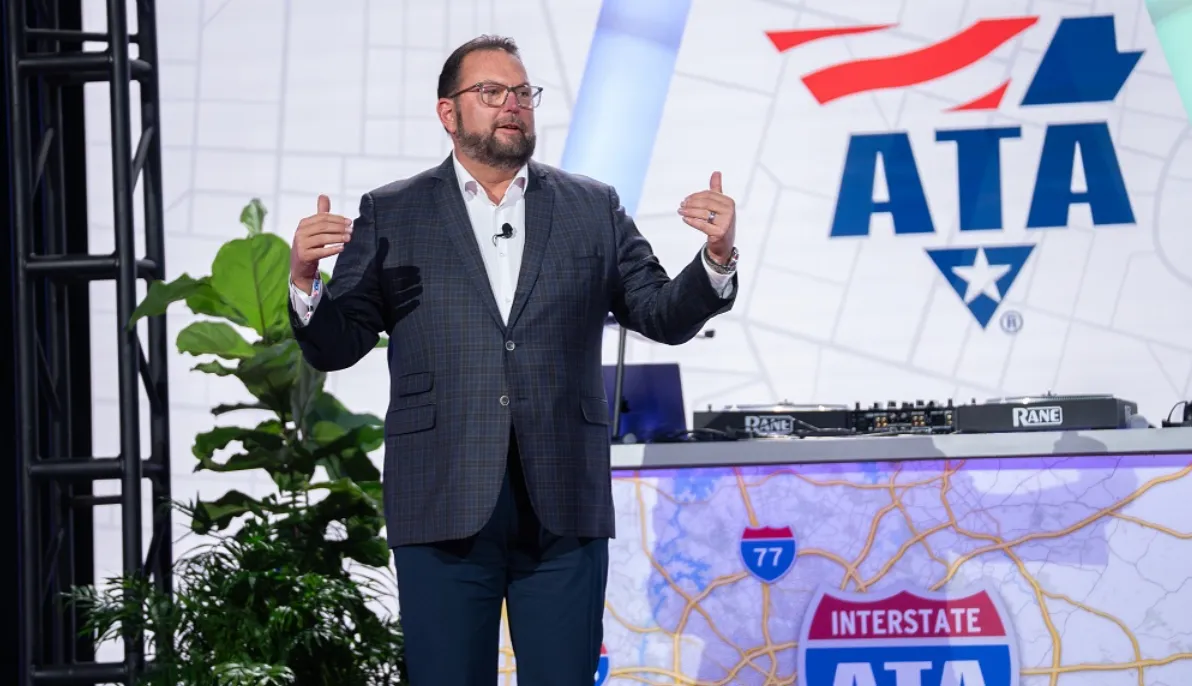
Charlotte, NC – At the American Trucking Associations’ 2026 Management Conference & Exhibition, ATA’s Board of Directors elected Derek Leathers, chairman and CEO of Werner Enterprises based in Omaha, Nebraska, as the Federation’s 82nd Chairman.
“For more than 90 years, ATA has given trucking a strong and unified voice. But longevity alone is not leadership. ATA has endured by continuing to raise the bar and bringing our industry together to solve problems none of us can solve alone,” said Leathers. “We did not build this institution. We inherited it from generations of leaders who gave their time, energy, and judgment to make our industry stronger. Now it is our responsibility to build on that foundation and leave ATA even stronger for those who come next. It is an honor to serve as ATA’s 82nd chairman to carry that mission forward.”
Leathers succeeds Greg Hodgen, CEO of Groendyke Transport, Inc., as ATA Chairman.
“One year ago, I gratefully accepted the opportunity to serve as ATA’s chairman. Today, I am even more grateful—for the people who made that service possible and for all that our federation has accomplished together,” said Hodgen. “I leave this role with a deeper appreciation for ATA and with confidence that it remains in capable hands. As my friend Derek takes the chair, I firmly believe this organization is on a path to achieve amazing things. Although my term is ending, my commitment is not. I encourage all of our members to stay involved, keep sharing your voice, and help us turn the strength of this association into results for the industry we love.”
“I want to thank Greg for his outstanding service over the past year and congratulate Derek as he takes on this new leadership position,” said ATA Chief Advocacy & Public Affairs Officer Henry Hanscom. “With Derek’s vision, the engagement of our members, and the dedication of ATA’s professional staff, our association’s future is bright. We look forward to working alongside Derek to build on our momentum and continue delivering the advocacy victories and member value that strengthen trucking and move our industry forward.”
ATA’s Board also elected Gregg Troian, president of PGT Trucking Inc. in Aliquippa, Pennsylvania, as first vice chair, and Michael Kiely, president of global government affairs at UPS, as second vice chair. The Board re-elected John M. Smith, chairman of CRST International Holdings LLC, as secretary. Harold Sumerford Jr., CEO of J&M Tank Lines Inc., was re-elected as treasurer.
Click here for Leathers’ biography.
Washington – Today, the American Trucking Associations published the 2026 edition of American Trucking Trends, its annual industry data compendium about the state of the U.S. trucking sector.
“Trucking’s reach extends into every corner of the economy. Trends quantifies that impact and puts that invaluable data at business leaders’ fingertips,” said ATA Chief Economist Bob Costello. “The latest figures show areas of improvement, including modest growth in freight tonnage and industry revenue. But those gains must be viewed in the context of fierce economic headwinds, as motor carriers continue to contend with escalating operational costs and largely uneven freight volumes. By revealing both the progress and the pressure points within our industry, Trends is essential for making sound business decisions.”
Among the key findings in this year’s report:
- Trucks moved 11.46 billion tons of freight in 2025, up from the 11.27 billion tons hauled the previous year.
- In 2025, the industry saw revenues at $936.4 billion, up from $906 billion in 2024.
- Trucking employed 8.5 million people in industry-related jobs, including 3.45 million professional drivers in 2025.
- The industry remains one made up of small businesses, with 91.1% of carriers operating 10 or fewer trucks and 99.2% operating fewer than 100 power units.
- Trucks moved 68% of surface trade between the U.S. and Canada, and 86% of goods across the Mexican border in 2025.
This year’s version of Trends also includes important data about household goods movements, the broader macroeconomy, and more.
“Reliable data is one of the most powerful tools we have to tell trucking’s story and demonstrate our industry’s indispensable role in the economy,” said ATA Chief Advocacy & Public Affairs Officer Henry Hanscom. “Trends forms a cornerstone of ATA’s successful advocacy efforts by enabling our federation to more effectively push for policies that strengthen trucking, support drivers and the supply chain, and keep our economy moving.”
ATA American Trucking Trends 2026 is available for purchase at ATABusinessSolutions.com.
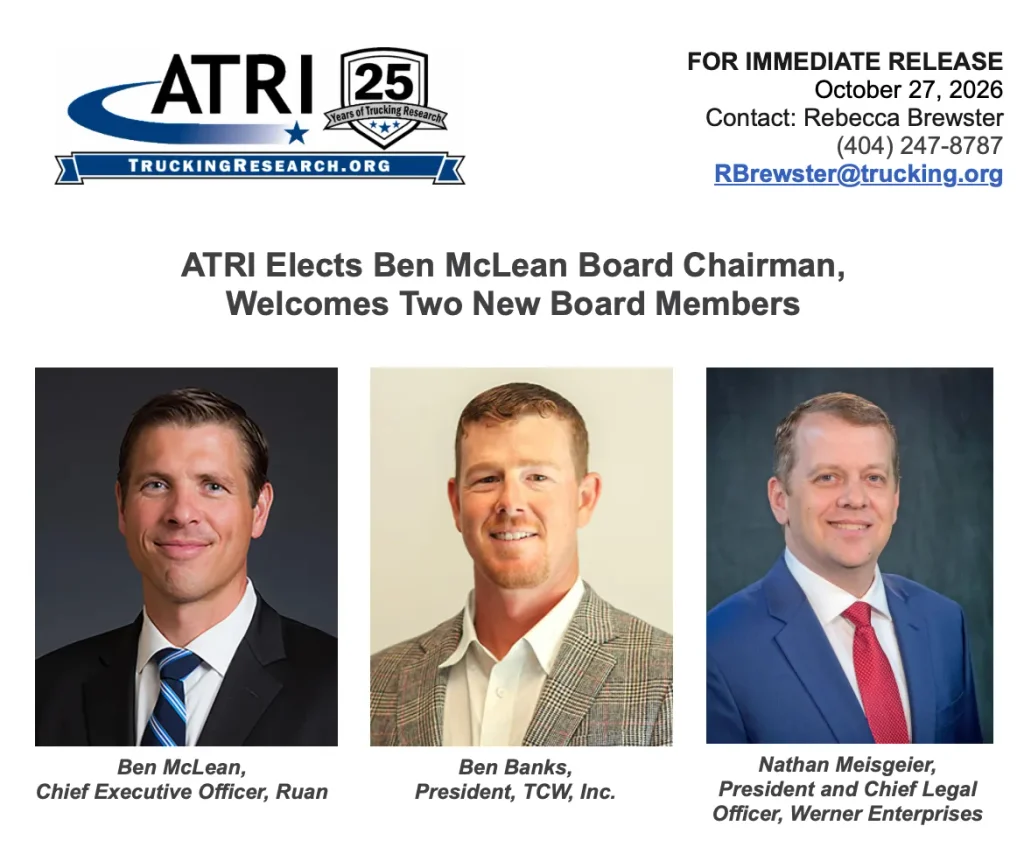
Washington, DC – The American Transportation Research Institute (ATRI) has elected Ben McLean, Chief Executive Officer of Ruan Transportation Management Systems, Chairman of its Board of Directors. ATRI also announced the appointment of two new Board members: Ben Banks, President of TCW, Inc., and Nathan Meisgeier, President and Chief Legal Officer of Werner Enterprises.
McLean, who was first appointed to the ATRI Board of Directors in October 2017, will lead the 13-member Board of trucking industry presidents and CEOs. He succeeds Derek Leathers, Chairman and CEO of Werner Enterprises, who is completing four years of service as ATRI Chair.
“We are excited to have Ben McLean lead the ATRI Board,” said Rebecca Brewster, ATRI President and COO. “His commitment to research excellence and innovation will help drive the Institute forward for years to come. We also want to thank Derek Leathers for his dedicated service as Chairman and welcome Ben Banks and Nathan Meisgeier to the Board. Their extensive industry experience and insights will be tremendous assets to ATRI as we continue advancing our research mission.”
Ben McLean has served as CEO of Ruan Transportation Management Systems since 2015. He joined Ruan in 2007 and previously held several corporate and operational leadership roles, including Chief Operating Officer and Chief Information Officer. Before joining Ruan, he worked with William Blair & Company and Deloitte’s Technology Consulting practice. His board and advisory service includes the board of UFP Industries, the Northwestern University Transportation Center’s Business Advisory Committee, and the Iowa Business Council, where he is a board member and former chair. He holds three degrees: an MBA from the Kellogg School of Management, a law degree from Northwestern University School of Law, and an undergraduate degree in computer engineering from Northwestern University.
Ben Banks is President of TCW, Inc., where he has worked for more than 15 years since graduating from Georgia Southern University. He has served as a member and chair of ATRI’s Research Advisory Committee (RAC). A 2018 graduate of ATA’s LEAD program, Banks currently serves as Chair of Truck PAC and on the Georgia Trucking Association Executive Committee and IANA’s Intermodal Interchange Executive Committee.
Nathan Meisgeier has served as President and Chief Legal Officer of Werner Enterprises since January 2024, following his previous role as Executive Vice President and Chief Legal Officer. He also serves as Chief of Staff. His responsibilities include oversight of Legal, Safety, Risk, Human Resources, Government Affairs, Recruiting, Terminal Management and Security. Prior to joining Werner in 2005, Meisgeier was a litigator at the Kansas City law firm of Stinson, Mag and Fizzell for seven years. He holds a juris doctorate from Harvard Law School in addition to degrees in accounting and economics from the University of Nebraska-Lincoln. Meisgeier is Chairman of the American Trucking Associations’ Legal Reform Advisory Committee and serves on the American Trucking Associations Litigation Center board, among other positions in the transportation industry.
View the complete ATRI Board of Directors roster.
Aurora Reports Major Milestones in Driverless Trucking During Q3 2026
Aurora continues to advance autonomous trucking technology, reaching significant operational and regulatory milestones during the third quarter of 2026.
Aurora reported that it has built more than 20 driverless trucks that are joining its fleet, equipped with the Aurora Driver technology that allows commercial trucks to operate without a person behind the wheel. In September, the company also surpassed 500,000 driverless miles, marking another milestone in its efforts to expand autonomous freight transportation.
Regulatory Progress for Autonomous Trucks
One of the quarter’s most notable developments came from the Federal Motor Carrier Safety Administration (FMCSA), which granted Aurora and the industry a five-year exemption allowing qualifying driverless commercial vehicles to use cab-mounted warning beacons instead of traditional roadside warning devices that require manual placement.
The exemption represents an important regulatory development for autonomous trucking, addressing a safety requirement originally designed for vehicles operated by human drivers.
Aurora demonstrated that its warning beacon technology could provide a level of safety equivalent to or greater than existing requirements, helping establish a pathway for broader deployment of driverless commercial vehicles.
Learn more about the FMCSA exemption
Autonomous Trucking Gains National Attention
Aurora’s progress has also attracted national media coverage, offering a closer look at how autonomous trucking technology is developing and what it could mean for the transportation industry.
- The Wall Street Journal featured Aurora’s autonomous trucks in an article describing their cautious and courteous driving behavior. Read the article.
- CNBC joined Aurora for a ride along on public highways, providing a firsthand look at the company’s driverless technology. Watch the coverage.
- Schneider National CEO Jim Filter discussed the future of autonomous trucking with CNBC, emphasizing that autonomous technology is expected to supplement rather than replace professional truck drivers. Watch the interview.
For those interested in seeing the technology in action, Aurora also offers a public livestream of its autonomous trucks through Aurora Driver Live.
As autonomous trucking continues to evolve, developments in vehicle technology, safety standards, and federal regulations will play an important role in shaping the future of commercial transportation.
Additional information: Aurora Q3 2026 Press Release | Shareholder Letter | Investor Presentation
Washington – Honoring the hard work and dedication of professional technicians, the American Trucking Associations and ATA’s Technology & Maintenance Council announced today that the eighth annual National Technician Appreciation Week will be held June 13-19. This year’s theme is “Celebrating technicians that keep us moving.”
“Professional technicians are indispensable to trucking operations, and our nation owes them an enormous debt of gratitude,” said ATA Chief Advocacy & Public Affairs Officer Henry Hanscom. “The exacting standards that technicians uphold help to keep everyone on the road safe and ensure trucks can travel hundreds of billions of miles each year to deliver to homes and businesses. ATA looks forward to leading the celebration of National Technician Appreciation Week next June and thanking these hardworking, highly skilled professionals for ensuring the wheels of our industry continue to turn.”
Professional technicians perform one of the most demanding and critical roles in trucking. NTAW acknowledges the extraordinary efforts of these dedicated professionals.
“Professional technicians combine deep technical expertise with an unwavering commitment to safety and reliability,” said TMC Executive Director Robert Braswell. “We are pleased to announce the dates for the eighth annual National Technician Appreciation Week to recognize their invaluable contributions. This is an opportunity for our industry to shine a spotlight on the talented men and women whose work is essential to keeping fleets operating safely and efficiently every day.”
For more information on NTAW, visit https://ntaw.trucking.org/.