UPCOMING EVENTS
- October 7th, 2026 – Smarter Business Summit
- October 13th, 2026 – Utah Regulatory Reform (Bringin Utah Businesses and Government Together)
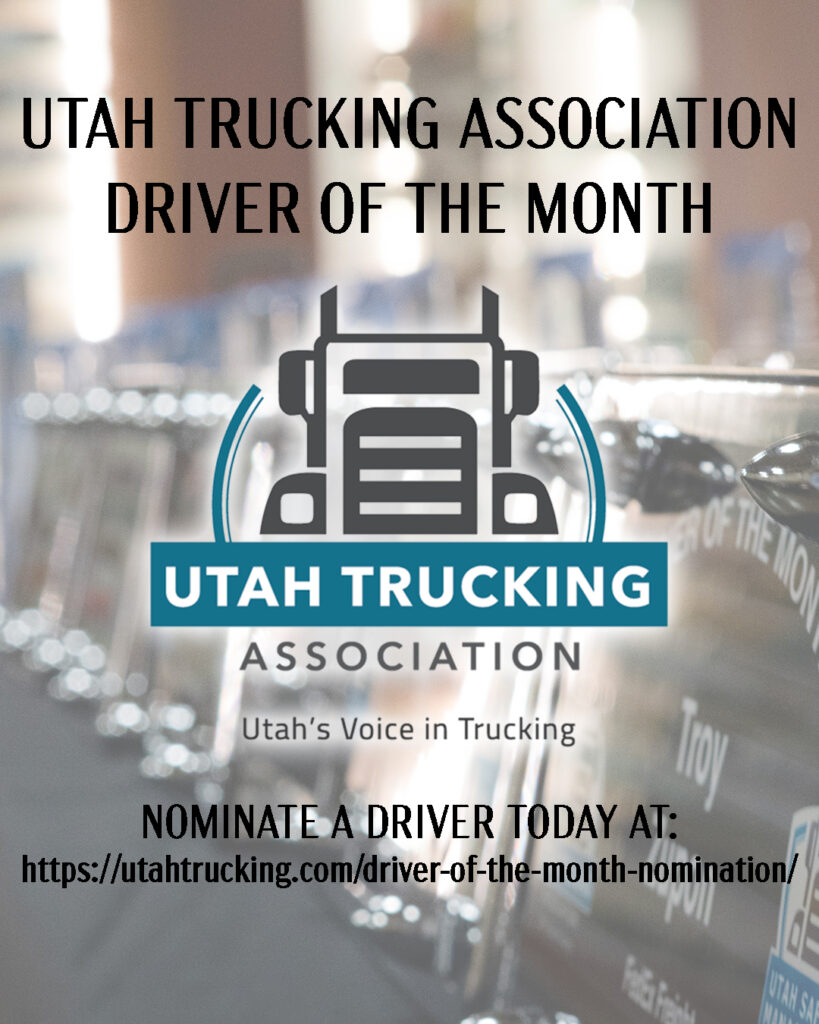
- October 23rd, 2026 – Utah Trucking Association Autumn Shotgun Shoot
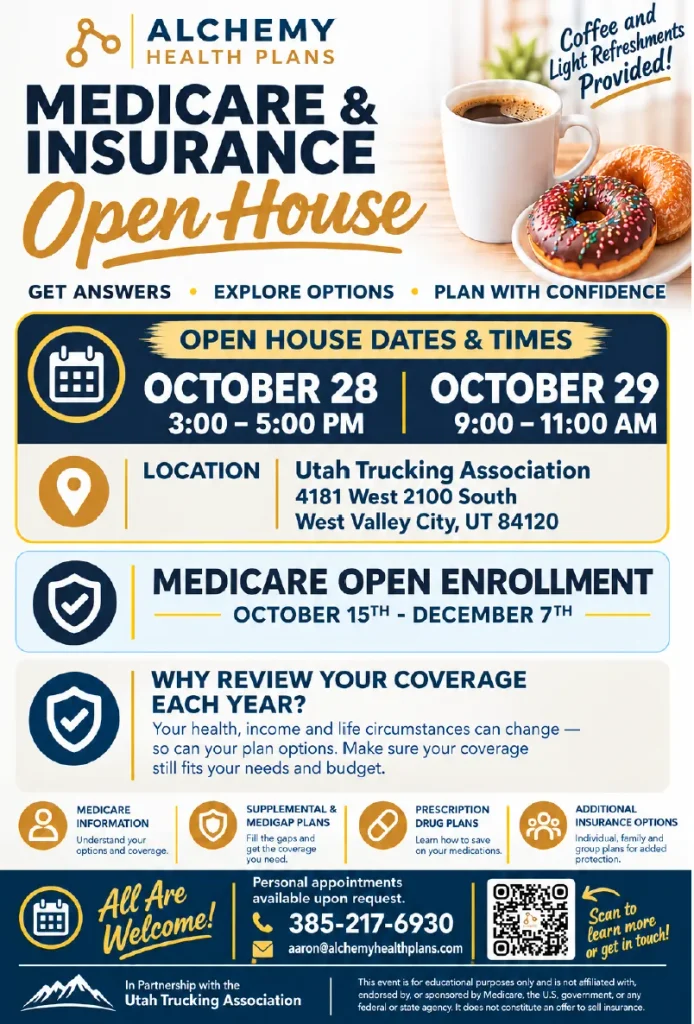
- October 28th, 2026 – Medicare Seminar (Happy Hour) – Open House
- October 29th, 2026 – Smarter Business Summit (Doughnuts & Coffee) – Open House
- November 6th, 2026 – 2026 Driver Awards Banquet
Announcements
OPPORTUNITY TO GET INVOLVED

You’re invited to join the Intermountain Business Alliance, Utah Valley Chamber of Commerce, and Brazilian Chamber of Commerce for the Utah Regulatory Reform Listen & Learn Forum on Tuesday, October 13, 2026, at The Ruth in Pleasant Grove.
This forum is designed to give Utah business owners, CEOs, executives, and decision-makers a direct opportunity to identify the government regulations affecting their ability to grow and compete.
Our question is simple:
If you could strengthen, alter, or eliminate one government regulation to make your business more productive, profitable, and competitive, what would it be?
Industry leaders will discuss their most significant regulatory challenges in focused roundtables and identify priority issues to be presented directly to the elected officials in attendance.
Invited and participating leaders include U.S. Senator John Curtis, U.S. Representative Mike Kennedy, Utah House Speaker Mike Schultz, and Utah State Senator Brady Brammer, along with additional state and local leaders.
Utah Regulatory Reform Listen & Learn Forum
Tuesday, October 13, 2026
8:30 AM–12:00 PM
The Ruth
Pleasant Grove, Utah
Come prepared to share what government can do differently to help your business compete and grow.
We would be honored to have your voice at the table.
Dear ATA Members:
I want to provide a brief update on the President’s dyed diesel Executive Order and how ATA is advising carriers to approach this new policy.
1. What was announced
On October 5, President Donald J. Trump signed an executive order directing temporary federal tax-payment and penalty relief for highway use of dyed diesel. Dyed diesel is normally reserved for off-road uses and marked red to distinguish it from fuel subject to highway taxes.
The order directs Treasury and IRS to:
- Determine eligibility for tax deferral. Within five days, Treasury must determine whether statutory authority permits relief and which taxpayers qualify. If those determinations are made, eligible tax obligations incurred from October 5 through December 31, 2026, would be deferred without interest or penalties, to the extent authorized by law.
- Announce dyed-diesel penalty relief. Within five days, Treasury must direct IRS to announce that specified penalties will not apply to dyed diesel sold for highway use or used on highways during that period. The announcement must also address penalties for missed semimonthly tax deposits.
- Publish implementing guidance. That guidance must identify covered taxpayers, conditions, applicable deadlines and the date postponed taxes must ultimately be paid.
- Explore tax forgiveness. Treasury must examine ways, including legislation, to eliminate the deferred tax obligations. The order itself does not forgive those taxes.
The order also directs federal coordination on fuel access, protection of agricultural distribution and encouragement of corresponding state action. It explicitly directs FMCSA to continue legally required compliance enforcement.
Bottom line: This is a directive for temporary penalty relief and potential tax deferral, not a blanket repeal of diesel taxes or all fuel-related requirements. We recommend that carriers delay the use of dyed diesel for on-road use until Treasury has issued its guidance.
2. Practical implications for trucking
Potential relief is not the same as permanent savings
Federal statute identifies the federal diesel tax as 24.4 cents per gallon, approximately $60 on a 250-gallon fill. Its claim of savings exceeding $100 per fill assumes corresponding state action. Those figures should not be presented as guaranteed savings for every carrier, particularly because federal tax forgiveness remains unresolved.
Dyed diesel does not create additional fuel supply
Dyed and clear diesel come from the same underlying supply. Allowing highway use changes the fuel’s tax and enforcement treatment; it does not address the global supply constraints driving prices higher.
Access through normal fueling networks remains a practical hurdle
There are significant distribution challenges: most truck stops and major fleet fueling locations dispense clear diesel, while switching involves storage, delivery controls, labeling and recordkeeping. The executive order directs coordination on access but does not establish that dyed diesel is available throughout carriers’ usual fueling networks.
State taxes and interstate reporting require separate clarification
State tax liability and International Fuel Tax Agreement (IFTA) reporting are significant concerns for interstate carriers. Those issues should be checked against new federal guidance and each relevant state’s written instructions rather than treated as resolved by the announcement. Some states have suspended enforcement of dyed diesel but have different requirements. See here for details by state.
Interstate trucks could expose themselves to penalties if they use dyed diesel and enter a state that hasn’t issued a waiver.
Highway funding remains an important consideration
Fuel-tax holidays provide uncertain pump-price savings and put highway funding at risk, and there’s a distinction between delayed collection and actual forgiveness: if taxes are forgiven, highway use goes untaxed while trucks continue relying on roads and bridges.
Recommended guidance for members
- Do not change fueling practices solely on the basis of the announcement.
- Delay use of dyed diesel for on-road use until Treasury has issued its guidance.
- Confirm eligibility, supplier participation, state requirements, and reporting treatment. Retain complete fuel-purchase and mileage records.
- Do not assume deferred taxes have been eliminated or change fuel-surcharge arrangements based on advertised savings alone.
- Be aware that the use of dyed diesel can stain fuel systems, leaving residual evidence of dyed diesel that could be subject to enforcement measures after federal and state enforcement relief has expired.
- Before using dyed diesel, check with your equipment supplier to ensure that there are no warranty implications.
Please reach out with any questions.
Henry Hanscom
Chief Advocacy & Public Affairs Officer
American Trucking Associations
Fees for the Unified Carrier Registration Plan and Agreement
the Federal Motor Carrier Safety Administration (FMCSA) published the final rule titled “Fees for the Unified Carrier Registration Plan and Agreement”. The final rule amends the regulations governing the annual Unified Carrier Registration (UCR) Plan and Agreement registration fees that participating States collect from motor carriers, motor private carriers of property, brokers, freight forwarders, and leasing companies. On September 18, 2025, the UCR Board recommended a fee increase for the 2027 registration year and subsequent registration years. This recommended increase averages 20 percent over the fee structure adopted for 2025 and retained for 2026, with varying increases ranging between $9 and $9,329 per entity, depending on the applicable fee bracket. Although the fees for registration year 2027 are increased, they are less than those in effect during registration years 2019 through 2022. FMCSA adopts the recommended fee increase.
Hours of Service Waiver for the Transportation of Gasoline and Diesel Fuel
AGENCY: Federal Motor Carrier Safety Administration (FMCSA), Department of Transportation (DOT).
ACTION: Grant of waiver.
SUMMARY: FMCSA grants a waiver from certain regulations applicable to motor carriers and drivers operating commercial motor vehicles (CMVs) in interstate commerce to transport gasoline and diesel fuel. The Agency grants this waiver in anticipation of the need for greater hours-of-service flexibility for motor carriers transporting fuel during the last weeks of the summer and most of the fall if the demand for fuel increases above the levels experienced earlier in the year.
DATES: This waiver is effective September 16, 2026, and expires on December 16, 2026.
FOR FURTHER INFORMATION CONTACT: Ms. LaTonya Mimms, Division Chief, Driver and Motor Carrier Operations, Office of Policy, MCPSD@dot.gov, Federal Motor Carrier Safety Administration, 1200 New Jersey Avenue SE, Washington, DC 20590- 0001.
Legal Basis
The Transportation Equity Act for the 21st Century (TEA-21) (Pub. L. 105-178, § 4007, 112 Stat. 107, 401, June 9, 1998) provides the Secretary of Transportation (the Secretary) authority to grant a waiver that relieves a person from compliance, in whole or in part, with any of the Federal Motor Carrier Safety Regulations (FMCSRs) issued under either 49 U.S.C. 31136 or Chapter 313 of Title 49 of the United States Code (49 U.S.C. 31136(e), 31315(a)). The Secretary must make a determination that the waiver is in the public interest and that it is likely to achieve a level of safety that is equivalent to, or greater than, the level of safety that would be obtained in the absence of the waiver. Waivers may be granted only for nonemergency and unique events for a period not in excess of three months. TEA-21 authorizes the Secretary to grant waivers without requesting public comment and without providing public notice.
The Administrator of FMCSA has been delegated authority under 49 U.S.C. 113(f) and 49 CFR 1.87(e) and (f) to carry out the functions vested in the Secretary by 49 U.S.C. chapter 313, relating to CMV operators, and 49 U.S.C. chapter 311, subchapters I and III, relating to CMV programs and safety regulations.
Background
Adequate gasoline and diesel supplies are critical to the movement of people, products, and supplies as well as the harvesting and transport of agricultural crops. About 29% of total U.S. energy consumption in 2025 was for transporting people and goods from one place to another based on annual reports from the U.S. Department of Energy, Energy Information Administration. Petroleum products accounted for about 89% of the total U.S. transportation sector energy use. Gasoline is the dominant transportation fuel in the U.S., followed by distillate fuels (mostly diesel fuel) and jet fuel. In consideration of the critical need for timely and efficient distribution and delivery of gasoline and diesel fuel and current global supply chain disruptions, FMCSA believes limited, temporary hours of service flexibility should be provided for the interstate motor carriers transporting gasoline and diesel fuel to address potential increases in transportation and agricultural harvesting demands.
Current Regulatory Requirements
The regulations in 49 CFR 395.3 limit the hours of service a driver may operate a CMV transporting property in interstate commerce.
FMCSA’s Determination and Regulatory Provisions Waived
Consistent with the statutory requirements for waivers, FMCSA determined that it is in the public interest to issue a waiver, limited in scope and circumstances, that is likely to achieve a level of safety that is equivalent to, or greater than, the level of safety that would be obtained in the absence of the waiver, until December 16, 2026.
To respond to global supply disruptions, anticipated increases in the demand for gasoline and diesel fuels in the late summer and fall, and to mitigate impacts on the costs and availability of fuel for transportation service providers, agricultural harvesting, and the traveling public as the demand increases, FMCSA waives the hours-of-service limitations in 49 CFR 395.3 for motor carriers and drivers transporting gasoline and diesel fuel.
Public Interest
FMCSA finds that granting this waiver is in the public interest to ensure the distribution and delivery of fuel for transportation service providers, agricultural harvesting, and the traveling public.
Safety Equivalence
Due to the limited scope of this waiver and the ample precautions that remain in place, FMCSA has determined that the waiver is likely to achieve a level of safety that is equivalent to the level of safety that would be obtained absent the waiver. The waiver of specific regulations should not be looked at in isolation but rather as part of the whole of all regulations governing the safety of drivers. Waiver determinations are made holistically, taking all relevant factors into account. See International Bhd of Teamsters v. DOT, 724 F.3d 206 (D.C. Cir. 2013). Drivers and motor carriers seeking to utilize the regulatory flexibility provided by this Waiver must comply with the Terms, Conditions, and Restrictions of this Waiver.
FMCSA believes that the measures listed below under Terms, Conditions, and Restrictions of the Waiver, taken collectively, provide the assurance needed to meet the legal standard that granting
the waiver is likely to achieve an equivalent level of safety. Therefore, FMCSA has determined that a waiver from 49 CFR 395.3 during the period of the waiver is likely to achieve a level of safety that is equivalent to, or greater than, the level of safety that would be obtained in the absence of the waiver.
Unique Circumstances
FMCSA finds that the circumstances surrounding this waiver are unique and the waiver essential to facilitate timely and efficient fuel movement and support fuel availability during the last portion of the summer and most of the fall given acute fuel supply issues.
Terms, Conditions, and Restrictions of the Waiver
This waiver covers motor carriers and drivers transporting gasoline and diesel fuel for the period beginning at 12:00 a.m. on September 16, 2026, through 11:59 p.m. on December 16, 2026. While operating under this waiver, motor carriers and drivers are subject to the following terms and conditions:
- A driver must not drive more than 16 hours in any 24-hour period. This limit applies even if the driver is also operating under an exception in 49 CFR 395.1 or any other waiver, exemption, or declaration. The total driving time of any driver operating under this waiver must not exceed the 16-hour limit.
- The driver must take a minimum of a 6 consecutive hour break in the sleeper berth in each 24-hour period. If there is no sleeper berth, the driver must take a minimum 8 consecutive hour off-duty break in each 24-hour period.
- Drivers must maintain a valid commercial driver’s license for the transportation being conducted with all necessary endorsements for the commercial motor vehicle being operated and not be subject to an out-of-service order, disqualification, or loss of driving privileges.
- Drivers must keep a physical or digital copy of this waiver in their possession when operating under this waiver and present it to law enforcement upon request.
- Motor carriers or drivers currently subject to an out-of-service order are not eligible for the relief granted by this waiver until they have met the applicable conditions for its rescission and the order has been rescinded in writing by the issuing jurisdiction.
- Motor carriers with a conditional safety rating are not eligible for the relief granted by this waiver.
- At any time, if the driver informs the motor carrier that he or she needs immediate rest, the driver must be permitted immediately to find a suitable, safe resting location and allowed at least 10 consecutive hours off duty before resuming driving.
- The waiver applies while the driver returns empty to the motor carrier’s terminal or the driver’s normal work reporting location. However, if the driver informs the motor carrier that he or she needs immediate rest, the driver must be permitted immediately to
find a suitable, safe resting location and allowed at least 10 consecutive hours off duty before resuming driving. - When a driver is moving from operations under this waiver to normal operations, a 10 -hour break is required when the total time a driver is engaged in operations under this waiver, or in a combination of operations under this waiver and normal operations, equals or exceeds 14 hours.
- Motor carriers and drivers must comply with all applicable Federal and State requirements.
- Nothing in this waiver shall be construed as a waiver of or exemption from any other applicable requirements or any portion of the FMCSRs (49 CFR Parts 350-399) including the controlled substance and alcohol uses and testing requirements (49 CFR Part 382), the commercial driver’s license requirements (49 CFR Part 383), or the financial responsibility (insurance) requirements (49 CFR Part 387); Federal Hazardous Materials Safety Regulations (49 CFR Parts 100-180); vehicle size and weight limitations, as well as route designations administered by the Federal Highway Administration (23 CFR Part 658; 23 U.S.C. 127; 49 U.S.C. §§ 31111-31115); any requirement of the U.S. Department of Agriculture; or any other regulations for which relief is not specifically granted herein.
- Crash Notification. Each motor carrier must notify FMCSA within 2 business days of a crash, as defined in 49 CFR 390.5T, involving any driver operating under this waiver. Notification shall be by email to MCPSD@DOT.GOV. The notification must include the following information:
- Date of the crash;
- City or town, and State in which the accident occurred, or closest to the accident scene;
- Driver’s name and license number;
- Vehicle number and State license number;
- Number of individuals with injuries;
- Number of fatalities;
- The police-reported cause of the crash (if available at time of the report); and
- Whether the driver was cited for violation of any traffic laws, or motor carrier
safety regulations. - The total on-duty time accumulated during the 7 consecutive days prior to the date of the accident and the total on-duty time and driving time in the work shift prior to the accident.
- Each motor carrier operating under this waiver must collect and submit to FMCSA upon FMCSA’s request information on the total number of drivers who operated under the waiver.
- FMCSA reserves the right to revoke this waiver in its entirety or as to a specific motor carrier or motor carriers or driver if the waiver results in a lower level of safety than
was maintained before it was granted, or continuation of the waiver would not be consistent with the goals and objectives of Title 49, chapter 313 or section 31136.
Preemption
In accordance with 49 U.S.C. 31315(d), as implemented by 49 CFR 381.600, during the period this waiver is in effect, no State shall enforce any law or regulation applicable to interstate commerce that conflicts with or is inconsistent with this waiver with respect to a driver or motor carrier operating under the waiver. States may also adopt the same waiver or policy with respect to operations in intrastate commerce.
Events:


Resources:



Truckin Hot News:
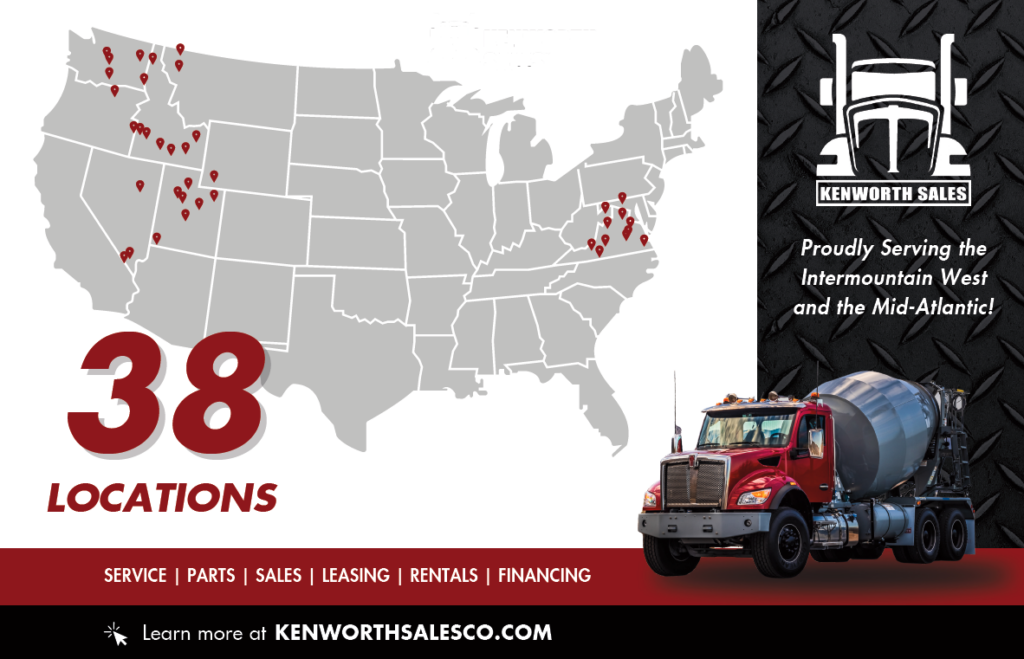
Great Article on UTA Member Kenworth Sales
More than 80 years on, Kenworth dealer remains true to core values
“If we are listening as opposed to just talking, we actually become better at serving our customers. We understand more about what drives them, what their what their priorities are, what their values and mission are.”
Great Article on UTA Member Great Dane of Utah
Great Dane of Utah a family run labor of love for the Nehmers and their employees
“We really value relationships, both on the customer side and the employee side.”
Washington—Last night, by a vote of 47-41, the U.S. Senate confirmed Keith Sonderling to serve as the next Secretary of the U.S. Department of Labor.
The American Trucking Associations applauded the Senate’s action and welcomed Sonderling to his new role. ATA strongly backed Sonderling’s nomination due to his extensive experience with issues vital to the trucking industry as well as his advocacy for commonsense protections for independent contractors.
“The 8.4 million hardworking men and women employed in the trucking industry rightfully expect steady, thoughtful leadership from DOL,” said ATA Chief Advocacy & Public Affairs Officer Henry Hanscom. “Equipping today’s and tomorrow’s truckers with the tools they need to succeed, and protecting their ability to launch and grow their own businesses if they choose, is essential. Maintaining a regulatory environment that functions well for both workers and employers is also critical.”
“Meeting these challenges requires a Secretary of Labor with deep workforce expertise, strong policy judgment, and proven agency-management experience,” Hanscom continued. “Mr. Sonderling has demonstrated that he possesses all three of these traits. We congratulate him on this well-deserved promotion, and we look forward to working with him as he assumes this new leadership role.”
Sonderling has met with ATA’s Women In Motion Council on multiple occasions, most recently in June 2026. In those meetings, WIM members raised their concerns that the previous administration’s independent contractor rule would jeopardize the livelihoods of 350,000 independent truckers—including many women—who choose this employment model. Sonderling played a pivotal role in proposing a new rule that would reinstitute protections for independent contractors, restoring clarity and order to the law in this area.
Washington—Today, the American Trucking Associations joined a broad coalition of American industries in launching the SpecTech Alliance to protect an array of consumer, industrial, and governmental services currently under threat from wide scale interference.
The Alliance formed in opposition to NextNav, Inc.’s petition to upend the Lower 900 MHz Band (902–928 MHz) and to protect billions of dollars in investment. The newly formed alliance—comprised of leading organizations in the trucking and logistics, retail, airlines, aerospace, security, consumer electronics, critical infrastructure, and technology sectors—warns that NextNav’s proposal would burden American consumers and businesses with billions of dollars in unnecessary costs, disrupt critical operations, impact safety, and threaten a multitude of devices and technologies that millions of Americans rely on every day.
“Creating a resilient, secure alternative to GPS is the right objective, but NextNav’s proposal takes the wrong approach,” said ATA Chief Advocacy & Public Affairs Officer Henry Hanscom. “Motor carriers have invested heavily in communications networks, safety systems, tracking, and other technologies that depend on reliable access to the 900 MHz Band. Squeezing out these established devices would create operational disruptions, undermine proven safety measures, and increase costs throughout the supply chain. The FCC should demand that NextNav go back to the drawing board to find a solution that does not come at the expense of existing users.”
NextNav has petitioned the FCC to fundamentally alter the 900 MHz band to support its Position, Navigation, and Timing (PNT) GPS alternative solution. Ultimately, this change would push out incumbent users sharing the band and cause harmful interference to many critical systems, such as RFID supply chain tracking, tolling systems, security systems, lifesaving public safety equipment, utility and water meters, consumer electronics, and medical-alert devices.
After multiple rounds of public comment and more than 18 months of technical and economic review, opposition to NextNav’s petition is near-unanimous. The vast majority of the more than 2,000 comments filed in the record urge the FCC to deny NextNav’s petition. The opposition is backed by independent testing, economic studies, and warnings from major nationwide public safety organizations that NextNav’s proposal would place first responders and the public at risk. In addition, consumers, ratepayers, and businesses would be forced to absorb billions in expenses caused by the huge disruptions NextNav would cause.
Airlines, aerospace, trucking, retail, tolling, security, utilities, healthcare logistics, oil and gas, consumer technology, agriculture, and public safety all rely on the Lower 900 MHz Band to serve consumers, support government operations, and deliver innovative new products and services. This band has served these industries reliably for more than 30 years under the current FCC rules. With the record complete and the financial and public safety costs clear, the SpecTech Alliance is calling on the FCC to protect Americans and deny NextNav’s petition.
Washington, D.C. – The American Transportation Research Institute (ATRI), the trucking industry’s not-for-profit research organization, has commenced research to develop a framework for assessing the impacts of trucking industry regulations. The framework development will initially be focused on Assessing the Costs and Benefits of Hours-of-Service (HOS) and the Electronic Logging Device (ELD) Mandate. Industry stakeholders, including motor carriers, truck drivers, and law enforcement, are all encouraged to take the HOS / ELD survey.
ATRI’s Research Advisory Committee (RAC), recognizing the need to develop a framework for assessing the costs and benefits of regulations governing the trucking industry, identified this as a top priority in 2026.
In the HOS / ELD survey, respondents will assess the overall HOS rules, the ELD mandate, and nine specific provisions of these two regulations. Respondents will be asked to assess the regulations according to their perceived safety benefit and cost of compliance. In addition, the survey will ask respondents for recommended changes to each of the provisions to improve their safety benefit and lower the cost of compliance, providing a roadmap for policy improvements.
As noted, this first phase and data collection is focused on the HOS and ELD regulations, but the emerging benefit-cost framework is intended to be applied to, and evaluate other trucking industry regulations across safety, workforce, and the environment.
Interested participants are asked to respond by October 16, 2026. All responses will be kept entirely confidential, and data will only be presented in an aggregated, anonymized format.
Washington—The American Trucking Associations praised the U.S. House of Representatives for passing the Diesel Emissions Reduction Act (DERA) last night by a vote of 343-79.
The bill—which was introduced by U.S. Representatives Doris Matsui (D-CA), Ken Calvert (R-CA), Chellie Pingree (D-ME), and Nick Langworthy (R-NY)—would reauthorize the DERA program through fiscal year 2029 at $100 million annually. It will now be considered by the Senate before being sent to the President’s desk to be signed into law.
“The trucking industry’s tremendous success at reducing its environmental impact is rooted in innovation, investment, and collaboration,” said ATA Chief Advocacy & Public Affairs Officer Henry Hanscom. “DERA has helped accelerate the deployment of cleaner, more efficient trucks while supporting the movement of America’s freight. By passing this bipartisan legislation, the House has taken an important step toward ensuring carriers can continue modernizing their fleets, which will deliver fuel savings and further emissions reductions. We thank Reps. Matsui, Calvert, Pingree, and Langworthy for championing this effort.”
DERA provides federal grants and rebates to help finance the voluntary replacement or retrofits of heavy-duty diesel vehicles and engines. By helping to upgrade tens of thousands of vehicles over nearly two decades, DERA is responsible for saving more than half a billion gallons of fuel.
Replacing older vehicles is critical to protecting the environment because advancements in clean diesel engine technology have resulted in substantially lower emissions. In fact, it would take 60 of today’s trucks to emit the particulates just one truck did in 1988, and over 200 trucks to emit as much NOx. A newly manufactured truck produces half the CO2 emissions of one manufactured in 2010 and produces 99% fewer NOₓ and particulate matter emissions than previous generations.
DERA is a technology-neutral program that allows for innovation and alternative fuel sources like renewable diesel, which generates a lower lifecycle carbon footprint than battery-electric vehicles at a fraction of the cost.

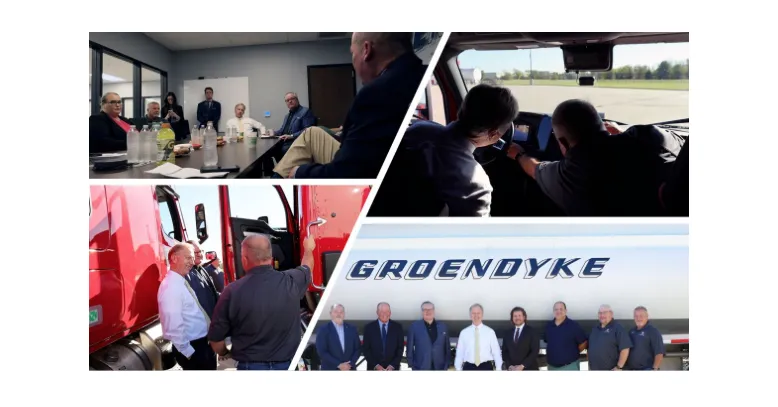
South Tulsa, OK — Today, American Trucking Associations Chairman Greg Hodgen and his team at Groendyke Transport welcomed Congressman Kevin Hern (R-OK) to one of the company’s newest truck terminals in South Tulsa, Oklahoma, for an in-depth discussion of the challenges and opportunities facing the trucking industry. The visit included a tour of the facility and a policy roundtable focused on protecting the trucking industry’s ability to safely and efficiently move America’s freight.
Congressman Hern met with Groendyke employees across a range of operational roles, including drivers, terminal personnel, and dispatchers, to learn more about the company’s operations in Oklahoma. During the visit, he also had the opportunity to get behind the wheel of a Groendyke truck to test the cutting-edge equipment and experience firsthand the skill and professionalism that define modern trucking.
Following the facility tour, Congressman Hern participated in a roundtable discussion led by Hodgen, CEO of Groendyke, along with senior members of Groendyke leadership, Oklahoma Trucking Association Chairman Robert Ragan of Melton Truck Lines, and Josh McAlister of Tenstreet. The conversation focused on the mounting toll lawsuit abuse is taking on trucking companies, professional drivers, and the prices consumers pay at the store.
“Congressman Hern understands the critical role trucking plays in powering Oklahoma’s economy and keeping America’s supply chain moving,” said ATA Chairman Greg Hodgen. “We appreciated the opportunity to showcase the professionalism of our drivers and employees while discussing the serious challenges that lawsuit abuse and third-party litigation financing are creating for our industry. We are grateful for Congressman Hern’s leadership on these issues and his willingness to engage directly with trucking professionals on the front lines.”
Roundtable participants thanked Congressman Hern for sponsoring the Tackling Predatory Litigation Funding Act. Congressman Hern’s legislation aims to close a tax loophole that has created a perverse incentive for deep-pocketed investors to pour vast sums of money into civil litigation in the hopes of obtaining an outsized return on case outcomes. Attendees also discussed several additional legislative proposals aimed at curbing lawsuit abuse, including the Staged Accident Fraud Prevention Act, the FAIR Trucking Act, the Uniform Vehicle Safety Standards Act, and the Protecting Third-Party Litigation Funding from Abuse Act.
“Trucking provides nearly 100,000 good-paying jobs in Oklahoma, supporting families and sustaining communities across our state,” Hodgen added. “In order to thrive, our industry depends on a fair legal environment that rewards safety and accountability rather than encouraging excessive litigation. The policies discussed today would help reduce fraud, increase transparency, and ensure that trucking companies can continue delivering the goods Americans depend on every day.”
The visit highlighted the value of bringing policymakers directly into trucking operations to hear from drivers, safety professionals, and business leaders about the real-world impact of federal policies. ATA and its members will continue working with lawmakers on both sides of the aisle to advance solutions that strengthen the supply chain, improve highway safety, and support the millions of Americans employed throughout the trucking industry.