UPCOMING EVENTS
- May 5th, 2026 – Kenworth Sales Customer Appreciation BBQ
- May 6th – 8th, 2026 – 2026 Management Conference & Trucking Expo
- May 27th, 2026 – DOT Audit Compliance Seminar
- May 28th, 2026 – HazMat 101 Training
- June 5th – 6th, 2026 – 2026 Utah Truck Driving Championship
- August 6th – 7th, 2026 – 2026 Rocky Mountain Regional Safety Rendezvous
Announcements
Thank you to all those who came out to support the 20th Annual SUTA Charitable Golf Tournament


Events:




2026 Rocky Mountain Regional Safety Rendezvous
August 6th – 7th, 2026 Coeur d’Alene Idaho

Resources:

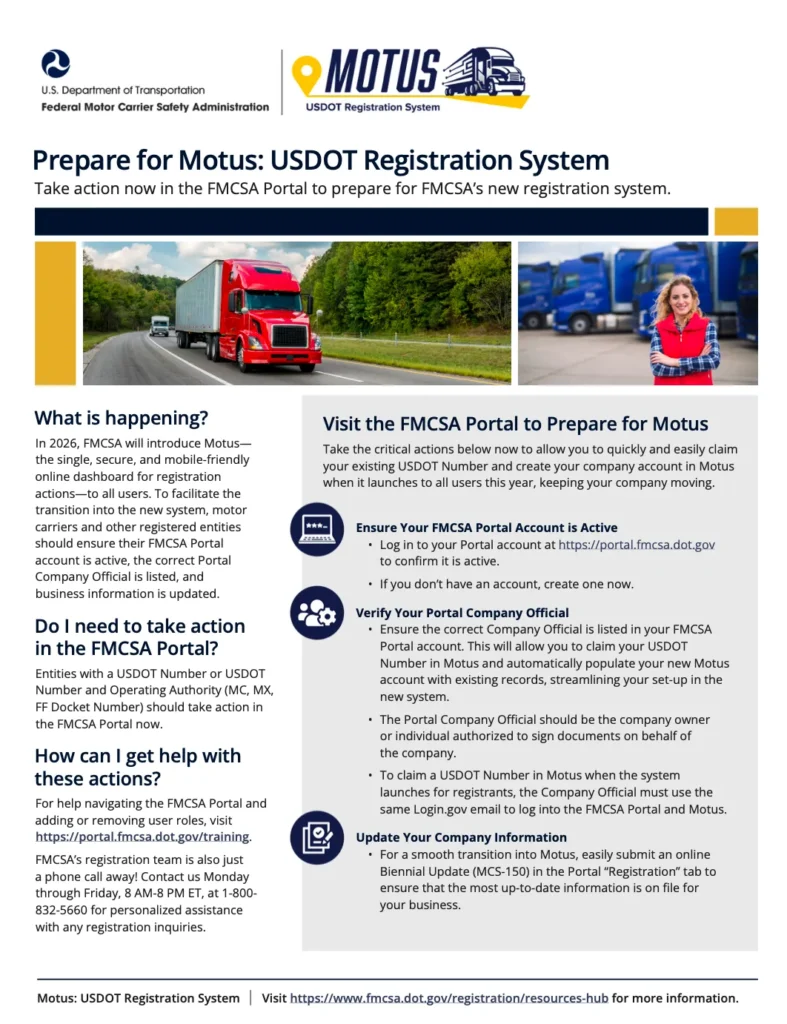
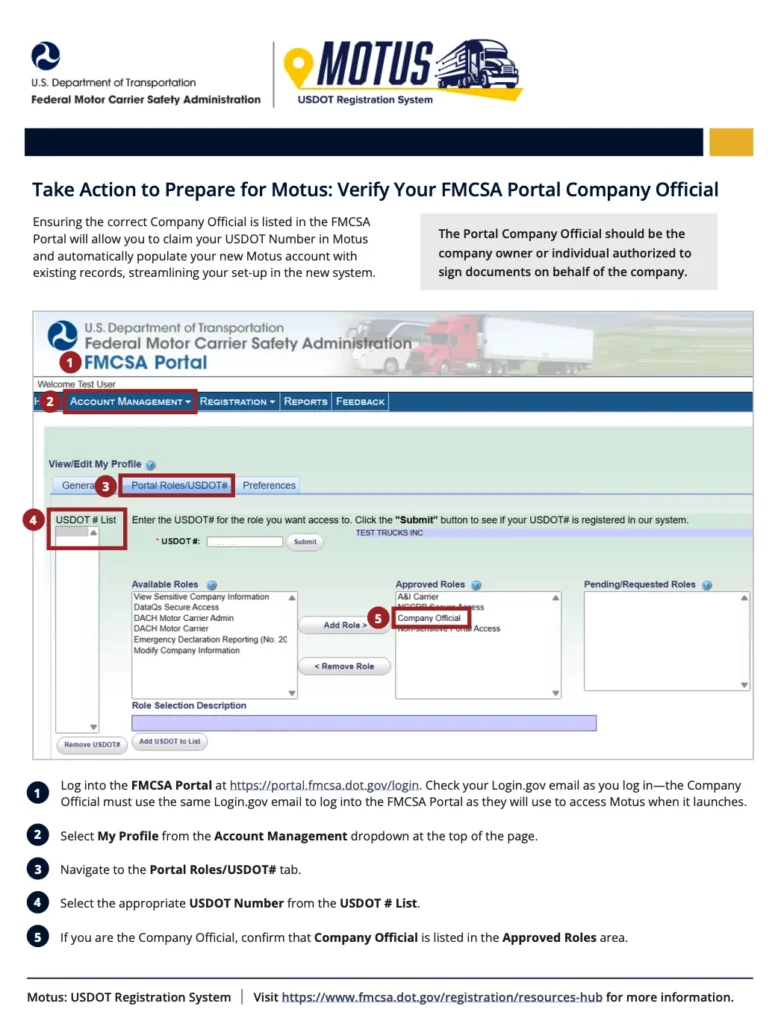


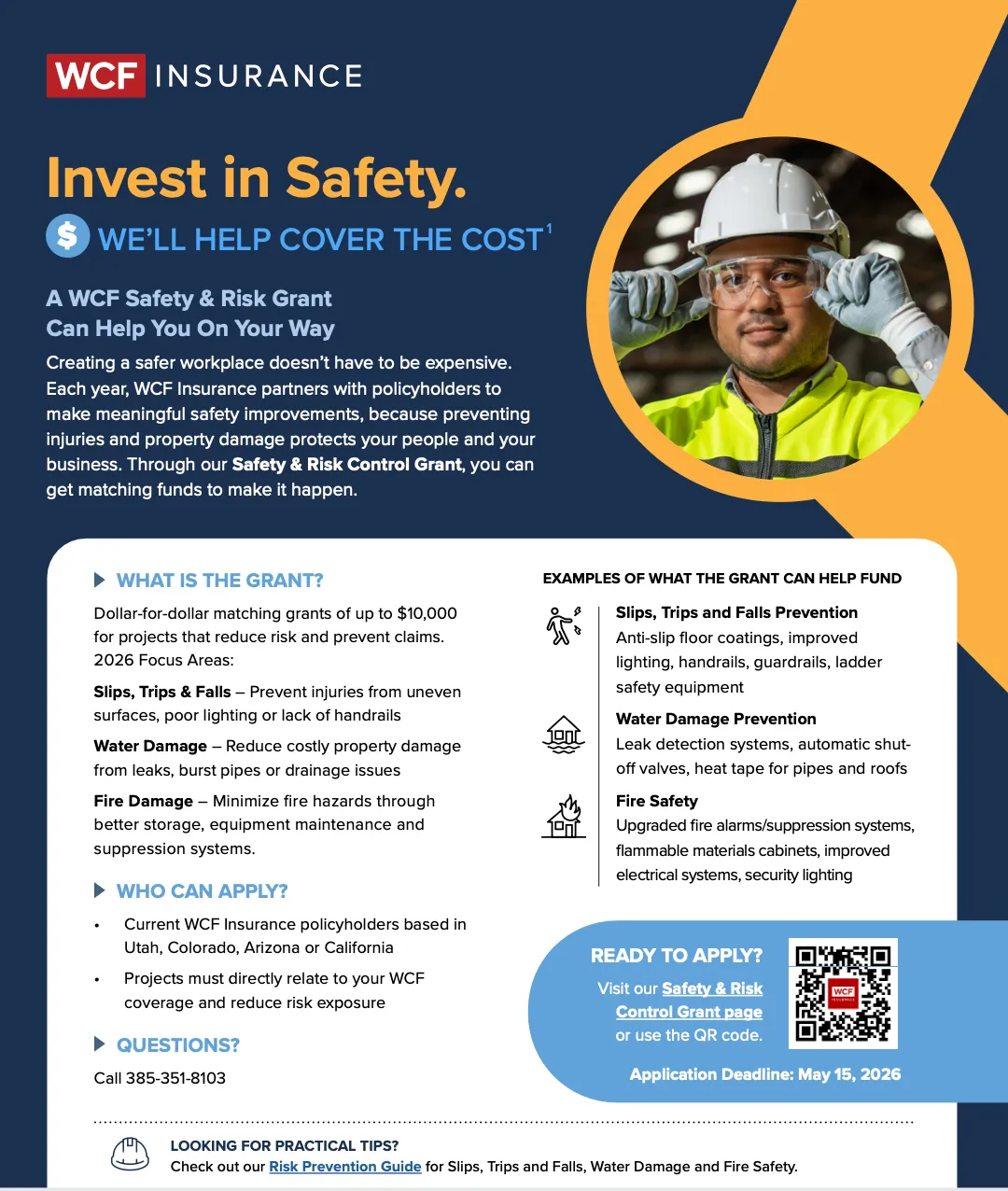

Truckin Hot News:
Federal Motor Carrier Safety Administration Notices
Today, FMCSA announced its plan to submit an Information Collection Request (ICR) titled “Quantifying the Benefits of Creating New Truck Parking Spaces”. This research study will collect approximately 1,000 survey responses from truck drivers about their experiences with finding truck parking spaces to estimate the monetary benefits of creating new truck parking spaces. Comments on this ICR must be received on or before May 6, 2026. The link to the Federal Register notice can be found here: Quantifying the Benefits of Creating New Truck Parking Spaces.
FMCSA has also scheduled a proposed rule titled “Fees for the Unified Carrier Registration Plan and Agreement,” for publication tomorrow, April 7, 2026. The proposed rule would amend the FMCSA’s regulations governing the annual Unified Carrier Registration (UCR) Plan and Agreement registration fees that participating States collect from motor carriers, motor private carriers of property, brokers, freight forwarders, and leasing companies. The proposed amendments do not change fees for the 2026 registration year, therefore the fees remain the same for the 2025 registration year. However, the proposed amendments will increase fees for the 2027 registration year and subsequent registration years by an average of 18 percent. Comments on the proposed rule must be received on or before May 7, 2026. Once the proposed rule is published, the notice can be found on the Federal Register here: Fees for the Unified Carrier Registration Plan and Agreement
Aurora Warning Beacon Application
Aurora submitted an exemption application to the Federal Motor Carrier Safety Administration for approval of an industry-wide alternative emergency warning device solution, cab-mounted warning beacons, which would be used by autonomous CMVs in lieu of manually placing warning triangles around the vehicle when stopped on the roadway. A statement of support from your organization, submitted directly to FMCSA, would be greatly appreciated as it would increase the likelihood of the exemption being granted. The deadline for comments is May 15, 2026.
When comparing approaching motorists’ abilities to detect, recognize and respond to a stopped CMV, such as changing lanes or slowing down, our research showed similar effectiveness between the warning beacons and traditional warning triangles. Link to full application here.
A key component of this application is that it is open to all AV truck companies (see Class of Persons in the application). In addition, we believe that the beacons should be able to be used by all trucking companies because it is not safe for anyone to walk on the side of a highway to place triangles. This exemption application is a step forward to getting a rule update as the long term solution that will offer all trucking companies a safer alternative to placing warning triangles.
The Aurora Government Relations team is continuing to work to push for a broader rule update to allow all trucks to use the warning beacons and this exemption is a key step in that process. If you would like to support our efforts to allow all trucks to use warning beacons, please email Melissa Wade at melissa@aurora.tech and we can set up time to discuss H.R. 4661 and other avenues of support.
To submit a statement of support online, go to the web page below and click the “Comment” button at the top left of the page.
https://www.regulations.gov/document/FMCSA-2026-0958-0002
An example statement is provided below for your consideration.
On behalf of [organization name], we would like to express support of the exemption application filed by Aurora Operations, Inc as published in the Federal Register on April 15, 2026.
As detailed in the exemption application and its attachments, experience and data from operating under the Federal Motor Carrier Safety Administration’s (FMCSA) 2025 waiver and independent research support the assertion that the proposed cab-mounted warning beacons achieve a level of safety that is equivalent to, or greater than, the level of safety provided by the current requirements—thereby meeting the requirements of 49 U.S.C. § 31315(b).
By granting the proposed exemption, FMCSA would authorize the use of an alternative method for warning motorists of the presence of a stopped commercial motor vehicle that achieves the underlying warning device regulation’s safety purpose. [Organization name] urges FMCSA to grant this petition as a step toward improving roadway safety for trucks and other road users.
DataQs Upgrades (Pro-Trucker Package Progress)
FMCSA Stakeholders –
FMCSA is excited to announce updates to its DataQs program which will improve turnaround times for truckers awaiting safety record corrections. States must now meet strict deadlines and follow a three-step independent review process when handling requests to fix data on crashes, inspections, and violations.
The system is key to maintaining accurate safety data and ensuring fair treatment for our law-abiding truck drivers. In 2024, DataQs processed more than 71,000 requests, including at least 8,300 related to crash data.
As part of Secretary Duffy’s Pro Trucker Package unveiled last summer, these changes to the DataQ process will continue to improve the lives of truck drivers.
Washington – Trucking activity in the United States jumped in February, pushing tonnage levels to the highest point in three years. Specifically, truck freight tonnage increased 2.6% after gaining 0.7% in January, according to the American Trucking Associations’ advanced seasonally adjusted For-Hire Truck Tonnage Index.
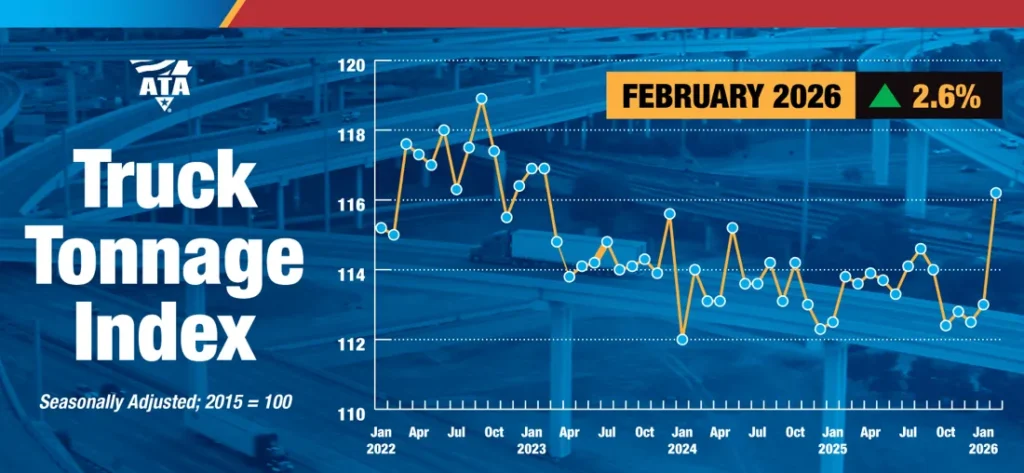
“February’s robust gain is great to see, but the size of the gain is likely magnified due to lower industry capacity,” said ATA Chief Economist Bob Costello. “With that said, particularly after a very prolonged freight recession, improving volumes in any manner is welcomed.”
In February, the ATA advanced seasonally adjusted For-Hire Truck Tonnage Index equaled 116.2, up from 113.3 in January. The index, which is based on 2015 as 100, increased 2.1% from the same month in 2025, the largest year-over-year gain since October 2022. During the first two months of the year, tonnage was up 1.4% from the same period last year. In 2025, the tonnage index was flat compared to the 2024 average.
January’s SA increase was revised up slightly from what was first reported in our February 24 press release.
The not seasonally adjusted index, which calculates raw changes in tonnage hauled, equaled 106.9 in February, 1.5% below January’s reading of 108.5.
Trucking serves as a barometer of the U.S. economy, representing 72.7% of tonnage carried by all modes of domestic freight transportation, including manufactured and retail goods. Trucks hauled 11.27 billion tons of freight in 2024. Motor carriers collected $906 billion, or 76.9% of total revenue earned by all transport modes.
Both indices are dominated by contract freight, as opposed to traditional spot market freight. The tonnage index is calculated on surveys from its membership and has been doing so since the 1970s. This is a preliminary figure and subject to change in the final report issued around the 5th day of each month. The report includes month-to-month and year-over-year results, relevant economic comparisons, and key financial indicators.
* 2024 estimates include forecasts.
Washington – Following today’s announcement that the U.S. Environmental Protection Agency (EPA) is removing the diesel exhaust fluid sensor requirement, American Trucking Associations Vice President of Energy & Environmental Affairs Patrick Kelly released this statement:
“The American Trucking Associations welcomes EPA’s updated guidance providing additional flexibility on diesel exhaust fluid (DEF) quality monitoring and preventing forced shutdowns.
“As we have previously said, these systems have too often sidelined otherwise safe, compliant trucks due to faulty or unreliable DEF quality sensors, an issue that was compounded by widespread parts shortages in recent years. When a bad sensor can trigger a full inducement, the result is unnecessary downtime, unnecessary towing costs, strained supply chains, and higher costs across the board.
“EPA’s decision to provide manufacturers with flexibility to suspend these inducements—and eliminate problematic sensors altogether by monitoring a truck’s actual emissions—is a pragmatic solution that reflects how these systems perform in the real world.
“ATA appreciates EPA’s willingness to listen to industry and act. We will continue working with the agency and our industry partners to ensure emissions regulations are both effective and workable for the men and women who keep America’s goods moving.”
Washington – With average diesel prices surging to over $5.40 per gallon, the American Trucking Associations’ Moving & Storage Conference recently secured relief for movers doing business with the Department of War.
Last week, ATA-MSC sent a letter urging Major General Lance Curtis, the Commanding General of Personal Property Activity, to refine the Fuel Rate Adjustment (FRA) methodology under the Defense Personal Property Program. In light of the rapid escalation in diesel prices related to the conflict in the Middle East, ATA-MSC requested that the FRA methodology be moved from a monthly to a weekly index.
Today, the Department of War issued an advisory granting ATA-MSC’s request. Moving forward, fuel reimbursements will now be based on the U.S. On-Highway Diesel Fuel Price published weekly by the Energy Information Administration. The policy will be in effect until further notice.
In response, ATA-MSC Executive Director Dan Hilton issued this statement praising the decision:
“ATA’s Moving & Storage Conference is grateful to the Department of War for listening to the concerns of the moving and storage industry. Movers take great pride in supporting military families and are a key component of military readiness; however, surging fuel prices have squeezed their bottom lines and have made their operations increasingly difficult. We appreciate the DoW’s quick action to alleviate the severe financial challenges that many movers have been experiencing. This will help ensure that military relocations remain reliable, predictable, and seamless in service to the men and women in uniform and their families who deserve nothing less.”
Oklahoma City, OK – The American Trucking Associations’ Transportation Security Council announced today that it has recognized several extraordinary fleets for their commitment to trucking industry security and loss prevention efforts.
“Our industry is built on the firm foundation of security, allowing every shipment to move safely and every business to operate with confidence,” said ATA President & CEO Chris Spear. “The men and women who dedicate themselves to keeping our trucks, cargo, and communities safe are essential not just to the success of their companies, but to the smooth operation of the entire supply chain every single day. Their commitment protects the public, supports commerce, and ensures that trucking continues to keep our nation moving.”
The winners were recognized at ATA’s 2026 Safety, Security & Human Resources National Conference & Exhibition Awards Banquet sponsored by Tenstreet.
They include:
ATA Excellence in Security
- ABF Freight
ATA Excellence in Claims & Loss Prevention
- Estes Express Lines
“Honoring these fleets goes beyond simply giving awards. It is about showcasing their unwavering dedication to safeguarding people, freight, and the integrity of our industry,” said TSC Executive Director Jacob Pierce. “Their leadership in security, claims, and loss prevention demonstrates the forward-thinking, principled approach that keeps our industry strong and sets a standard for others to follow.”
Oklahoma City, OK – The American Trucking Associations’ Safety Management Council announced today that it has recognized several outstanding fleets and industry leaders for their exceptional dedication to safety both on the road and in the workplace.
“Safety and security in trucking are at the core of everything we do. They are what keep operations running smoothly and, even more important, protect every driver on the road,” said ATA President & CEO Chris Spear. “The professionals in this space play a critical role in the industry’s success. For many, it becomes a long-term commitment to continuously improve standards and prevent risk. At the end of the day, their work goes beyond compliance. They are actively helping to save lives every time a truck travels our roadways.”
The winners were recognized at ATA’s 2026 Safety, Security & Human Resources National Conference & Exhibition Awards Banquet sponsored by Tenstreet.
They include:
President’s Trophy – Sponsored by Great West Casualty Company
- Over 100 Million Miles – A. Duie Pyle, Inc.
- Between 25 – 100 Million Miles – Red Classic
- Under 25 Million Miles – Alaska West Express
2025 ATA National Driver of the Year – Sponsored by PrePass Safety Alliance
- Don Carpenter, Old Dominion Freight Lines.
2025 Excellence in Safety – Sponsored by Great West Casualty Company
- Tennessee Trucking Association
“We’re thrilled to honor this year’s recipients. Each plays a key role in building a safer, more resilient culture throughout our industry,” said SMC Executive Director Jacob Pierce. “From motor carriers to state association leaders and drivers on the road, their commitment is vital to promoting safety, and we deeply appreciate their hard work.”
Washington – Today, the American Trucking Associations’ Trucking Cares Foundation donated $2,500 to the Nebraska Trucking Association to support the delivery of wildfire relief in the Cornhusker State.
“The devastating wildfires that have torn through western Nebraska have caused widespread property damage and disruption to daily lives, particularly for farmers and ranchers. But in the wake of this disaster, we have seen countless examples of neighbors stepping up to help,” said TCF Chairman Greg Owen, head coach of Ability Tri-Modal. “In times of need, truckers are a lifeline, delivering critical relief supplies where they are needed most. With the trucking industry being squeezed by high diesel prices, we are proud to join the Nebraska Trucking Association’s efforts to help defray truckers’ costs and enable communities to get back on their feet quickly.”
“Having TCF join our relief effort is huge,” said NTA President and CEO, Kent Grisham. “With that donation, along with the support coming in from individuals and companies, we are now able to double our initial commitment to our Trucking Heroes Wildfire Relief Fund. We are seeing trucks roll to the devastated areas from throughout the region, some of them making many roundtrips. Rebuilding our legendary grazing territory in the sandhills of Nebraska will be a long-haul effort for everyone, but I know our trucks will keep rolling for as long as it takes, like always.”
Wildfires ignited in western Nebraska last month and ripped across the plains, burning hundreds of thousands of acres in their path. Fueled by strong winds, the fires affected large swaths of ranch and pasture lands; destroyed homes, barns, and fences; and injured or killed livestock and wildlife.
With more than 35,000 cattle displaced and countless acres lost, demand is high for feed and supplies. Trucks are needed to transport it all, but the soaring cost of fuel is hampering the response.
To help, the Nebraska Trucking Association launched the Nebraska Trucking Heroes Stipend through its charitable arm, the Nebraska Trucking Cares Fund. Truckers, farmers, and ranchers who assist with transporting emergency relief supplies can receive aid to offset the high cost of fuel.
The stipend offers $0.50 per mile, up to 500 miles per trip, for truckers helping with wildfire relief in western Nebraska. To learn more about the Nebraska Trucking Heroes Wildfire Relief Fund, or to donate, visit https://nebtrucking.com.
Washington — Honoring the hard work and commitment of professional technicians, the American Trucking Associations and ATA’s Technology & Maintenance Council announced today that the seventh annual National Technician Appreciation Week will be held June 14-20. This year’s theme is “Celebrating technicians that keep us moving.”
“Trucking operations run around the clock and cover hundreds of billions of miles to deliver to virtually every home, workplace, and business. Our nation owes enormous gratitude to the hardworking men and women who keep our trucks well maintained and ensure the wheels of our essential industry continue to turn,” said ATA President & CEO Chris Spear. “I look forward to celebrating National Technician Appreciation Week, when we will join Americans from coast to coast to thank technicians for their knowledge, skill, and attention to detail. Their professionalism and commitment to upholding exacting standards enhance the efficiency of our supply chain and help to keep everyone on the road safe.”
Professional technicians perform one of the most demanding and critical roles in trucking. NTAW acknowledges the extraordinary efforts and talent of these dedicated professionals.
“We are pleased to announce the dates for the seventh annual National Technician Appreciation Week to recognize the professional technicians who are indispensable to trucking operations,” said TMC Executive Director Robert Braswell. “By ensuring vehicles are safe and ready for service, technicians make it possible for drivers to deliver the goods we all rely on. This week is an opportunity for both the industry and the public to show their appreciation and thank these professionals for the critical work they do every day.”
For more information on NTAW, visit https://ntaw.trucking.org/. Download social media templates here.
Washington — Today, the American Trucking Associations announced it is now accepting nominations to recognize the most passionate representatives of the trucking industry’s image with the 2026 Mike Russell Trucking Industry Image Award.
The award celebrates companies, organizations, and individuals who creatively generate awareness of the trucking industry. This award is presented to an individual, motor carrier, trucking organization, and industry supplier who demonstrate excellence in creating a positive image for the trucking industry. This is illustrated by a safety-first approach to conducting business and professionalism.
“The trucking industry touches every part of our lives—moving the goods our communities rely on and creating millions of good-paying jobs across the country,” said ATA Vice President of Industry Affairs Nikki Thomas. “The Mike Russell Award honors the people and organizations who truly represent the heart of trucking and proudly elevate our industry’s story. These honorees are setting a higher standard, changing perceptions, and inspiring others to share in the pride of what trucking delivers every day. Each year, our judges are excited to review an outstanding slate of nominations and to celebrate these impactful contributions at ATA’s Management Conference & Exhibition in October.”
ATA is pleased to announce Great West Casualty Company is continuing their sponsorship of the 2026 Mike Russell Trucking Image Award.
“The Mike Russell Trucking Industry Image Award celebrates leaders who shine a light on the real impact trucking has on our daily lives. These luminaries motivate us to keep educating the public about the dedication, innovation, and leadership that move our nation forward,” said ATA COO Dan Horvath. “We also thank Great West Casualty Company for sponsoring this award for the 19th year. This recognition reminds us of the tremendous progress we’ve made in telling trucking’s story, while also underscoring how much more there is to do.”
Last year, ATA recognized the Trucking Association of New York and Antoine Sadler a professional truck driver for Walmart Transportation.
The award was created in 2007 and is named in honor of Mike Russell, a trucking industry supporter and former ATA Vice President of Public Affairs. Submissions for the Mike Russell Trucking Industry Image Award are assessed by an expert, impartial panel of judges based on creativity, frequency, reach, impact, and execution.
Visit the official nomination page to learn more about the award and how to submit a nomination.
Completed nominations must be submitted to the ATA Industry Affairs Department no later than Friday, July 31. The winners of the 2026 Mike Russell Trucking Image Award will be announced during ATA’s Management Conference and Exhibition scheduled for October 17-20 in Charlotte, North Carolina.

Washington, DC – At its recent meeting in Atlanta, the American Transportation Research Institute (ATRI) Board of Directors, led by Chairman Derek Leathers of Werner Enterprises, reviewed and approved the 2026 Top Research Priorities. The research priorities were identified by ATRI’s Research Advisory Committee (RAC) at its annual meeting held March 10-11 in Washington, DC.
ATRI’s RAC selected a diverse set of research priorities designed to address some of the industry’s most critical issues focused on improving safety, enhancing driver health and wellness, and understanding how major weather events impact trucking operations. The 2026 ATRI top research priorities are:
Outcomes of Coaching Practices and Front-Line Management on Safety. The trucking industry has increasingly adopted a proactive approach to safety that relies on coaching and front-line management. Through a series of data collection efforts and statistical analyses, this research will identify industry best practices for driver coaching that have the greatest impact on safety outcomes.
Advancing “Beyond Compliance.” Over 15 years ago, ATRI published the first research examining potential benefits of an “Alternative Compliance” program – a concept that would motivate and reward motor carriers for voluntary investments in safety technologies, strategies, and programs that have proven safety benefits. Now referred to as “Beyond Compliance,” that same concept continues to generate interest by industry and government. This research will examine potential incentives for participation in a Beyond Compliance program and develop a pilot test methodology and evaluation plan.
State Benchmarking: Identifying the Best Business Climate States for Trucking. There currently exists significant variances in the 50 states’ economic, operational and regulatory environments for motor carriers. This research will develop a benchmarking index based on state data relating to each state’s business climate measures including insurance costs and litigation exposure, taxes and fees assessed on truck fleets, labor costs including workers compensation, and operational costs such as fuel prices, tolls and parking availability.
Assessing the Costs and Benefits of Federal and State Regulations by Stakeholder Group. The trucking industry is subject to myriad regulations at the state and federal levels. Many of those regulations present increased costs, decreased productivity, and unclear benefits, while others may provide measurable benefits but are not enforced. This research will develop a template for trucking industry regulatory cost-benefit analyses that index regulations based on how beneficial they are, whether or not they are clearly understood and implemented by the industry, and the degree to which they are enforced.
Quantifying the Relationship Between Medical Card Status & Operational Impacts. The nation’s truck drivers face myriad health and wellness challenges exacerbated by the sedentary nature of truck driving, extended periods away from home, and inconsistent support for exercise and healthy eating. Beyond creating chronic health issues for drivers, these challenges increase the industry’s operational costs including healthcare, workers compensation, reduced driver productivity and increased driver turnover. This research will utilize drivers’ medical card status as a proxy for driver health and quantify the nexus between driver health and increased industry operational costs.
Major Weather Event Impacts on Trucking. Major weather events such as hurricanes, wildfires and snowstorms have a significant impact on roadway operations, particularly when the impacts close major freight routes for an extended period of time. The closures are extremely disruptive and costly for supply chains and in particular, the trucking industry. This research will utilize case studies to identify best practices for truck fleets, state Departments of Transportation and State Trucking Associations for preparing for and responding to major weather events.
Washington — The American Trucking Associations today praised six Members of Congress for sending a letter urging the U.S. Department of Health and Human Services to remove regulatory barriers that have stalled the adoption of modern, effective workplace drug testing methods—including hair and oral fluid testing—in safety sensitive industries.
The letter was signed by Representatives Andy Harris (R MD), Ben Cline (R VA), Pete Sessions (R TX), Mike Bost (R IL), Mike Collins (R GA), and Claudia Tenney (R NY) and sent to HHS Secretary Robert F. Kennedy Jr.
“For far too long, HHS has dragged its feet on implementing science-based drug testing policy, and these bureaucratic delays have come at the expense of safety,” said ATA President & CEO Chris Spear. “ATA applauds the leadership of Representatives Harris, Cline, Sessions, Bost, Collins, and Tenney for calling on HHS to correct the failures of previous administrations, follow the law, and strengthen safety across the nation’s transportation network.”
In their letter to HHS, the Members of Congress wrote that current federal drug testing programs “serve a critical public safety mission,” but warned that outdated regulatory structures now “threaten the relevance and effectiveness of the entire program.”
Oral fluid testing was approved for regulated use in 2023, yet no U.S. laboratory has been able to achieve certification due to barriers imposed by the Food & Drug Administration. Additionally, in 2015, Congress first directed HHS to recognize hair testing as a valid alternative to urine testing for commercial motor vehicle drivers. HHS has still not issued the necessary guidance despite Congress reaffirming that directive earlier this year.
The primary obstacle to the widespread adoption of oral fluid testing is a requirement by the FDA to oversee workplace drug testing programs. FDA’s clearance pathway is structured around clinical patient diagnostics, however, and is not well suited for validating testing methods that cover more than 6.5 million DOT-regulated workers and hundreds of thousands of federal employees.
Workplace drug testing programs already receive robust oversight from the Substance Abuse and Mental Health Services Administration and the National Laboratory Certification Program. This supervision meets or exceeds FDA standards.
The Members called on HHS to:
- Exempt workplace drug testing programs from review by FDA, which is ill-equipped to oversee the forensic nature of these tests.
- Reaffirm that workplace drug testing programs are subject to the rigorous oversight framework provided by SAMHSA and NLCP.
- Direct SAMHSA’s Division of Workplace Programs to serve as the authoritative body for future updates to drugs, cutoffs, testing technologies, and specimen types, ensuring the federal program can remain current and responsive to evolving public safety threats.
- Finalize the hair testing guidelines as directed by Congress over a decade ago. While the above steps would pave the way for the implementation of hair testing, this can only happen if HHS promptly finalizes its long-overdue rule.
The lawmakers further stressed that modernization is urgently needed to combat growing efforts to defeat traditional urine drug tests. According to an analysis of Quest Diagnostics data, substituted and invalid drug specimens—two common forms of drug test subversion—increased over 370% and 36%, respectively, from 2022 to 2023 among federally regulated, safety-sensitive employees.
“Oral fluid, hair, and other directly observed specimen types significantly reduce the opportunity for specimen substitution and have demonstrated higher positivity rates as a result. These alternative testing methods offer the critical safeguards needed to keep impaired workers from operating on our nation’s roads and transportation systems and protect public safety,” the lawmakers wrote.
Click here to read the letter.
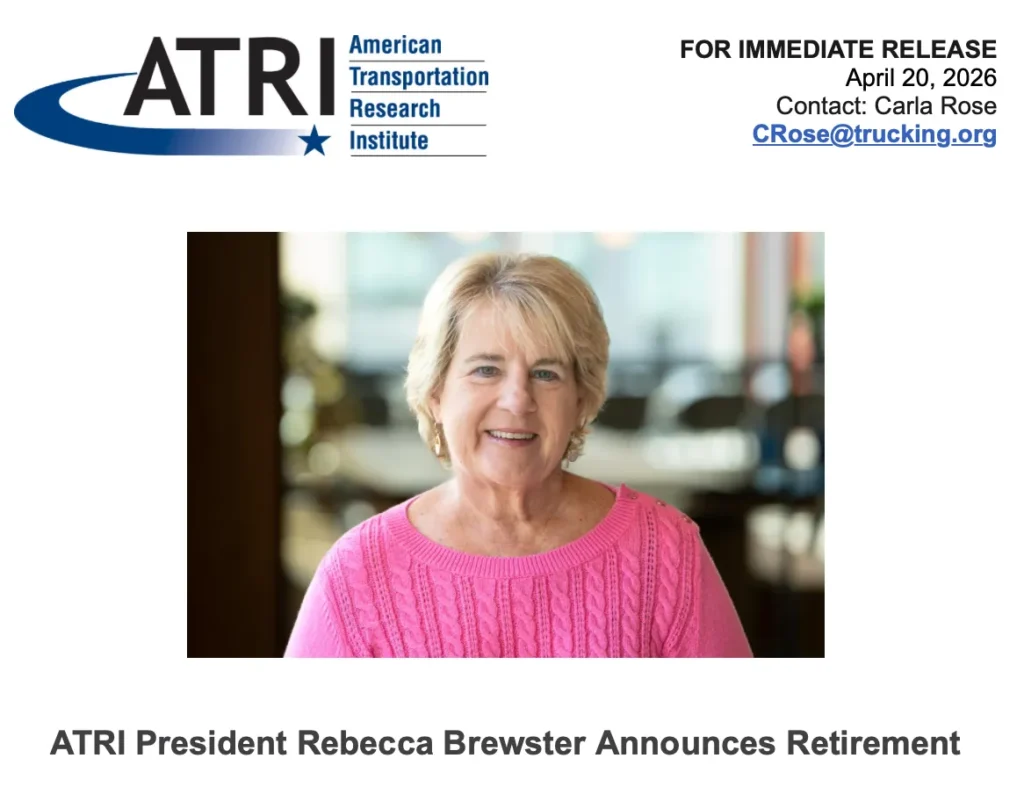
Atlanta, GA – ATRI President Rebecca Brewster has announced that she will retire in early 2027, after serving the organization for 34 years, 25 of which she has led ATRI as its president and chief operating officer.
During her tenure at ATRI, the organization has grown into the trucking industry’s most respected source for industry data and analysis, capturing numerous awards for research excellence.
“Serving the trucking industry through ATRI has been one of the greatest privileges of my life and I sincerely appreciate the Board’s long-time support of and confidence in my leadership,” said Brewster. “The ATRI team is well-positioned to carry on ATRI’s mission of research to improve the industry’s safety and productivity and I look forward to working with the new leader on the transition.”
ATRI’s Board of Directors, led by Werner Enterprises Chairman Derek Leathers, has appointed a search committee of Board members to identify Brewster’s successor. ATRI Board member Brenda Neville, Iowa Motor Truck Association President and CEO will chair the search committee.
“Rebecca’s leadership of ATRI has made a lasting impact on the trucking industry,” said Leathers. “We are grateful for her three decades of leadership and the legacy she will leave behind.”
In May the ATRI search committee will commence its work to identify a new leader. More details will be available on the ATRI website at TruckingResearch.org.
| Largest Year-Over-Year Gain since October 2022 |
| Washington – Trucking activity in the United States rose 0.3% in March after surging 2.9% in February, according to the American Trucking Associations’ advanced seasonally adjusted For-Hire Truck Tonnage Index. |
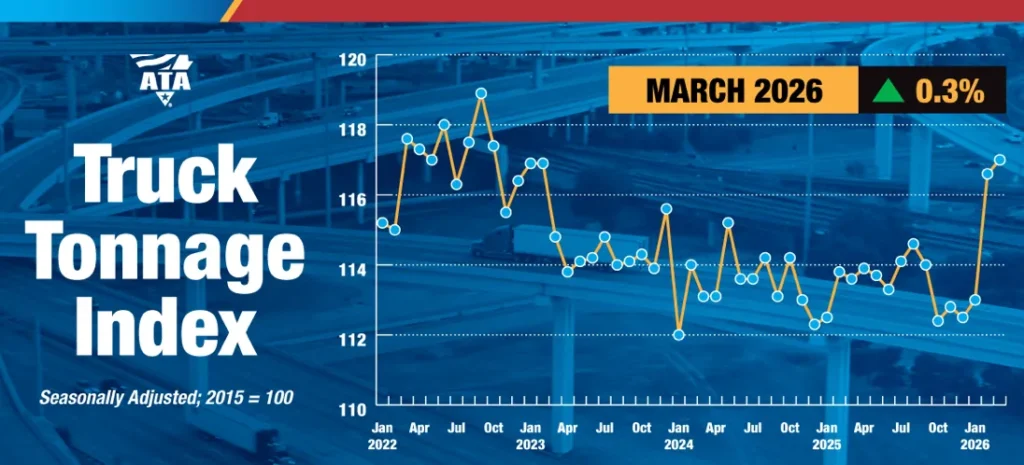
“While March wasn’t particularly strong sequentially, it was the largest year-over-year increase since October 2022,” said ATA Chief Economist Bob Costello. “The first quarter of 2026 was also the best performance since the third quarter of 2017 when considering both sequential and year-over-year results.”
In March, the ATA advanced seasonally adjusted For-Hire Truck Tonnage Index equaled 117.0, up from 116.6 in February. The index, which is based on 2015 as 100, increased 3% from the same month in 2025, the largest year-over-year gain since October 2022. During the first three months of the year, tonnage was up 2.1% from the same period last year. In 2025, the tonnage index was flat compared to the 2024 average.
February’s SA increase was revised up slightly from what was first reported in our March 24 press release.
The not seasonally adjusted index, which calculates raw changes in tonnage hauled, equaled 120.1 in March, 12% above February’s reading of 107.3.
Trucking serves as a barometer of the U.S. economy, representing 72.7% of tonnage carried by all modes of domestic freight transportation, including manufactured and retail goods. Trucks hauled 11.27 billion tons of freight in 2024. Motor carriers collected $906 billion, or 76.9% of total revenue earned by all transport modes.
Both indices are dominated by contract freight, as opposed to traditional spot market freight. The tonnage index is calculated on surveys from its membership and has been doing so since the 1970s. This is a preliminary figure and subject to change in the final report issued around the 5th day of each month. The report includes month-to-month and year-over-year results, relevant economic comparisons, and key financial indicators.
* 2024 estimates include forecasts.
Washington, DC – The American Transportation Research Institute (ATRI) today announced an extension for motor carriers to participate in its annual Operational Costs of Trucking report. For-hire motor carriers can now submit data through Friday, May 15, 2026.
Data for can be submitted online or by PDF: both forms are available on ATRI’s websitealong with a sample customized report and other helpful information for participants. All confidential data is protected and published only in anonymized averages; NDAs can be signed by request.
ATRI’s Operational Costs of Trucking is trusted by thousands of industry decisionmakers every year as a key barometer of freight market conditions and is the leading public benchmarking tool for motor carriers of all sectors, from owner-operators to 10,000+ truck fleets. The report tracks cost metrics such as driver pay, equipment expenditures, and insurance premiums as well as key performance indicators such as non-revenue mileage, driver utilization, mileage between breakdowns, and revenue per truck per week.
All participating motor carriers receive a customized report that compares their costs and operations to an anonymized peer group of the same sector and size. New in 2026, customized reports for multi-year participants will also include year-over-year comparisons to more directly evaluate trends over time.
Washington — Following action by the U.S. Department of Justice and the Drug Enforcement Administration to reclassify state-licensed medical marijuana, American Trucking Associations Vice President of Safety Policy Brenna Lyles issued this statement:
“We are reviewing DEA’s announcement and assessing what near- and long-term impacts it could have on USDOT’s drug and alcohol testing program. The American Trucking Associations does not take a formal position on marijuana legalization. However, we are concerned about the safety risks of rescheduling it without clear safeguards to preserve USDOT’s testing authority for safety-sensitive workers.
“A safe driver is a qualified driver. And a qualified driver is drug- and alcohol-free. As we’ve seen with recent events and the increase in enforcement from USDOT, it’s critically important that drivers of 80,000-pound vehicles are unimpaired and fit to operate that equipment.
“Absent clear protections for USDOT’s marijuana testing authority, a policy shift could undermine the Department’s drug- and alcohol-testing program and weaken highway safety. That risk is compounded by the lack of a reliable, widely accepted standard to measure marijuana impairment, whether roadside or before a driver gets behind the wheel.
“We appreciate USDOT’s continued focus on safety and efforts to strengthen driver qualification and enforcement standards. Now it must work with HHS, DOJ, and Congress to ensure any policy change preserves the authority, tools, and technical capacity needed to keep impaired and unqualified drivers off our roads.”
For years, ATA has led efforts to mitigate the public safety risk posed by marijuana due to policy changes at the state and federal levels. In August, ATA sent a letter to USDOT Secretary Sean Duffy to push for safeguards to the testing authority and technical requirements that apply to USDOT-regulated, safety-sensitive workers.