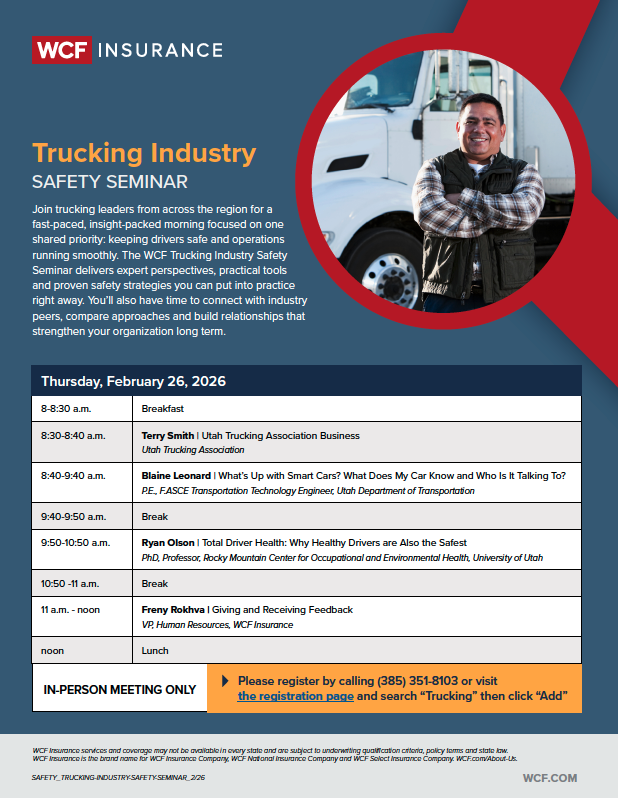
UPCOMING EVENTS
- March 4th, 2026 – NUTA Luncheon
- March 5th, 2026 – Safety Management Council Luncheon
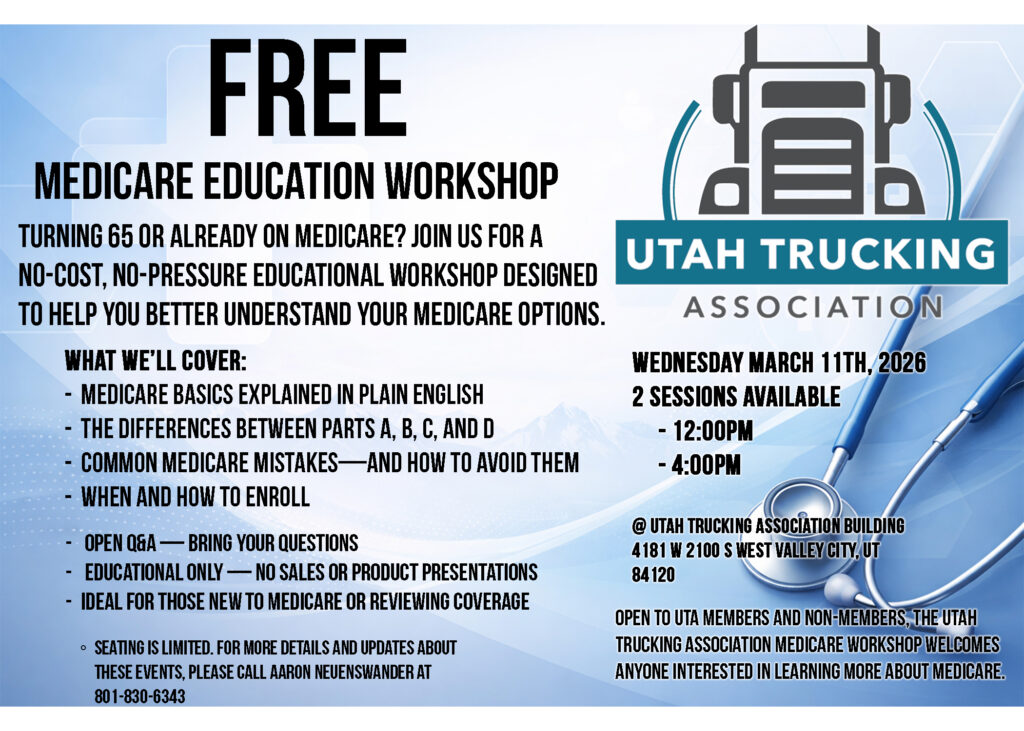
- March 11th, 2026 – Free Medicare Education Workshop
- April 1st, 2026 – 20th Annual Southern Utah Trucking Association Charitable Golf Tournament
- April 3rd, 2026 – BUTA Luncheon
- April 20th – 24th, 2026 – NATMI CDS / CSS Fleet Safety Training
- April 24th, 2026 – Spring Warmup Sporting Clay Tournament
- May 6th – 8th, 2026 – 2026 Management Conference & Trucking Expo
- June 5th – 6th, 2026 – 2026 Utah Truck Driving Championship
- August 6th – 7th, 2026 – 2026 Rocky Mountain Regional Safety Rendezvous
Announcements

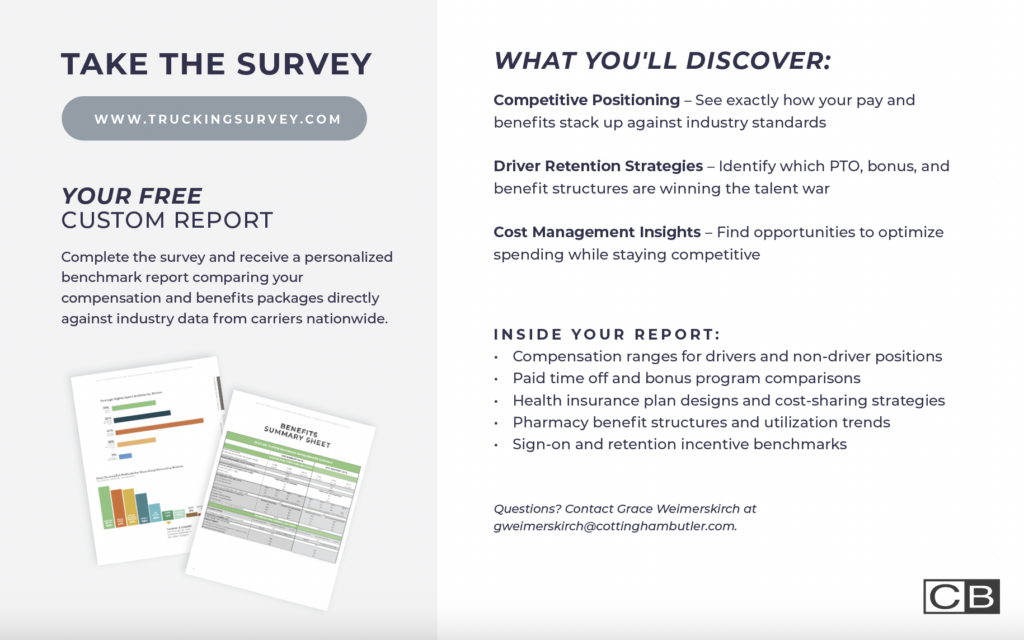
KNOW WHERE YOU STAND.
COMPETE WHERE IT COUNTS.
In today’s tight labor market, competitive compensation and benefits aren’t optional, they’re
essential. For seventeen years, Cottingham & Butler has helped motor carriers make smarter
decisions about how to attract and retain drivers without breaking the budget.
SURVEY LAUNCHES JANUARY 19 | TAKES 15-20 MINUTES | CUSTOM REPORTS DELIVERED IN JUNE!
Events:






2026 Rocky Mountain Regional Safety Rendezvous
August 6th – 7th, 2026 Coeur d’Alene Idaho

Resources:
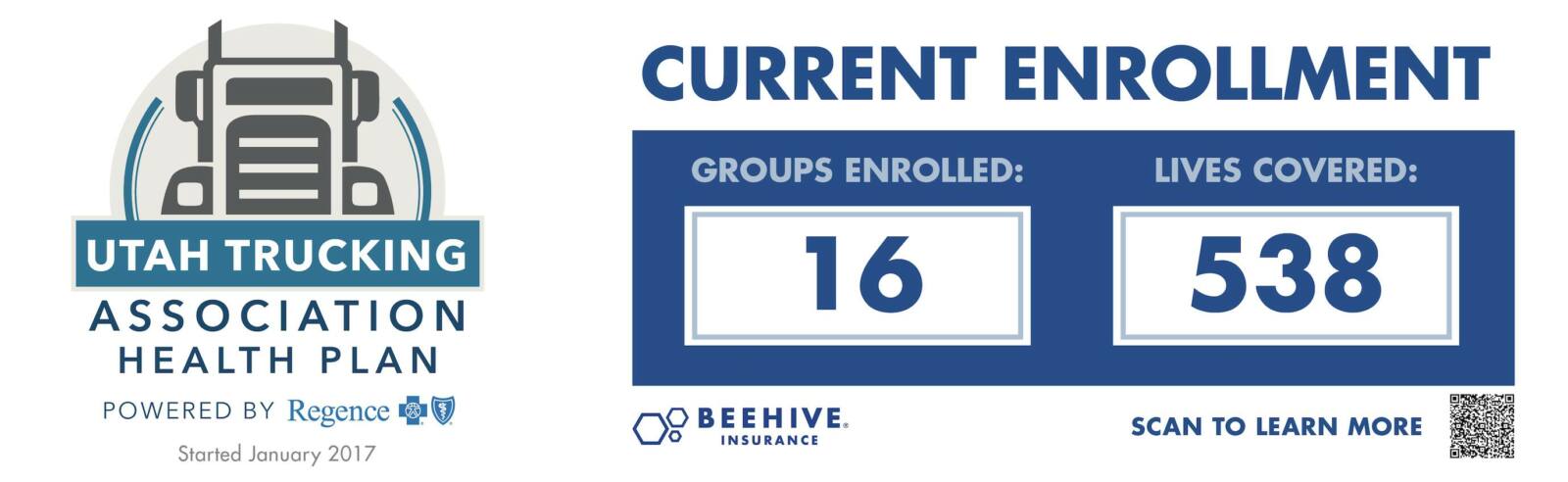


Utah Trucking Association 401K

Crafting a Fulfilling Retirement
Mar 10th – 1 p.m. MST
Join us this month where you’ll be guided step-by-step through the essential stages of retirement planning. From understanding Social Security and Medicare to developing smart income strategies, managing the emotional transition, and addressing estate planning, this session covers it all.


Truckin Hot News:
Washington, DC – The American Transportation Research Institute (ATRI) today called on for-hire motor carriers to participate in its annual Operational Costs of Trucking report.
ATRI’s Operational Costs of Trucking is trusted by thousands of industry decisionmakers every year as a key barometer of freight market conditions and is the leading public benchmarking tool for motor carriers of all sectors, from owner-operators to 10,000+ truck fleets.
The report tracks cost metrics such as driver pay, equipment expenditures, and insurance premiums as well as key performance indicators such as non-revenue mileage, driver utilization, mileage between breakdowns, and revenue per truck per week.
All participating motor carriers receive a customized report that compares their costs and operations to an anonymized peer group of the same sector and size. New in 2026, customized reports for multi-year participants will also include year-over-year comparisons to more directly evaluate trends over time.
“There are signs of growing opportunities for trucking in 2026, but only if fleets can maintain disciplined, nimble operations,” said Hirschbach Motor Lines Chief Financial Officer Andrew Hadland. “ATRI’s Operational Costs of Trucking and the customized report we receive as participants are important inputs for ensuring healthy performance in our costs and operations despite economic headwinds.”
For-hire motor carriers are invited to participate by Friday, April 24, 2026. Data for the year 2025 can be submitted online or by PDF: both forms are available on ATRI’s website along with a sample customized report and other helpful information for participants. All confidential data is protected and published only in anonymized averages.
| Tonnage Index was Flat in 2025 Washington – Trucking activity in the United States increased slightly in January, but volumes remained at low levels after significant declines in September and October. Specifically, truck freight tonnage increased 0.4% after falling 0.2% in December, according to the American Trucking Associations’ advanced seasonally adjusted For-Hire Truck Tonnage Index. |
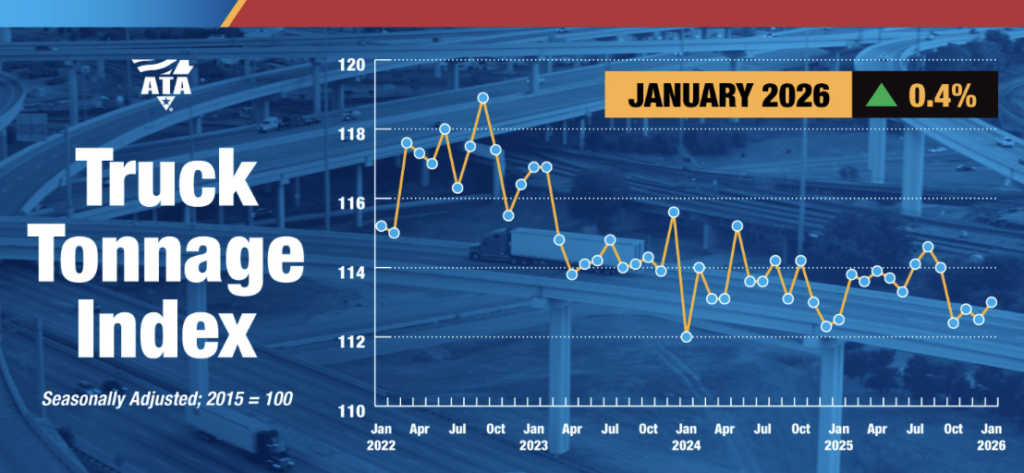
“Tonnage has lifted off the recent bottom in October with modest gains in November and January,” said ATA Chief Economist Bob Costello.“However, truck freight tonnage in January was down 1.3% from the 2025 high point in August. The trucking recovery story is more of a supply-side one with those motor carriers remaining benefiting from reduced overall capacity.”
In January, the ATA advanced seasonally adjusted For-Hire Truck Tonnage Index equaled 113.0, up from 112.5 in December. The index, which is based on 2015 as 100, increased 0.5% from the same month in 2025. In 2025, the tonnage index was flat compared to the 2024 average.
The not seasonally adjusted index, which calculates raw changes in tonnage hauled, equaled 108.3 in January, 2.5% below December’s reading of 111.1.
ATA recently revised the seasonally adjusted index back five years as part of its annual revision.
Trucking serves as a barometer of the U.S. economy, representing 72.7% of tonnage carried by all modes of domestic freight transportation, including manufactured and retail goods. Trucks hauled 11.27 billion tons of freight in 2024. Motor carriers collected $906 billion, or 76.9% of total revenue earned by all transport modes.
Both indices are dominated by contract freight, as opposed to traditional spot market freight. The tonnage index is calculated on surveys from its membership and has been doing so since the 1970s. This is a preliminary figure and subject to change in the final report issued around the 5th day of each month. The report includes month-to-month and year-over-year results, relevant economic comparisons, and key financial indicators.
Washington – Today, the American Trucking Associations announced a one-year renewal of an alliance with ACT 1—the Allied Committee for the Trucking Industry. By remaining the premier sponsor of ATA events, ACT 1 will continue to build on its productive partnership with ATA to promote trucking advocacy, ATA meetings, and the associations’ targeted efforts to strengthen the industry.
“Delivering America’s freight safely and on time depends on strong partnerships with suppliers who bring innovation and efficiency to the forefront of our industry,” said ATA President and CEO Chris Spear. “ATA is grateful for ACT 1’s longstanding support of our Federation, which elevates our events and programs, empowers our members to grow, and strengthens our collective voice in Washington and across the country.”
“ACT 1 is proud to be a premier sponsor of ATA at six of the upcoming events in 2026,” said Kelly Gedert, president of ACT 1 and general manager of strategic value chain and marketing at Daimler Truck North America. “A significant part of our mission at ACT 1 is to have collaborative relationships with our partner associations and have open exchanges on topics that are important to the industry and our collective customers. These events are the very place that allows for this dialogue with ATA and members of ACT 1. We look forward to seeing everyone and connecting at the ATA events this year.”
Under this agreement, ACT 1 will be the premier sponsor of many of ATA’s premier events over the next year, such as the:
- 2026 ATA Technology & Maintenance Council’s Annual Meeting & Transportation Technology Exhibition (March 16-19)
- 2026 ATA SMC & Transportation Security Council’s Safety, Security & Human Resources National Conference & Exhibition (April 1-3)
- 2026 ATA Mid-Year Management Session (May 17-20)
- ATA National Accounting & Finance Council (NAFC) Annual Conference & Exhibition (June 1-3)
- 2026 ATA’s National Truck Driver Appreciation Week (September 13-19)
- ATA Litigation Center’s Trucking Legal Forum (August 2-4)
- ATA Technology & Maintenance Council (TMC) Fall Meeting & National Technician Skills Competitions – TMCSuperTech (September 20-24)
- 2026 ATA Management Conference & Exhibition (October 17-20)
The Allied Committee for the Trucking Industry (ACT 1) is a group of leading industry suppliers dedicated to enhancing the business environment of the transportation industry. ACT 1’s stated mission of providing business leaders with the opportunity to exchange ideas, forge new relationships and build a stronger, more successful industry through networking and social events at the top national industry meetings matches well with ATA’s full slate of industry-leading meetings, conferences and exhibitions.
For more information on ACT 1, please visit www.act1trucking.com
Washington, DC – The American Transportation Research Institute today launched its recruitment of candidates for the 2027-2028 Research Advisory Committee. ATRI RAC members represent a diverse cross-section of the trucking industry, including motor carriers, industry suppliers, professional truck drivers, government and academia.
RAC members are required to participate in one in-person meeting annually and actively engage in ATRI’s research studies throughout the year. This includes serving on subcommittees working directly with ATRI researchers to develop research methodologies and data collection tools. RAC member responsibilities also include providing data for ATRI research initiatives and promoting ATRI’s research findings.
Interested individuals are encouraged to submit an online application, detailing your interest in serving and your unique industry background that best positions you to serve on ATRI’s RAC. The ATRI Board of Directors will appoint members to the 2027-2028 RAC when they meet later this year.
“You can talk to any of the 250+ individuals who have served on ATRI’s RAC over the years and they will almost certainly tell you it is one of the most rewarding professional experiences of their careers. RAC members play a critical role in identifying the trucking industry’s top research needs and we look forward to identifying a new slate of nominees for the 2027-2028 RAC,” said ATRI President Rebecca Brewster.
The online application is available now and also allows you to nominate an industry colleague for consideration. The application will remain open through Friday, May 15, 2026.
Additional pro-trucking provisions ATA requested were included in FY26 funding bill that passed Congress
Washington – Today, the American Trucking Associations heralded a historic first, as Congress took the unprecedented step of approving dedicated funding for truck parking projects. The groundbreaking action, which follows years of advocacy led by ATA, will provide $200 million that must be used solely to expand the availability of truck parking. This provision, along with numerous other measures designed to support truckers and strengthen the supply chain, was included in the final fiscal year 2026 appropriations package. The legislation now heads to the President’s desk to be signed into law.
Truck Parking
Addressing the severe, ongoing shortage of truck parking has been a centerpiece of ATA’s advocacy. Last year, top ATA leaders testified multiple times about this issue on Capitol Hill, and ATA members raised this topic directly with their Members of Congress during a record-setting Call On Washington season.
U.S. Congressman Steve Womack (R-AR), the chairman of the House Transportation Appropriations Subcommittee and a key ally of ATA, was instrumental in securing the $200 million truck parking line item in the FY26 appropriations package. While previous laws, such as the Bipartisan Infrastructure Law, have made funds available that could be used for truck parking, Congress has never before allocated funding specifically and exclusively for expanding truck parking capacity.
“When truck drivers finish their shift or take their federally mandated rest break, the last thing they should have to worry about is finding a safe place to park. Unfortunately, chronic underinvestment in this essential infrastructure has resulted in severe shortages, making it extremely difficult for truck drivers to do their jobs and creating significant hazards for all motorists,” said ATA President & CEO Chris Spear. “This substantial new funding that ATA championed will help us turn a corner on this issue. We thank the members of the House and Senate Appropriations Committees for prioritizing truck parking, the first time that Congress has allocated funds specifically for this purpose. We are especially appreciative of the decisive leadership of Congressman Womack for ensuring the truck parking provision was incorporated in the final bill.”
“Congressman Womack’s commitment to issues such as truck parking demonstrates his understanding that the men and women who deliver America’s freight deserve convenient, safe, and readily available places to rest,” said Arkansas Trucking Association President Shannon Newton. “Arkansas is primarily a rural state, where trucking represents 1 in 10 jobs, and it serves as a crossroads for interstate freight on I-30, I-40, and I-55. We are grateful to Congressman Womack for his leadership on such an important issue to our industry.”
According to a U.S. Department of Transportation study, 98% of truck drivers regularly experience problems locating safe parking. An analysis by the American Transportation Research Institute found that the average driver sacrifices 56 minutes of drive time per day. This results in $6,813 in lost wages for truck drivers each year.
More Pro-Trucking Provisions
In addition to the significant victory on truck parking, ATA secured multiple other priorities in the FY26 funding package, such as:
- Directing USDOT to provide a report and develop a strategy to respond to cargo theft.
- Addressing distracted and impaired driving;
- Studying the growing issue of predatory towing;
- Reporting on the availability and feasibility of technologies that could measure intoxication, including marijuana impairment;
- Demanding the issuance of long-overdue guidance that will allow motor carriers to use hair testing to detect drug use;
- Providing an update on the establishment of a national AV framework;
- Requiring a study on congestion pricing, specifically relating to its effect on finances, safety, emissions, and congestion;
- Strengthening oversight of the Training Provider Registry; and
- Enforcing English language proficiency requirements.
“From enhancing the efficiency of our supply chain to improving the safety of our roadways, the pro-trucking policies in this legislation give our industry many reasons to celebrate,” said Spear. “By leveraging ATA’s strong partnerships with lawmakers on Capitol Hill, we were able to overcome partisan gridlock to help strengthen the trucking industry and deliver progress on some of the most pressing challenges facing our members.”
Washington – Today, the American Trucking Associations expressed strong support for the Safety and Accountability in Freight Enforcement (SAFE) Act introduced by Congresswoman Harriet Hageman (R-WY) to combat chameleon carriers.
Chameleon carriers are high-risk trucking companies that are shut down and reopen under different identities—rotating through names, ownership structures, or U.S. Department of Transportation registration numbers—to avoid penalties, enforcement actions, insurance consequences, and public scrutiny. They often continue using the same trucks, managers, drivers, and addresses while pretending to be a brand-new company.
“Chameleon carriers are a plague on our nation’s highways, putting all motorists at risk and undercutting the vast majority of trucking companies that are responsible and follow the rules,” said ATA’s SVP of Legislative Affairs Alex Rosen. “Safety is a priority for our members, which is why we are grateful for Rep. Hageman’s leadership to strengthen federal safety requirements and oversight. Alongside USDOT, we have closed loopholes and removed bad actors from our roads, and we look forward to building on this progress by working with Rep. Hageman and her colleagues to attach this commonsense policy to the next Highway Bill.”
“Wyoming trucking companies play by the rules, invest in safety, and carry the cost when bad actors dodge accountability,” said Wyoming Trucking Association President & CEO Kevin Hawley. “The SAFE Act is a common-sense step to stop chameleon carriers from reappearing under new identities after serious safety failures or enforcement actions. By strengthening screening at registration, protecting due process through a clear appeals process, and improving data sharing, this bill helps level the playing field for responsible carriers and makes our roads safer for everyone.”
“These companies game the system, ignore the law, and put American families at risk, all while punishing hardworking truckers who follow the rules,” said Rep. Hageman. “If a trucking company racks up violations or loses its license, it should not get to slap on a new name and get back on the road. My bill closes dangerous loopholes and holds bad actors accountable.”
The SAFE Act establishes the mechanism to accurately detect chameleon carriers in the registration process, ensuring they are subject to enforcement for violations under the law.
Specifically, the bill:
- Requires a nationwide study on the scope and impact of chameleon carriers.
- Supports the Trump Administration’s ongoing efforts by directing FMCSA to develop and implement an advanced automation tool to flag suspicious registration applications before unsafe operators receive new USDOT numbers.
- Strengthens coordination between federal and state agencies to identify shared ownership, recycled equipment, and other red flags.
- Preserves due process by requiring human review and creating a clear appeals process.
Washington, DC – Today, the American Transportation Research Institute released its 15th annual list highlighting the most congested bottlenecks for trucks in America, with the interchange of Interstate 294 and Interstates 290/88 in Chicago ranking as the most congested freight bottleneck in the country.
As Congress prepares to reauthorize the nation’s surface transportation programs, this timely analysis can help local, state, and federal governments target funding where it is needed most.
“Congestion delays inflicted on truckers are the equivalent of 436,000 drivers sitting idle for an entire year,” said ATRI President and COO Rebecca Brewster. “While these congestion metrics are getting worse, the good news is that states do not need to accept the status quo. Illinois has been home to the country’s top bottleneck before, but following a sustained effort to expand capacity, its previous #1 bottleneck at the Jane Byrne Interchange no longer ranks in the top 25. This data gives policymakers a road map to reduce chokepoints, lower emissions, and drive economic growth.”
The 2026 Top Truck Bottleneck List measures the level of truck-involved congestion at more than 325 locations on the national highway system. The analysis, based on an extensive database of freight truck GPS data, uses several customized software applications and analysis methods, along with terabytes of data from trucking operations to produce a congestion impact ranking for each location. ATRI’s truck GPS data is also used to support the U.S. Department of Transportation’s Freight Mobility Initiative. The bottleneck locations detailed in this latest ATRI list represent the top 100 congested locations, although ATRI continuously monitors more than 325 freight-critical locations.
For the first time ever, the intersection of I-294 and I-290/I-88 in Chicago is the top freight bottleneck in the country, surpassing the long-standing number one bottleneck in Fort Lee, New Jersey. The remaining Top 10 bottlenecks include:

ATRI’s analysis, which utilized data from 2025, found traffic conditions continue to deteriorate from recent years, in some instances due to work zones that result from increased infrastructure investment. Average rush hour truck speeds were 33.2 MPH, 2.8 percent slower than the previous year. Among the top 10 locations, average rush hour truck speeds were 29.6 MPH.
“Following a comprehensive, data-driven analysis, ATRI has crowned a new stretch of highway in Chicago as America’s worst bottleneck. Those who are least likely surprised by this announcement are the truck drivers and commuters who are forced to endure endless delays when navigating this dreadful interchange,” said American Trucking Associations President and CEO Chris Spear. “Traffic congestion not only chokes our supply chains, adding $109 billion annually to the cost of goods paid by consumers, it also impacts the quality of life for all motorists. Fortunately for frustrated commuters, there is hope. For many years, the George Washington Bridge held this infamous bottleneck title, yet targeted infrastructure investments have finally helped to boost speeds between New York and New Jersey. This success provides a roadmap for policymakers to invest in projects that will improve efficiency throughout our transportation system and benefit their constituents.”
For access to the full report, including detailed information on each of the 100 top congested locations, please visit ATRI’s website here. ATRI is also providing animations created with truck GPS data for select bottleneck locations, all available on its website.
Washington – The American Trucking Associations sent a letter urging the U.S. Environmental Protection Agency to reevulate heavy-duty NOx standards to avoid causing major operational challenges for the trucking industry.
“ATA appreciates the commonsense approach to environmental regulation that the EPA is taking under [Administrator Zeldin’s] leadership,” wrote ATA President & CEO Chris Spear. “EPA’s commitment to engage industry stakeholders and reevaluate existing regulations will help to ensure environmental protections are appropriately balanced with the need to sustain economic growth and industry competitiveness.”
“We remain concerned that the heavy-duty NOₓ rule imposes significant burdens at a time when the trucking industry continues to contend with a prolonged freight recession and inflationary pressures,” Spear continued. “ATA requests that EPA consider improvements that would reduce cost and complexity and ensure that any new technology that trucking is forced to adopt is reliable.”
Beginning with model year 2027, EPA’s final rule, “Control of Air Pollution from New Motor Vehicles: Heavy-Duty Engine and Vehicle Standards,” requires a premature rollout of commercial motor vehicles with unproven engine technologies onto our highways, potentially disrupting freight transportation. The lack of compliant prototype engines and pre-production models has impeded fleets’ ability to prepare maintenance and training plans and assess possible reliability issues. In addition, the rushed implementation timeline is likely to spur a pre-buy that would further drive up costs for equipment that has become increasingly unaffordable.
To alleviate the impact of this burdensome and expensive regulation, ATA recommended that EPA grant non-conformance penalties to heavy-duty manufacturers to give them additional time to run real-world testing on these new emission control systems. The temporary nature of NCPs under the Clean Air Act would help to facilitate a smoother transition.
ATA also recommended that EPA consider expanding credit life, credit trading, and credit use across different vehicle classes. These credit market flexibilities would enable manufacturers to remain in compliance while supplying proven technologies to the new truck market.
Click here to read ATA’s letter to EPA.
Kenworth Sales Company in Utah named Kenworth Dealer of the Year for 2025
Kenworth Sales Company, headquartered in Utah, was named the 2025 Kenworth Dealer of the Year for the United States and Canada recently. “We congratulate Kenworth Sales Company for exceptional performance across all dealer excellence measurement categories and for exemplifying what it means to be a World’s Best Dealer,” says Jim Walenczak, Kenworth’s general manager and Paccar vice president.
FMCSA Issues New Rule Addressing Non-Domiciled CDLs
The Federal Motor Carrier Safety Administration (FMCSA) is issuing a final rule to the Federal Register that limits access to non-domiciled commercial driver’s licenses (CDLs). The rule will take effect 30 days after it is published in the Federal Register—likely, April 12. The rule then gives state licensing agencies a further 30-day timeline to complete the downgrade. The change will likely be in full effect around May 12.
Trucking Rulemakings to Watch in 2026
Amid deregulation and new crackdowns, the Trump administration still has incoming rulemakings to shake up transportation: CSA scoring, a new registration system, and more.
Trucking’s Emissions Deregulation Outlook for 2026
EPA is working to weaken truck emissions regulations this year: It is likely reducing Heavy-Duty NOx warranty requirements and repealing vehicle greenhouse gas standards altogether.
Operation SafeDRIVE Nets Nearly 2k ‘Unqualified’ Drivers, 56 Arrests for DUI/Immigration Status
During the three-day effort from Jan. 13-15, FMCSA inspectors and law enforcement partners in 26 states and the District of Columbia carried out targeted enforcement actions along major freight corridors and other high-risk locations that resulted in nearly 2,000 unqualified truckers and vehicles being removed from American roads. These activities also resulted in:
- 8,215 inspections
- 704 drivers placed out of service (including nearly 500 for English proficiency violations)
- 1,231 vehicles placed out of service
- 56 arrests (including DUI and illegal presence in the U.S.
EPA Prepares to Toss Out GHG Emission Regs
Environmental Protection Agency (EPA) Administrator Lee Zeldin is set to revoke an Obama era scientific report that has served as the bedrock for much Federal regulation against climate change — including Phase 3 GHG regulations.
DOT Calls Out Utah for Lapses in Non-Domiciled CDL Issuance
The Department of Transportation quietly ordered Utah to stop issuing or renewing non-domiciled CDLs in late January, saying the state had issued as many as 51% of its CDLs for non-citizens incorrectly.

International Roadcheck 2026 to Target ELD Tampering and Cargo Securement
This year’s International Roadcheck 72-hour inspection blitz will focus on ELD tampering and cargo securement. From May 12 to 14, enforcement personnel throughout North America will inspect commercial motor vehicles and their drivers for compliance with vehicle, cargo, and driver regulations.
All Truck Drivers to Be Required to Take CDL Test in English
All truck drivers and bus drivers will have to take their commercial driver license tests in English as the Trump administration expands its aggressive campaign to improve safety in the industry and get unqualified drivers off the road. Transportation Secretary Sean Duffy announced the latest effort Feb. 20 to ensure that drivers understand English well enough to read road signs and communicate with law enforcement officers.
FMCSA Rule Proposals Target Chameleon Carriers
Duffy said the efforts aim to modernize and strengthen federal systems used to verify motor carrier identity, ownership and compliance — a direct response to chameleon carriers that repeatedly shut down and reopen under new DOT numbers to evade enforcement.
FMCSA Revokes Nine ELDs; Carriers Have 60 Days to Replace Noncompliant Devices
FMCSA placed these ELDs on the revoked devices list because the companies failed to meet the minimum requirements established in Title 49 CFR Appendix A to Subpart B of Part 395. The removal took place February 12.
Wyoming Speed Limits to Move Higher
Gov. Matt Mead signed legislation earlier this month, allowing the state’s top speed limit to move from 75 mph to 80 mph along Interstate routes.
Safety Groups Call Out More Than a Dozen Trucking Bills
The Truck Safety Coalition recently called out 13 bills in Congress, saying they fail to make safety the highest priority. The groups, which signed on to the letter, include the Truck Safety Coalition, Citizens for Reliable and Safe Highways, Parents Against Tired Truckers, Advocates for Highway and Auto Safety, Center for Auto Safety, Consumers for Auto Reliability and Safety, Kids and Car Safety, League of American Bicyclists, Safety Research & Strategies and Stopdistractions.org.